How to Book
We work out of Flagstaff and come down to Kachina Village, about eight miles south, for panel jobs
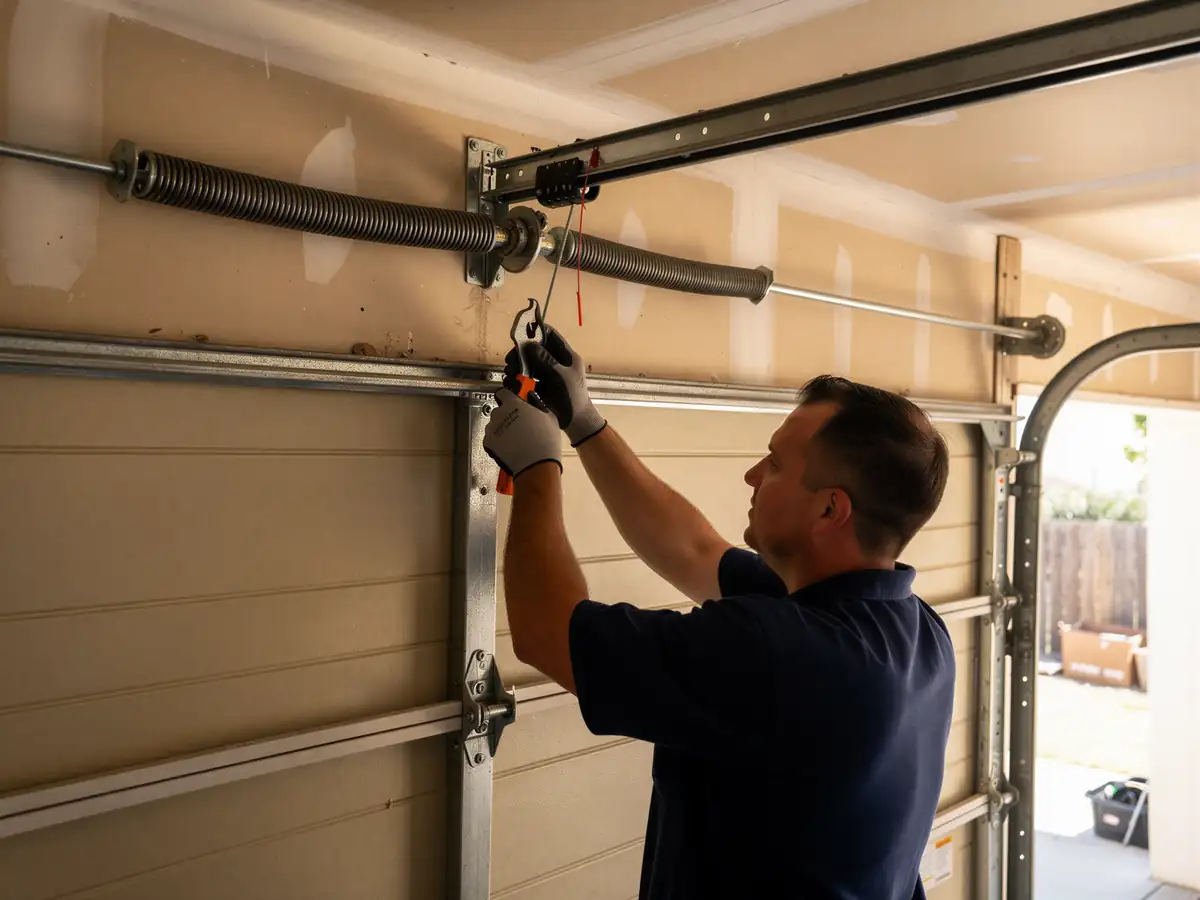
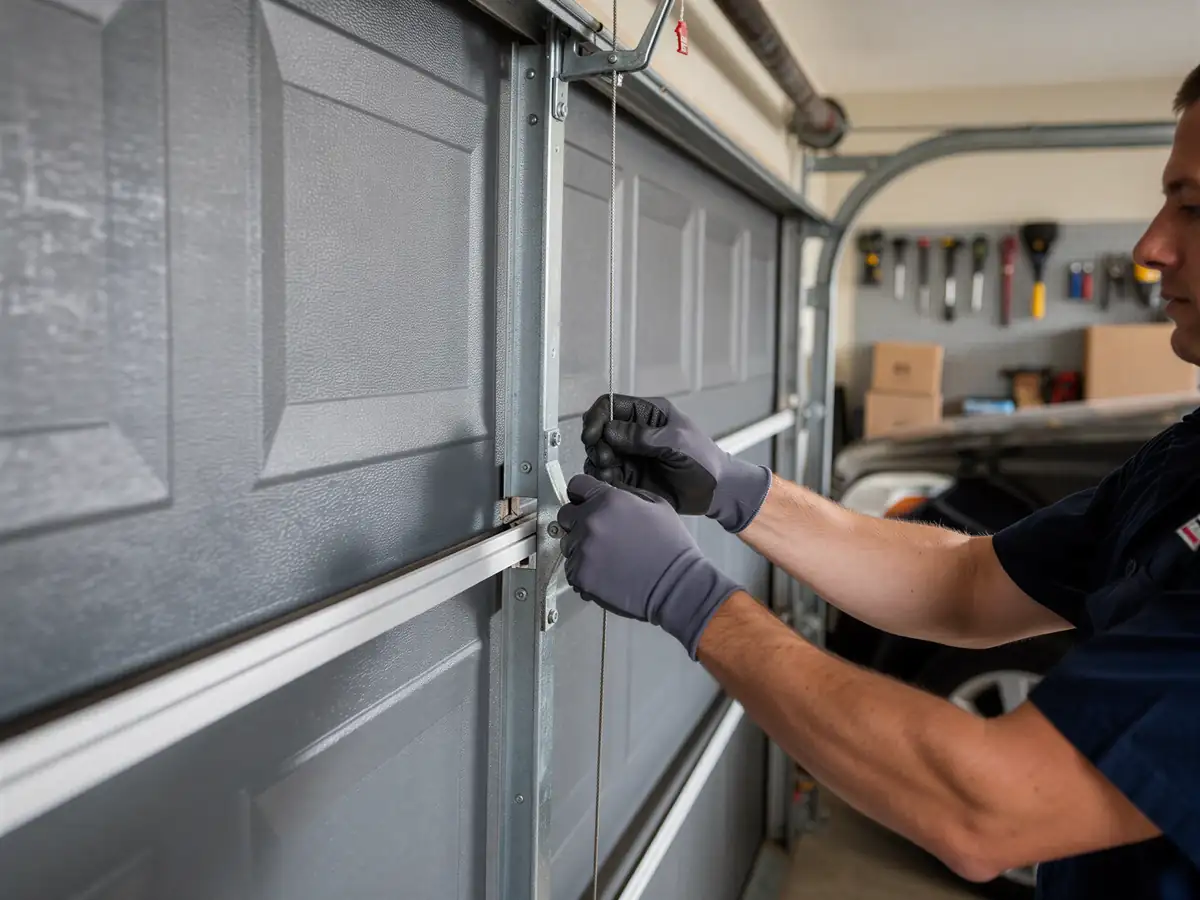
There's no local branch here, so the first step is a call or a message describing the damage - a cracked panel from a backed-into door, a dented section from hail or a dropped ladder, or a panel that's bowed and no longer sits flush in the track. Tell us the make of the door if it's on a sticker inside the top panel, and roughly how old the house is. Given that most of this neighborhood went up around 1985, we usually have a decent guess at what we're dealing with before we even get there, but a photo of the damaged section and the hinge spacing saves a wasted trip if the panel needs to be special-ordered. We'll quote the job once we know whether it's a single panel swap or the whole section needs attention.
If you're not sure the problem is the panel and not the opener, track, or spring, our general repair page for the area covers the broader troubleshooting
How Long It Takes
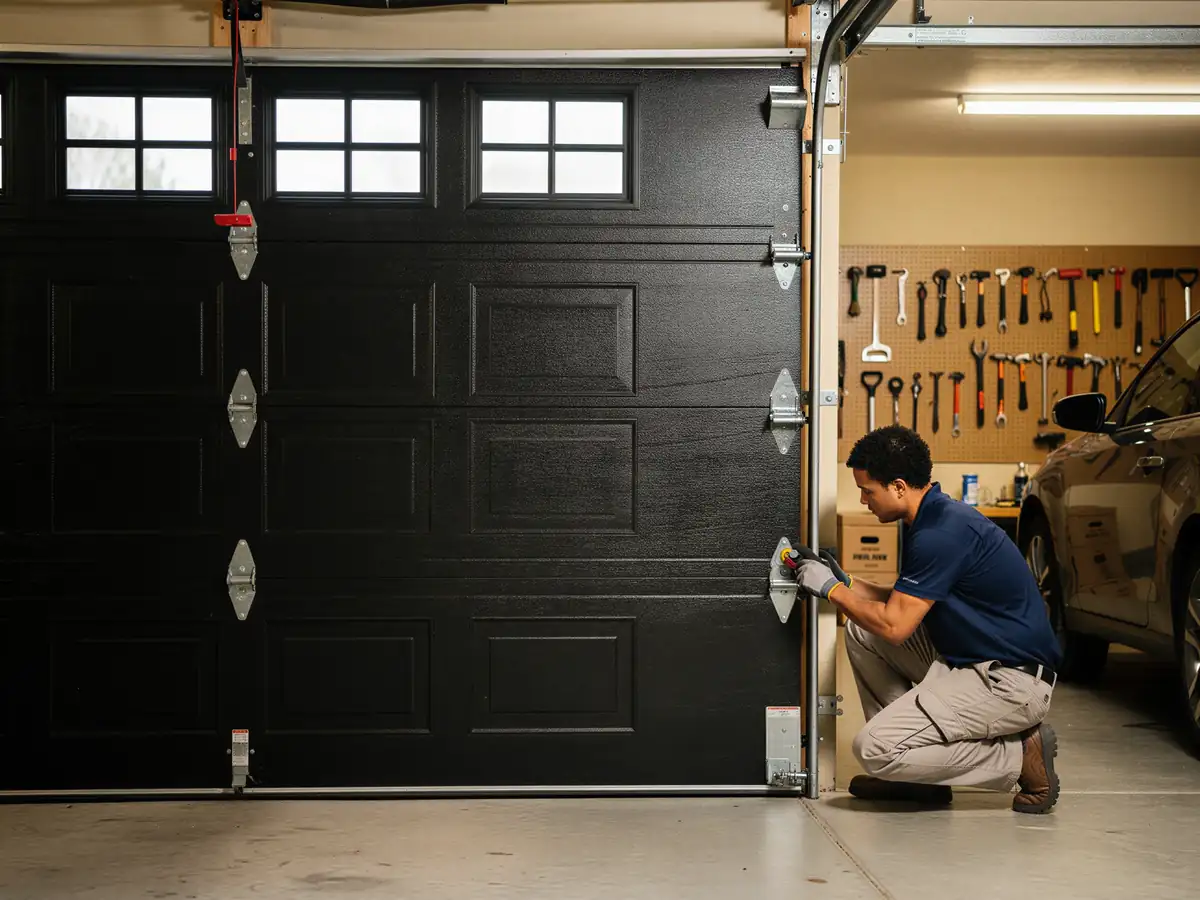
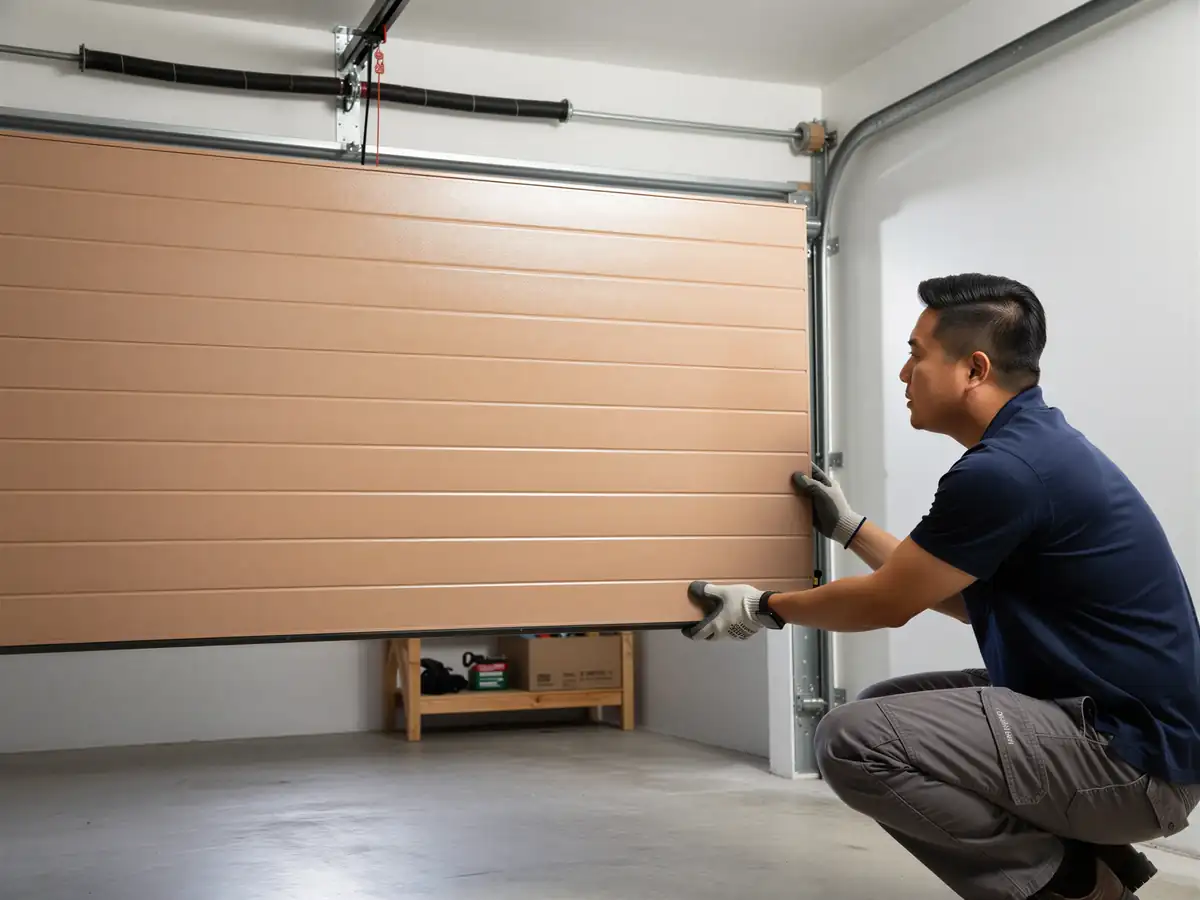
A straight panel swap on a door where the track and hinges are still true usually runs under two hours once the part is on the truck. The slower part is sourcing the panel itself. Doors built around 1985, which covers a large share of Kachina Village, were often steel sectional units from manufacturers that have since changed their panel profiles more than once. If the section matches a current stock size, we can often finish same visit. If it's a discontinued profile or an odd width, we're ordering a panel and coming back, which can add several days.
We won't pretend every job is quick. If the door has sagged out of square from decades of use on the original hinges, or if the track has pulled away from the jamb, straightening that out before fitting a new panel takes longer than the panel swap itself. We'd rather tell you that upfront than rush a fit that won't close right in six months.
Parts We Carry
We carry common steel panel sections and the hardware that tends to fail alongside them - hinges, rollers, and the short sections of track that take the worst wear where the door meets the floor. For a neighborhood built mostly in the mid-1980s, the panels themselves are the least standardized part. A lot of original doors used flat, uninsulated steel sections with a ribbed face that newer lines don't replicate exactly, so a perfect factory match isn't always possible. In those cases we fit the closest current panel and match the color as best we can, or replace the full door if the mismatch would be obvious from the street.
We don't stock every panel profile ever made, and we won't claim to. If your door is one of the less common builds from that era, expect an order lead time rather than a same-day fix.
Can You Do This Yourself
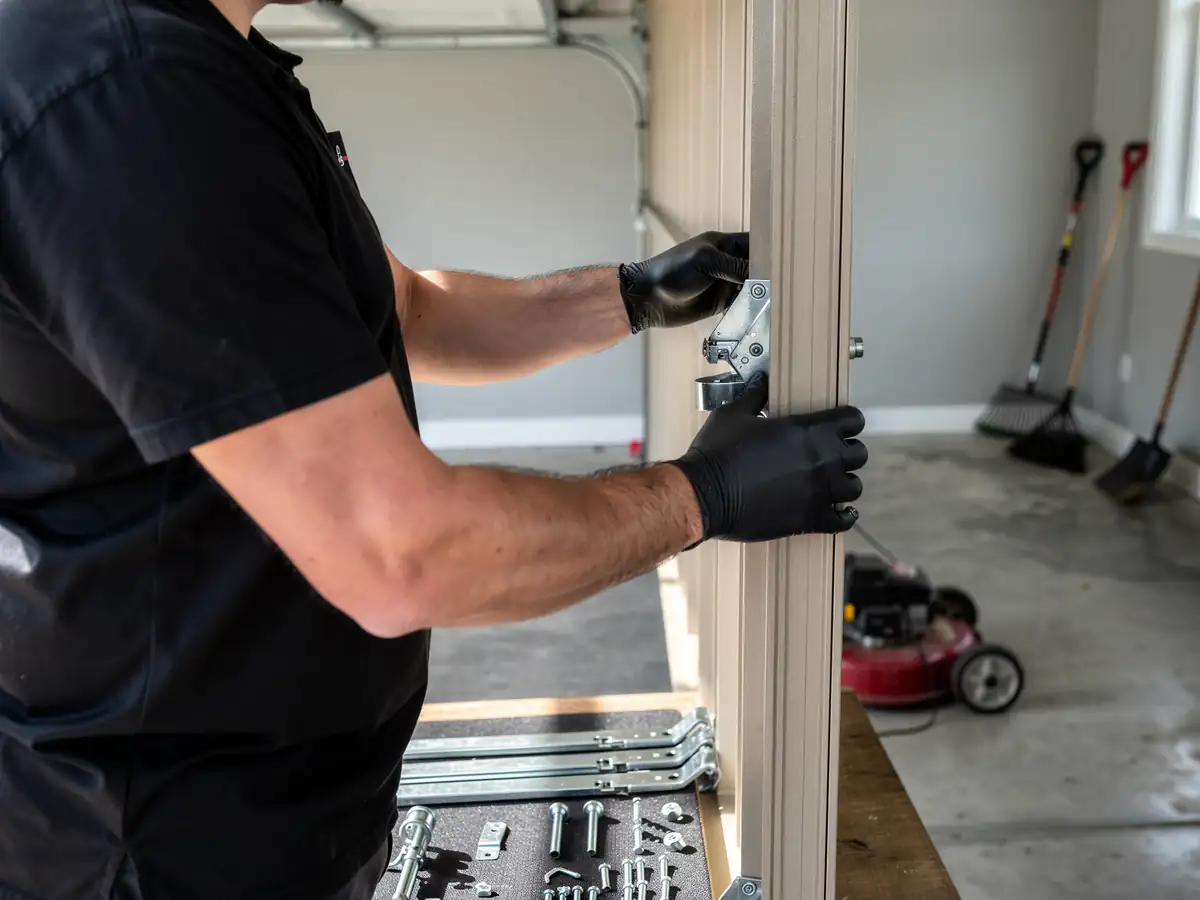
Swapping an end panel on a sectional door is within reach for someone comfortable with a drill and a ladder
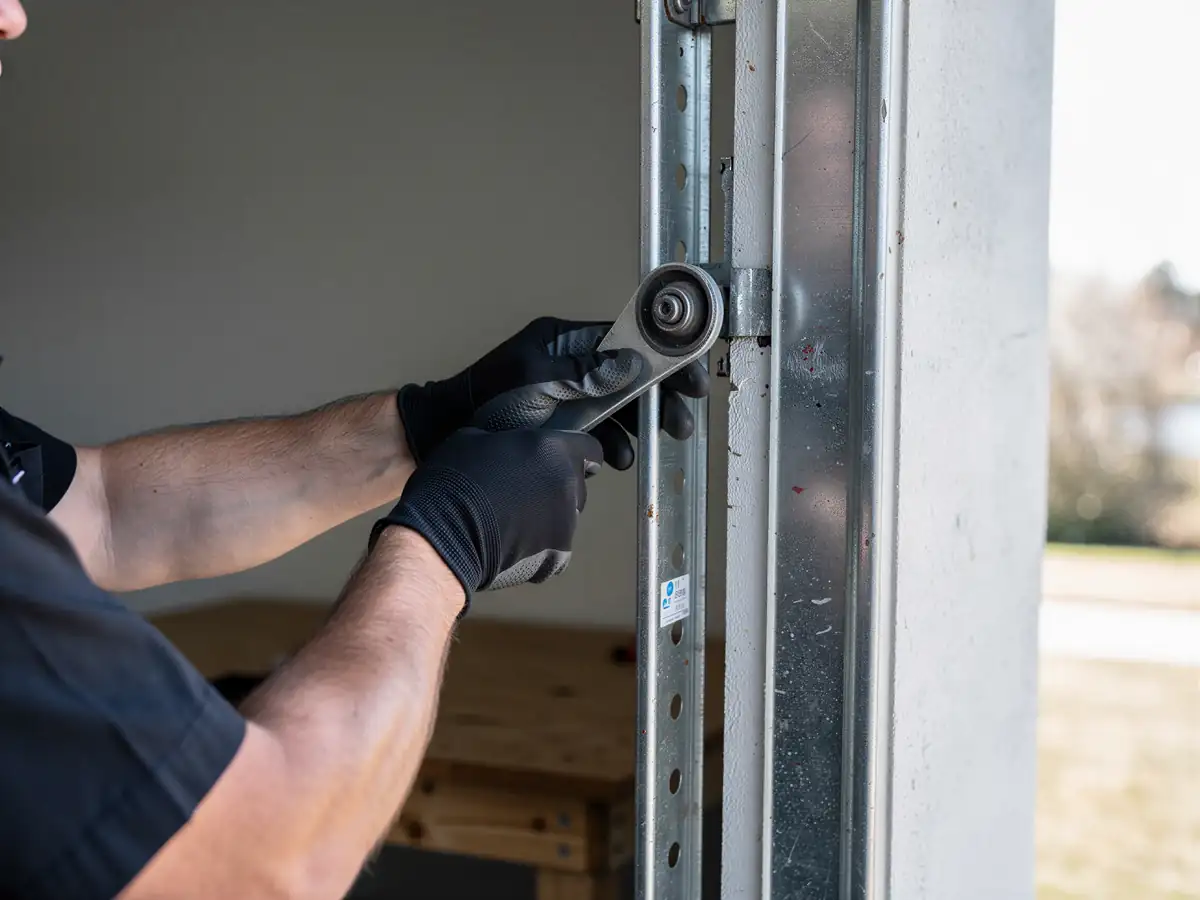
Provided the door isn't under spring tension at the section you're working on and the hinges line up cleanly. Where people get into trouble is on doors from the 1985 era specifically - the galvanizing on original hinges and track brackets has usually thinned enough that fasteners strip or brackets crack when you pull them to swap a panel, turning a one-panel job into a full hinge-and-track redo mid-project.
If the door still runs on its original torsion spring too
Leave that part alone regardless of your comfort level with tools; that's not a panel issue, it's a different kind of risk entirely. For a panel-only job on hardware that's still sound, doing it yourself is reasonable. For anything where the hinges or track look as old as the house, it's worth having someone check before you start pulling screws.
Why It Happens Here
Kachina Village's housing stock clusters tightly around 1985, which means a lot of doors here are hitting the point where the original panel has taken close to forty years of sun, cold, and use without ever being touched. With 1,328 households in the area, that's a meaningful number of doors still running factory-original steel sections on factory-original hinges. The damage we see most is a single panel cracked or dented - a car bumper, a dropped bike rack, a gust catching a door left half-open - rather than the whole unit failing at once, because steel sectional panels tend to fail locally before they fail globally.
The cold, dry climate here doesn't help the metal. Repeated freeze-thaw cycling over decades stiffens old seals and makes aging steel more brittle at the point of impact, so a knock that would just dent a newer insulated panel is more likely to crack an original 1980s-era one clean through.