How to Book
We're based in Flagstaff, about 8 miles down the road
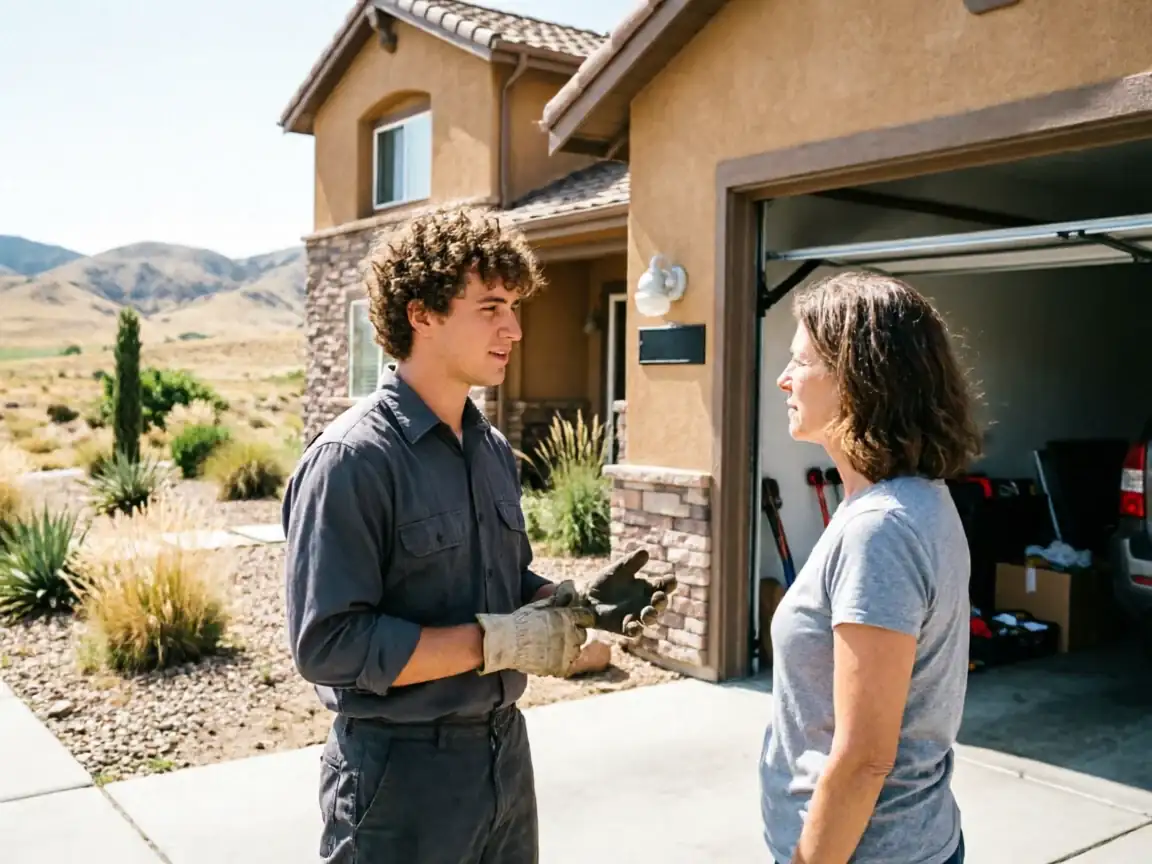
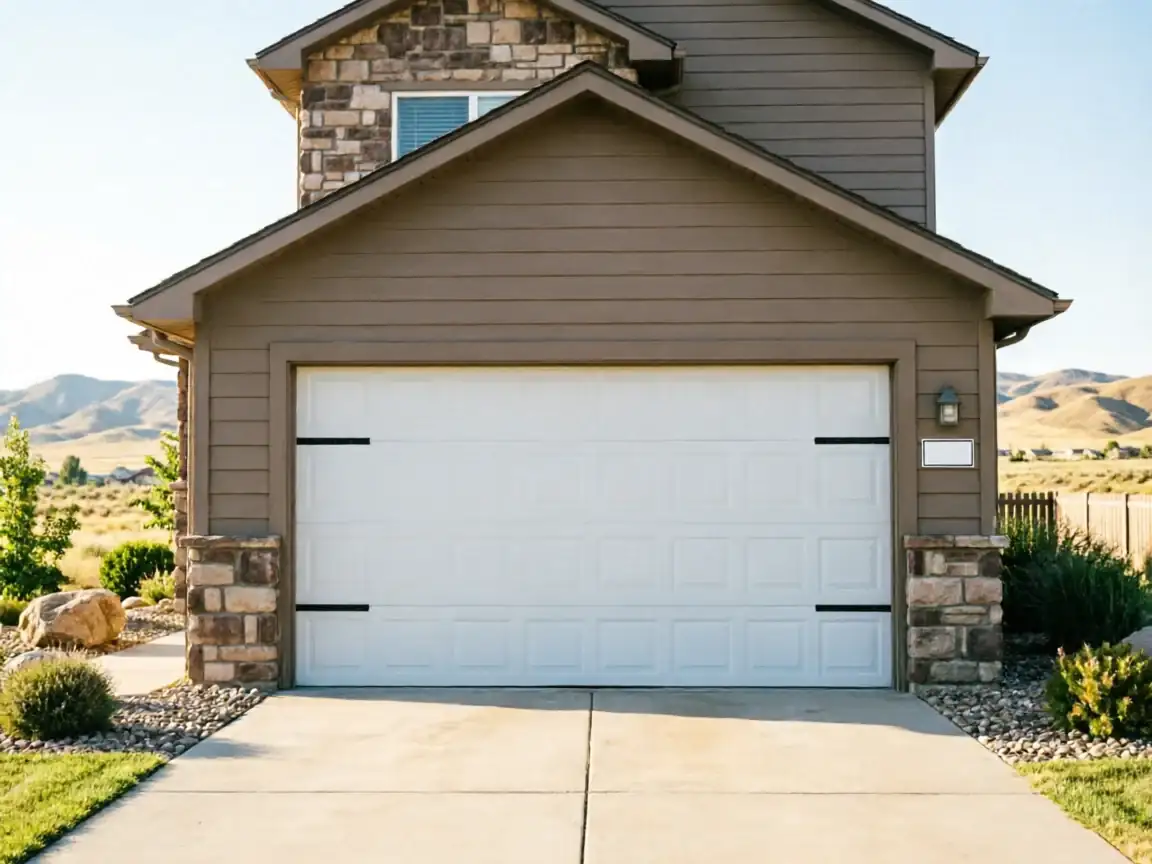
And we run calls out to Kachina Village as part of the regular route - there's no branch or depot out here, just a truck that comes when you call. Tell us the age of the house if you know it; for this neighborhood that's usually enough to guess at the spring type and opener gearing before we even pull up the driveway. A double door on a home built in the mid-1980s is a different job than a single door on something newer, and knowing which one we're walking into means we show up with the right spring cones and the right drill bits instead of guessing on site.
- 8 miles
We don't give out a fixed arrival window here because it depends on where else the truck is working that day
But we do call ahead before we leave Flagstaff so you're not waiting around with no word. If the door is stuck shut with a car trapped inside, say so when you call - that changes the order of the day.
How Long It Takes
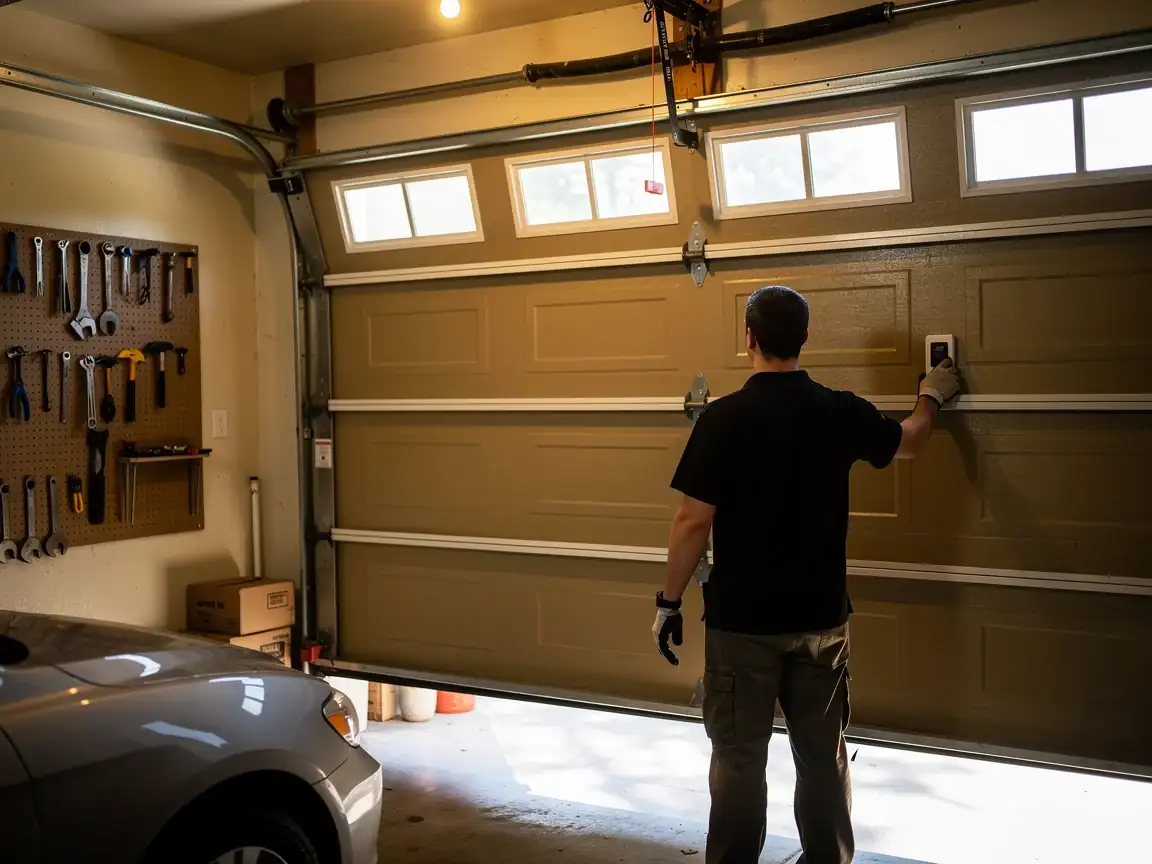
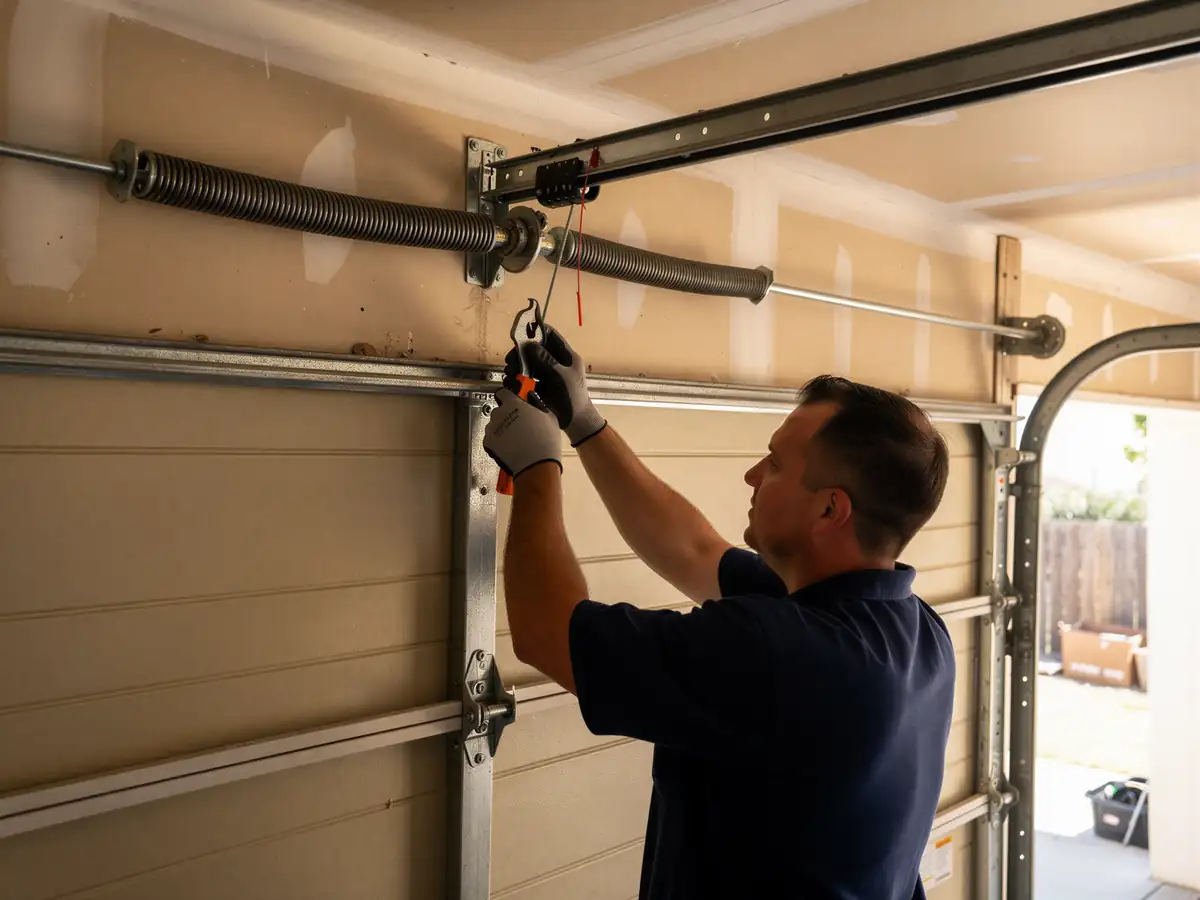
A straightforward torsion spring swap on a steel door from this era - the kind most houses here have - usually runs under two hours once the truck is on site. Extension spring setups, which some builders used on single doors through the late 1980s, take a bit longer because the pulleys and safety cables need checking too, not just the springs.
What slows a job down isn't the wrench work, it's parts. If a house still has its original 1985-vintage opener or a door panel that doesn't match anything on current shelves, we may need to order a part rather than carry it. That's the honest limitation: we stock what fails most often on doors from this build era, but we can't promise same-visit completion on anything that needs a special-order piece. We'll tell you on the spot if that's the case rather than let you assume it's a quick fix.
Parts We Carry
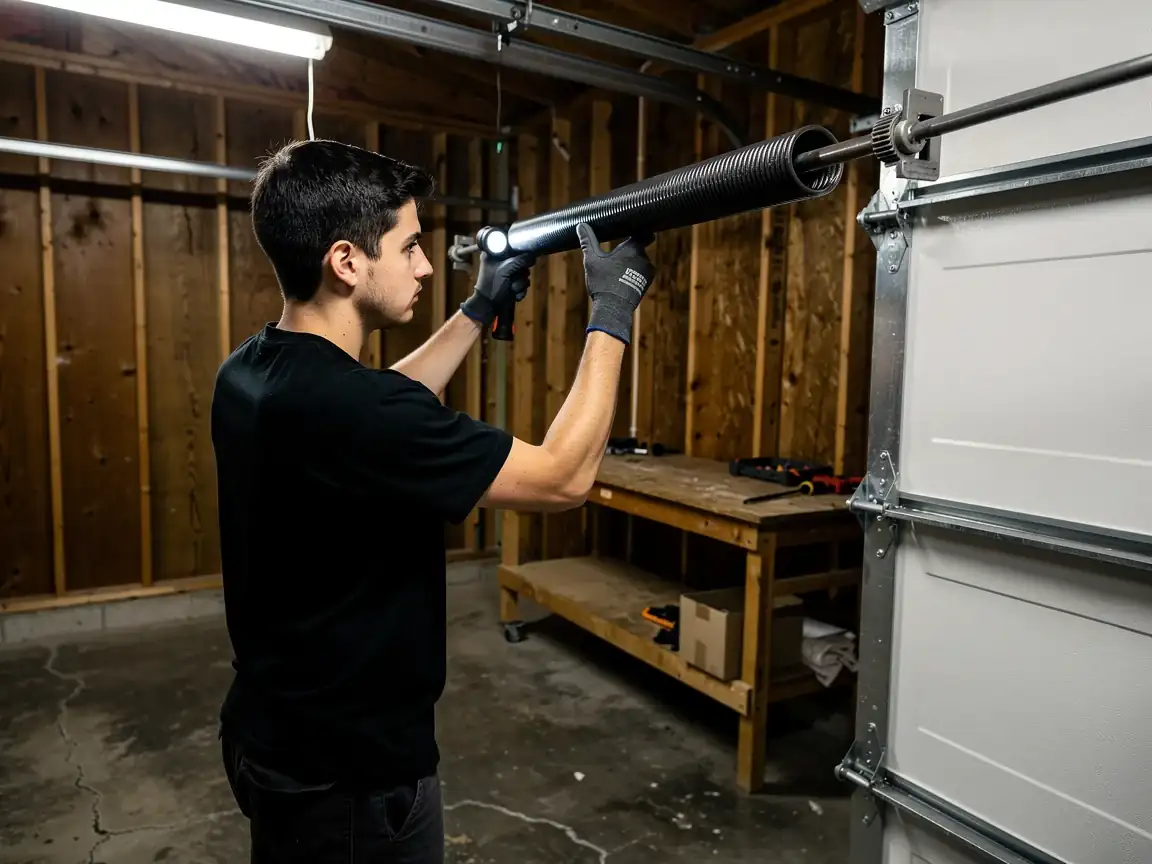
Houses in Kachina Village mostly date to the mid-to-late 1980s, and that era is consistent enough that we stock toward it specifically: torsion springs sized for the steel sectional doors that were standard by then, extension spring kits with the safety cables that code eventually required retrofitting, and rollers and hinges sized for the heavier insulated panels that started replacing thin single-layer steel around that time.
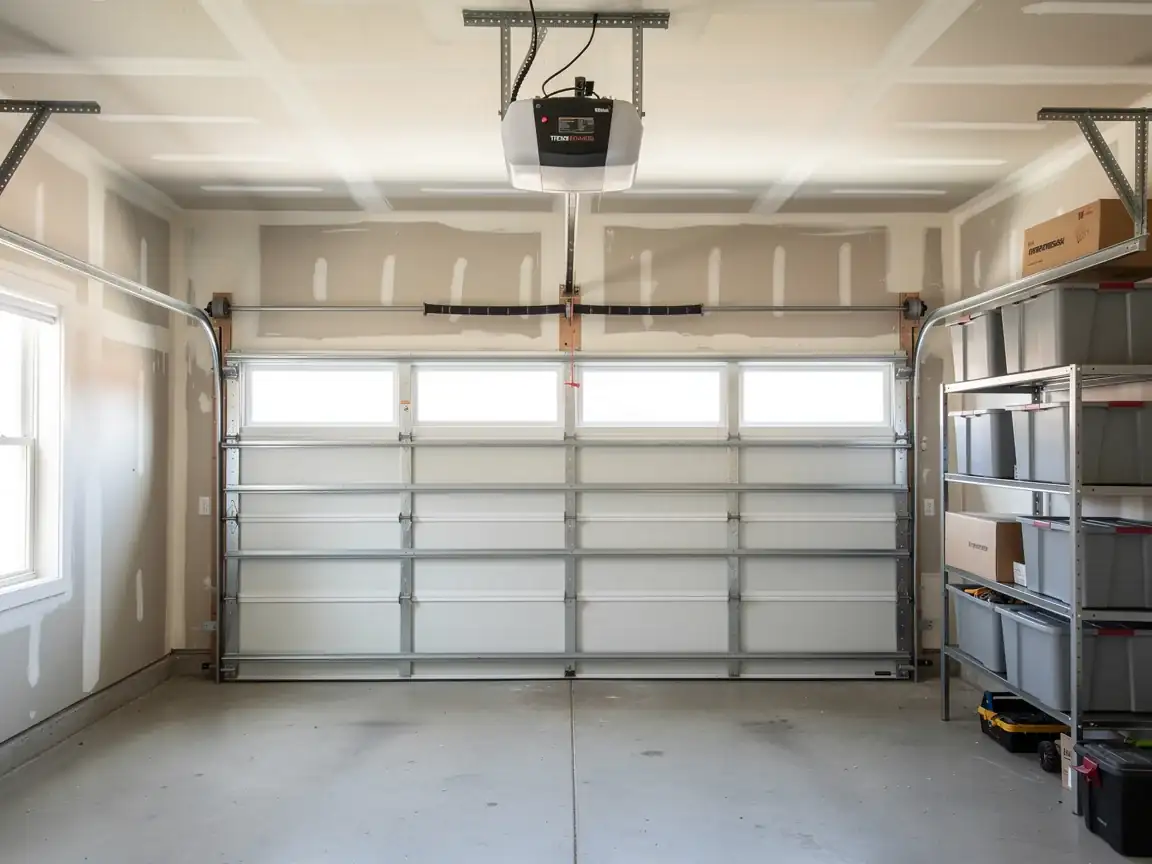
We also carry basic opener drive components - chain and belt sprockets, trolley carriages - that fit the openers most commonly paired with doors from this build period. What we don't carry on the truck is anything for a door that's been swapped out for something unusual since the house was built; aftermarket retrofits vary too much to stock blind. If your door isn't original to the house, tell us on the call so we can check compatibility before we drive out.
Can You Do This Yourself
Replacing rollers or tightening loose hinge bolts on a door from this era is reasonable DIY work if you're comfortable on a ladder
The hardware is simple and parts are easy to find for mid-1980s steel sectional doors. Springs are a different matter. A torsion spring holds enough stored tension to break fingers or worse, and extension springs without working safety cables can launch across a garage if they let go.
If the opener's circuit board or logic unit is the problem rather than the drive mechanism
That's also not a weekend fix - diagnosing a board failure versus a wiring fault takes equipment most homeowners don't have lying around. Our honest line: if it's springs, cables, or anything inside the opener housing, call it in. If it's a squeaky roller or a loose track bracket, a homeowner with basic tools can usually handle it without us.
Why It Happens Here
The area's winters sit in a cold, severe climate band, and cold is hard on old hardware specifically - steel springs lose temper faster with repeated contraction, and grease in 35-year-old rollers and hinges thickens up and stops doing its job. Combine that with housing stock centered around 1985 and you get a predictable failure pattern: springs that were already near the end of their cycle count snapping on the first hard cold snap of the season, not in July.
Median household income here runs around $79,085, which tends to mean owners hold onto original doors and openers longer rather than replacing on a schedule - we see more repair calls on original equipment here than on recently swapped doors. With roughly 1,328 households in the area, that adds up to a lot of original-era hardware still in service, which is exactly why we stock toward this build period rather than a generic parts list.