Why It Happens Here
Most of the housing in this service area went up between 1985 and 1991
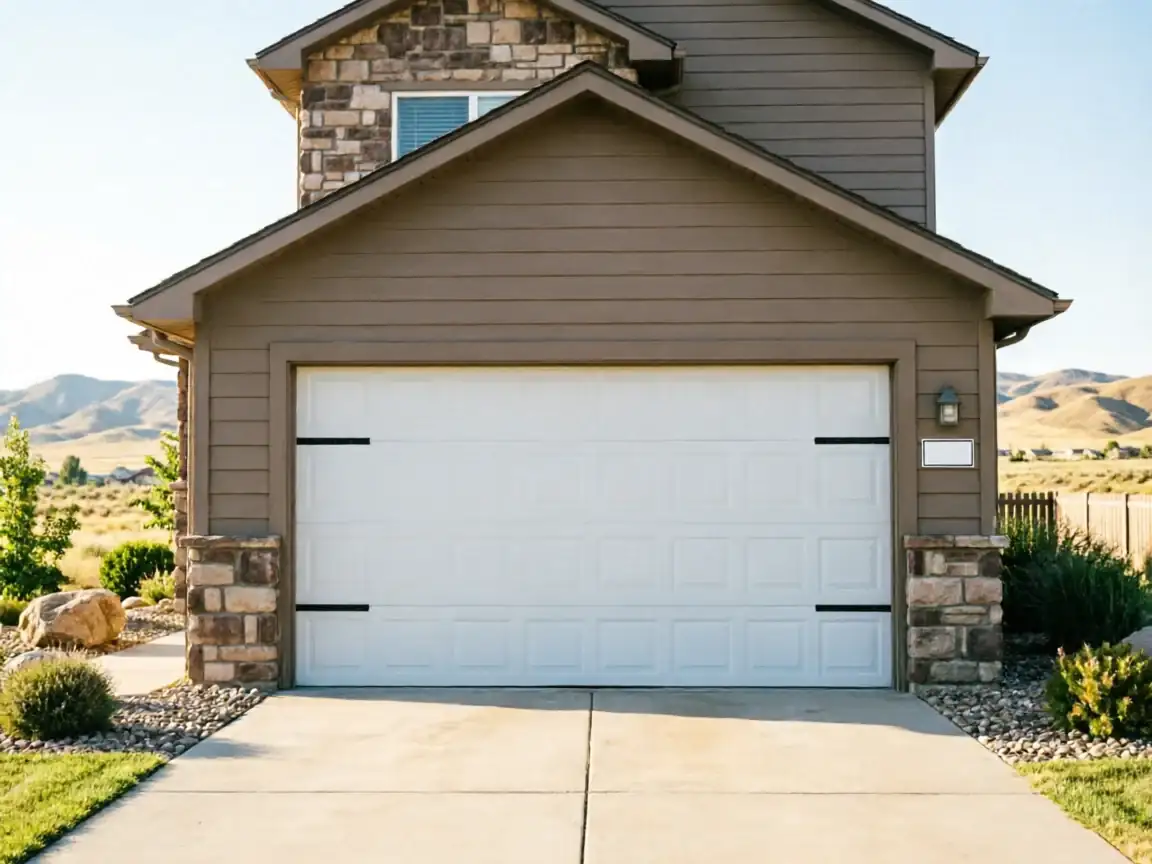
With 1985 as the median build year. That means a lot of original builder-grade doors - the kind that came with the house, not the kind anyone chose - are now closing in on forty years old. The same era of construction runs out through Mountainaire, Kachina Village, Fort Valley, and Munds Park, so it's not just one subdivision carrying this problem, it's the whole stretch of the service area.
Flagstaff sits in a severe cold climate band
And that's the part that finishes off a door this age faster than it would somewhere milder. Thermal cycling - freeze overnight, sun on the panel by midday, freeze again - works steel and the old foam-and-cardboard insulation sandwiches that were standard in the 80s and 90s. Panels bow. Seams split along the bottom seal. The track hardware, often original, develops play that no amount of lubricant fixes. By the time a door is sticking, binding, or running loud, you're usually not looking at a repair that holds for long. You're looking at hardware that's simply aged out in a climate that doesn't forgive it.
The Cost of This Job
We can't quote a number here without seeing the opening - width, whether it's a single or double bay, what insulation rating makes sense for a severe cold climate, and whether the existing opener and track can be reused or need to go too. Those variables move the job more than anything else.
What we can tell you is what drives the cost up or down. An insulated door built for this climate costs more upfront than a bare steel panel, but it's the right call here - Flagstaff's winters are hard enough on an uninsulated door that you'll be back to replace it again inside a decade. Reusing a sound opener and track, where the hardware is still square, keeps the job smaller. A full double-door swap with new track, new hardware, and a new opener is a bigger job than a single-bay panel replacement, plainly.
The area's median household income runs around $94,457, which doesn't set a price either, but it's worth knowing that a full install here isn't an unusual expense for a homeowner working with 1980s-vintage hardware that's simply reached the end of its run. We'll walk the opening with you and give you a real number before anything gets ordered.
What the Repair Takes
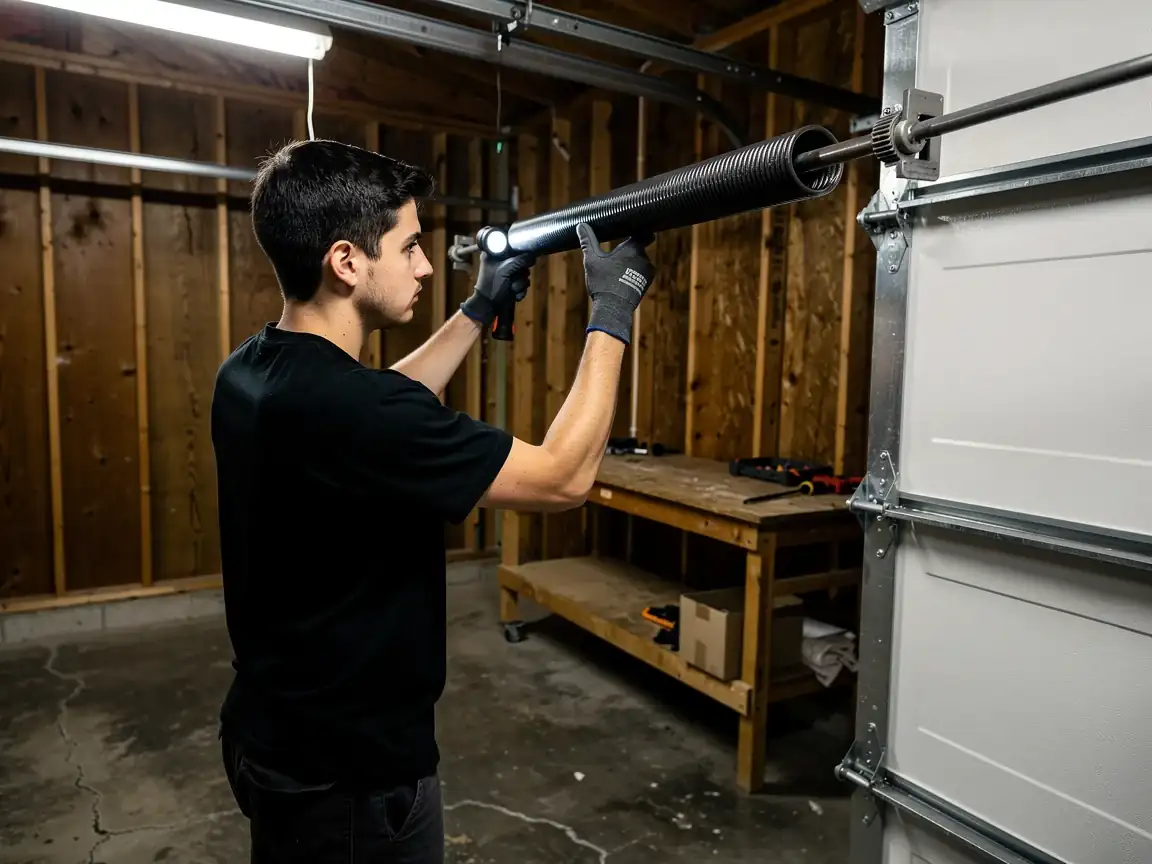
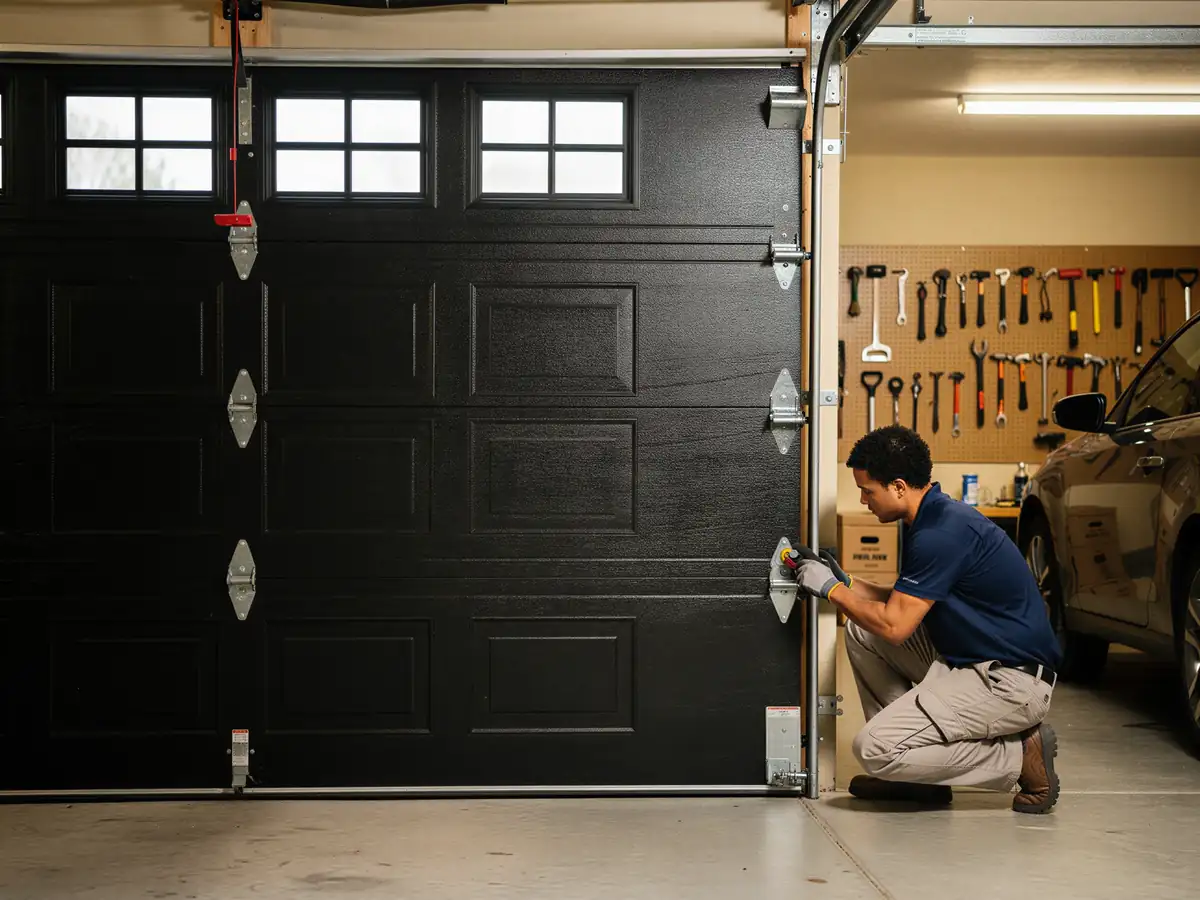
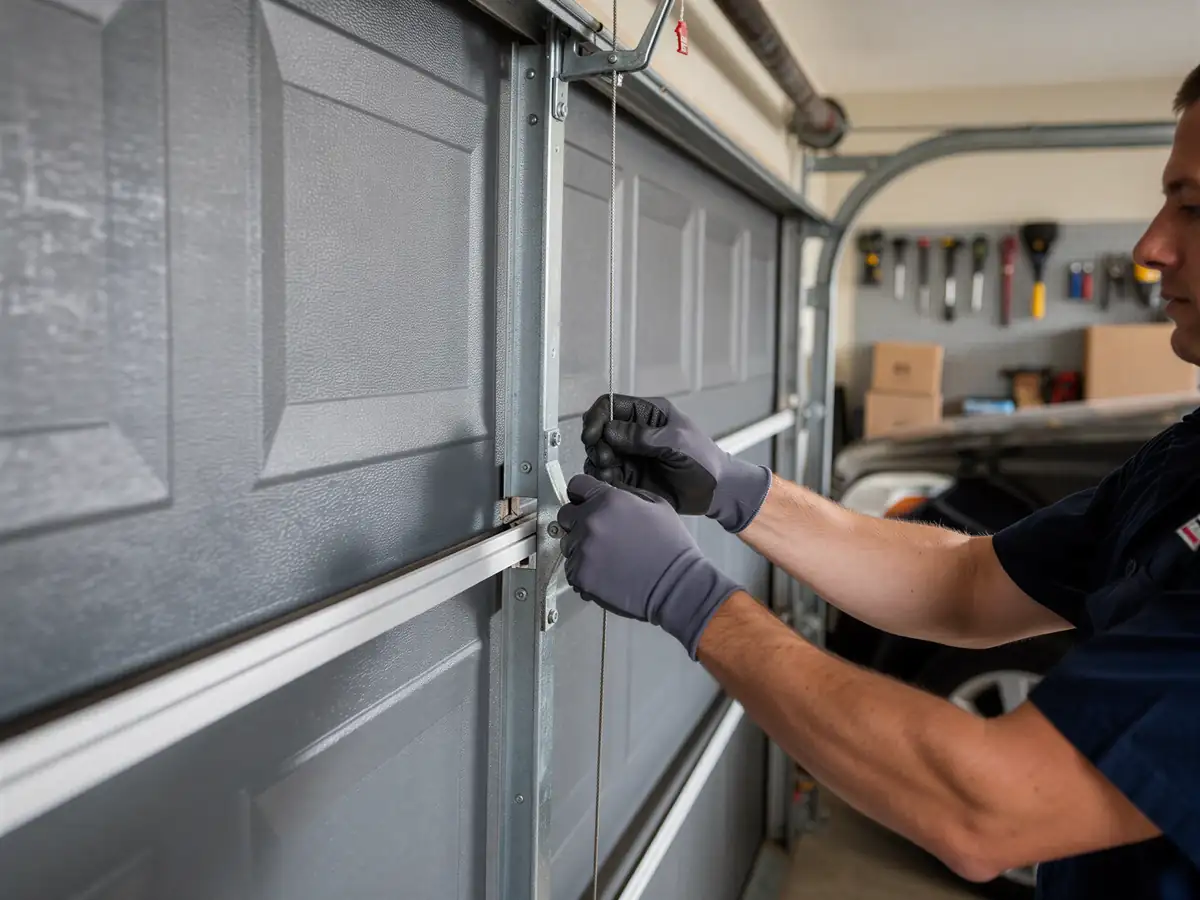
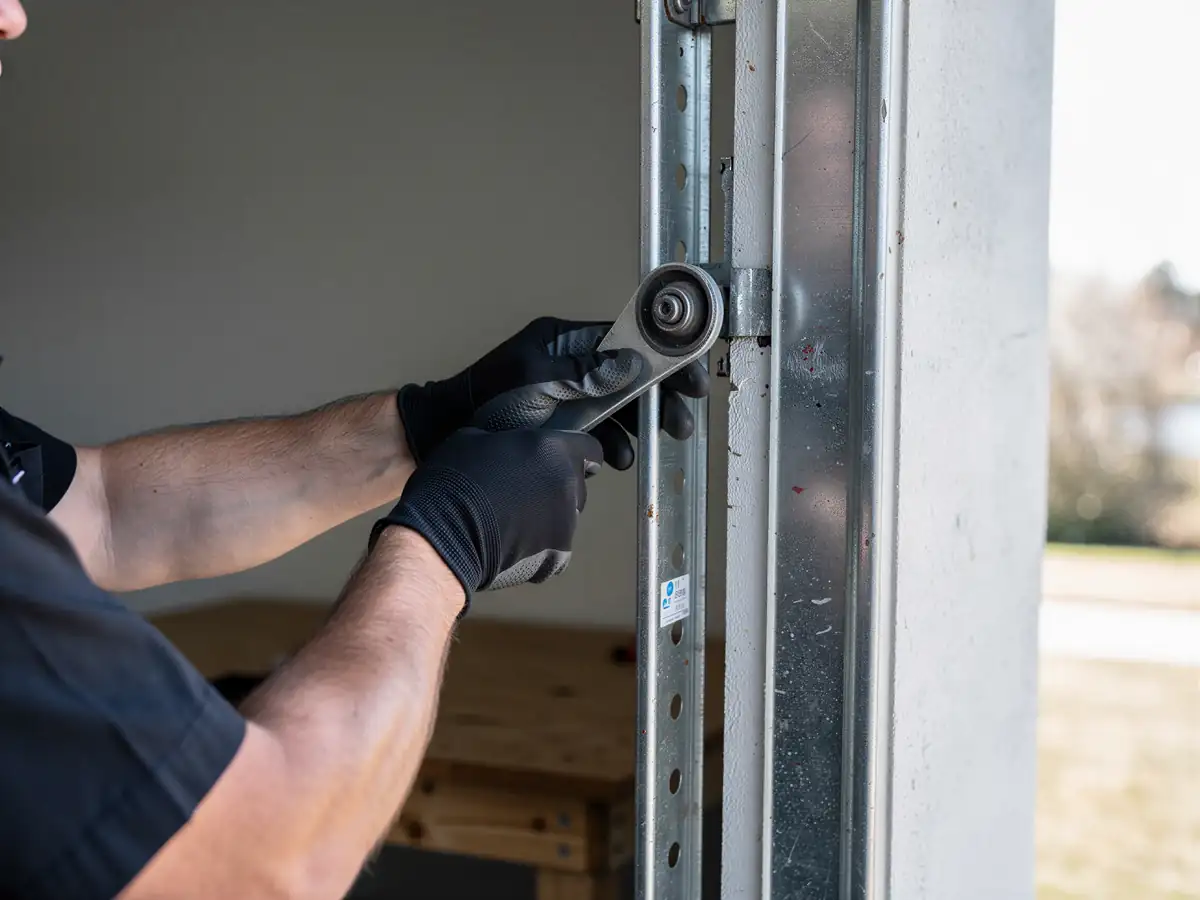
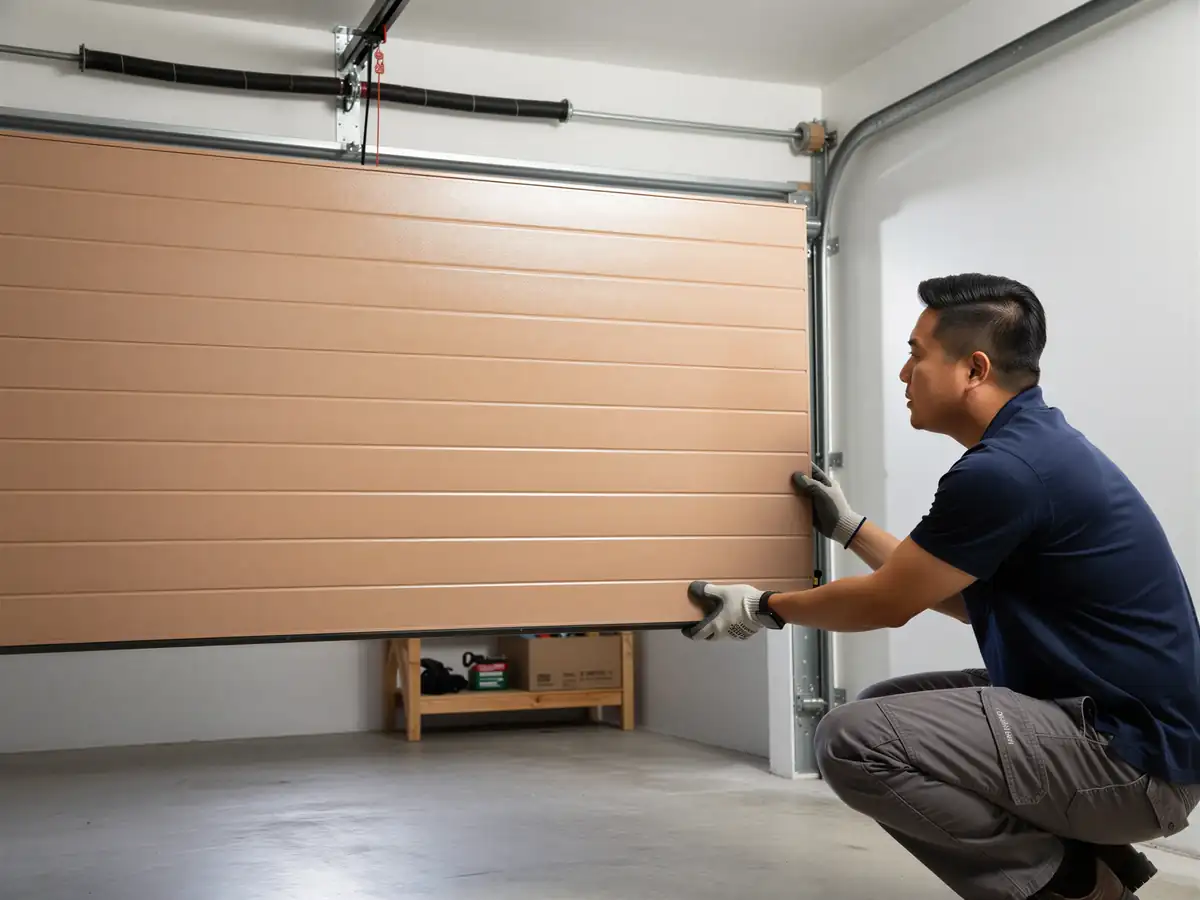
Installation starts with the opening, not the door. We check the jambs and header for square, since a lot of the 1985-1991 stock has settled slightly over the decades, and a door hung on an out-of-square opening will bind no matter how good the panel is. Old track comes out if it's pitted, bent, or sized for a door we're not reusing.
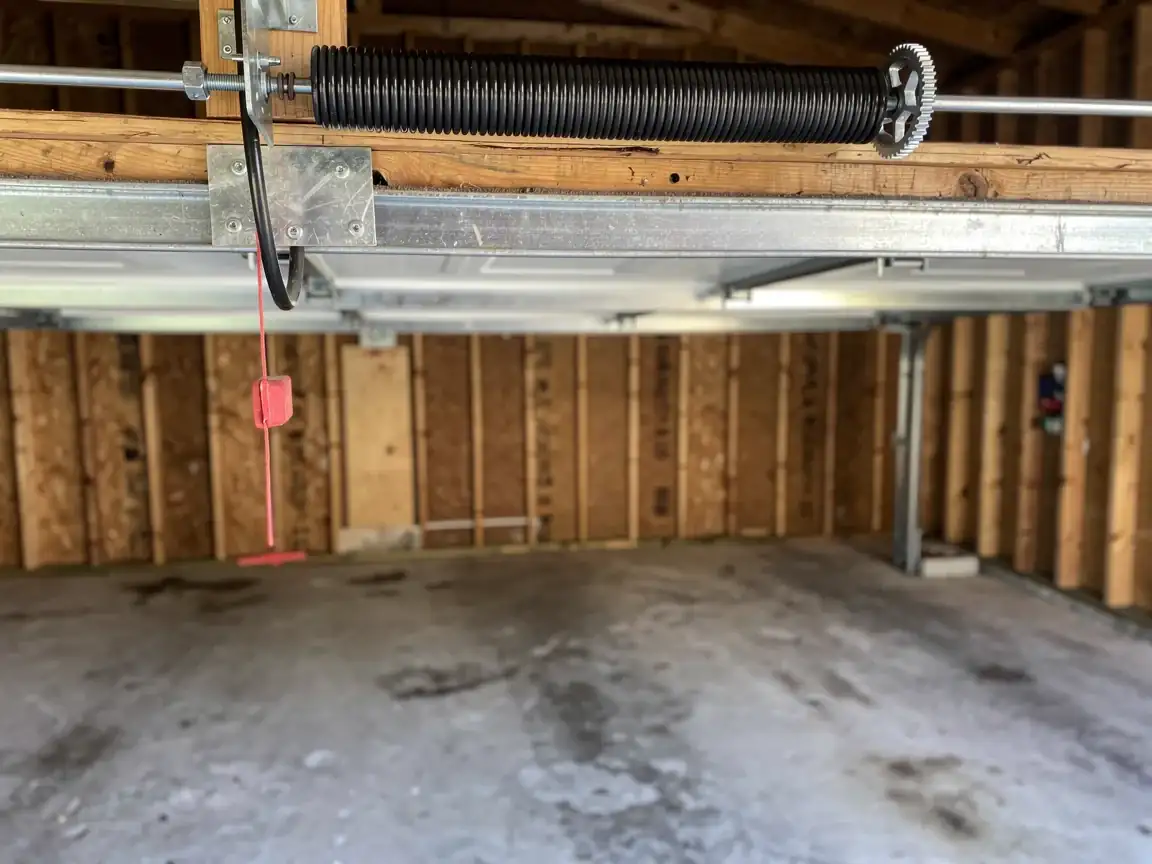
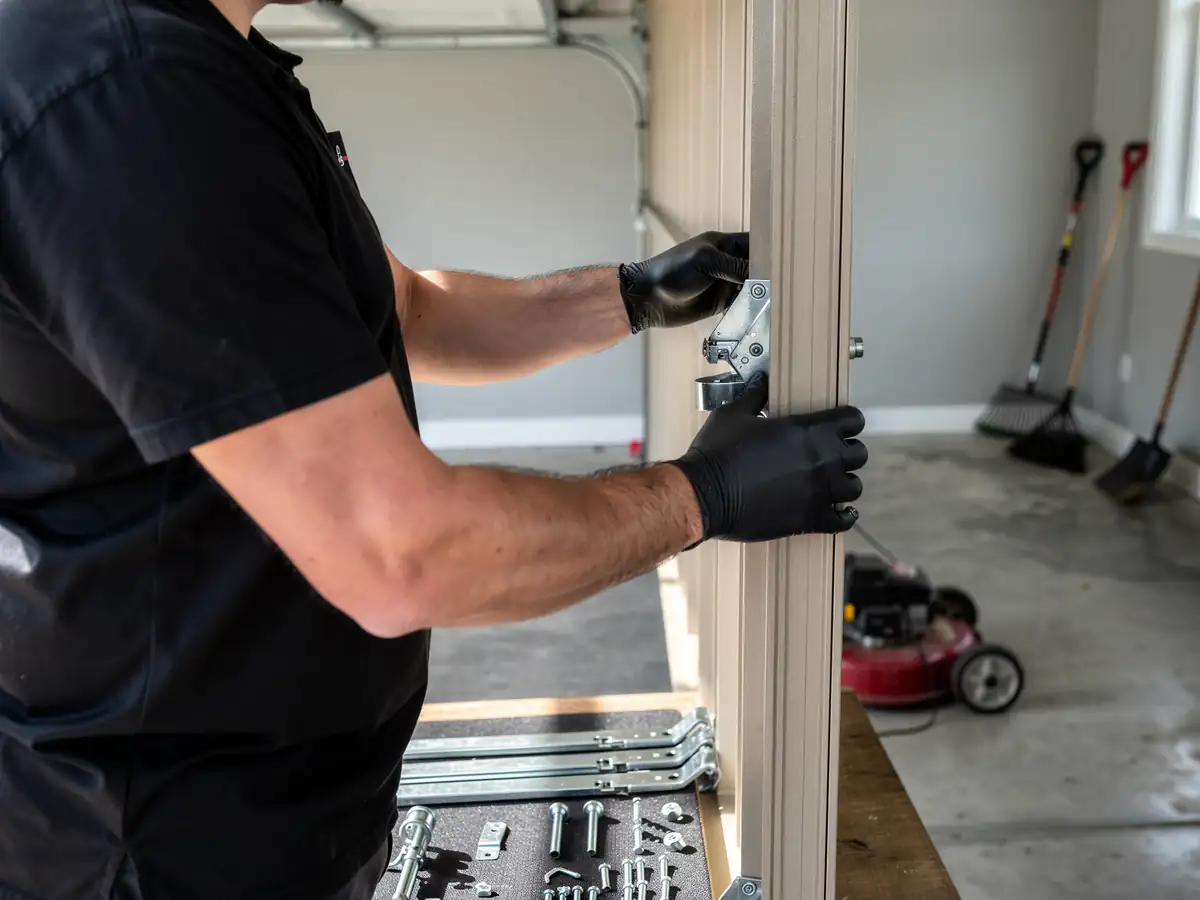
For this climate, we size the door with insulation and a bottom seal rated for severe cold, not a generic seal that'll stiffen and crack by January. New track gets set and leveled, rollers and hinges go on per the panel manufacturer's spec, and torsion springs get matched to the actual door weight - guessing on spring size is how you end up with a door that slams down or won't stay up.
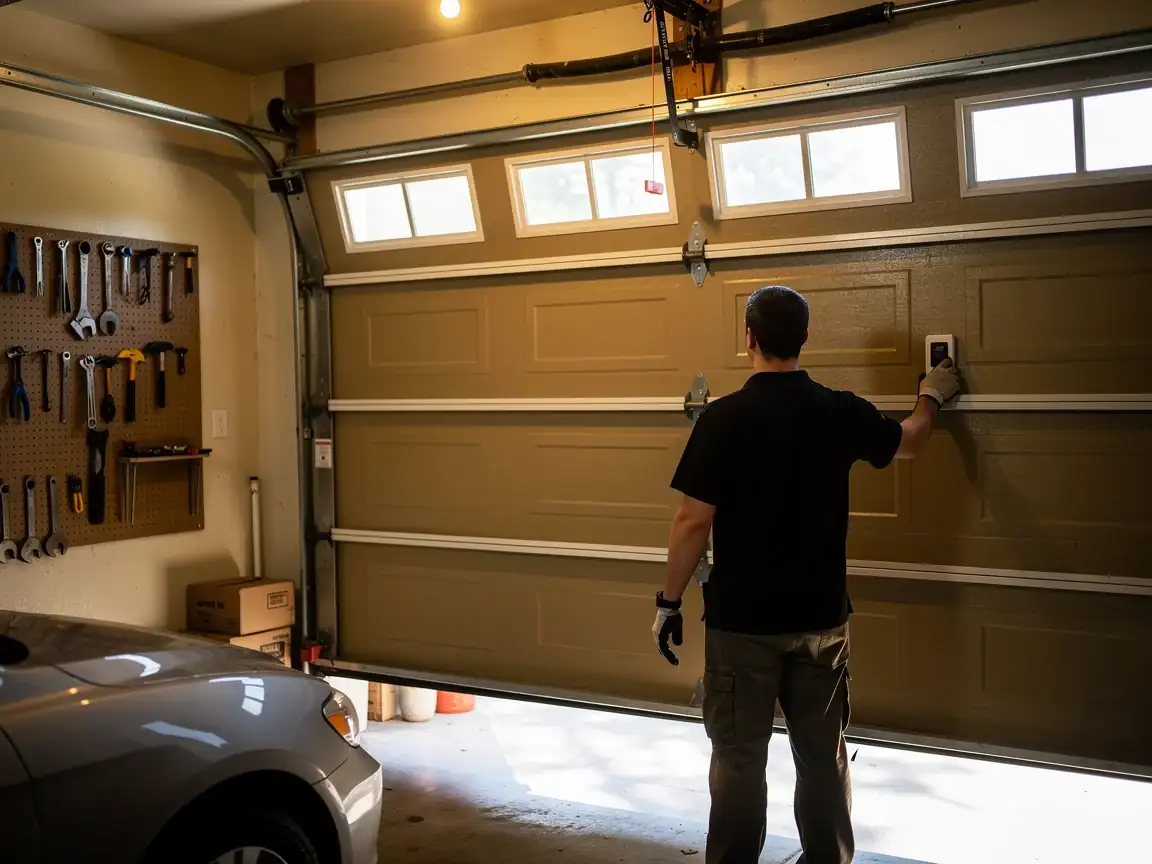
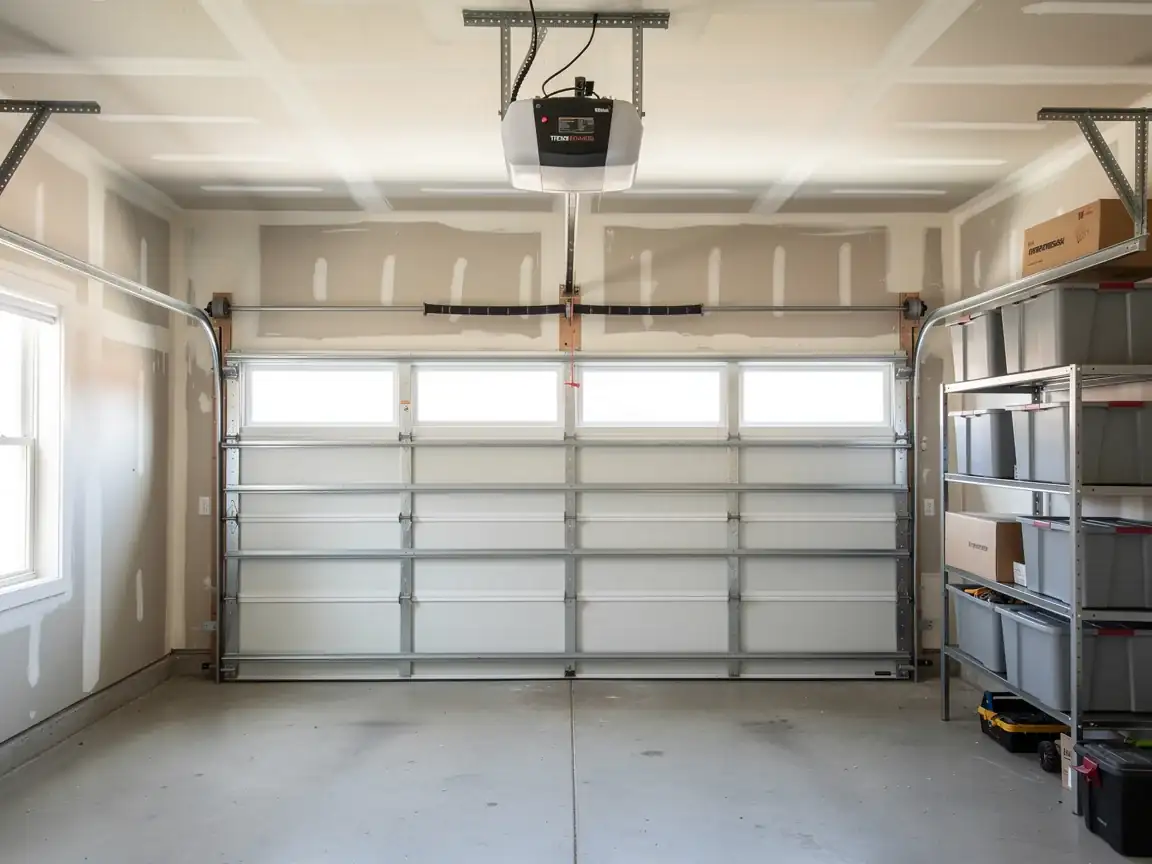
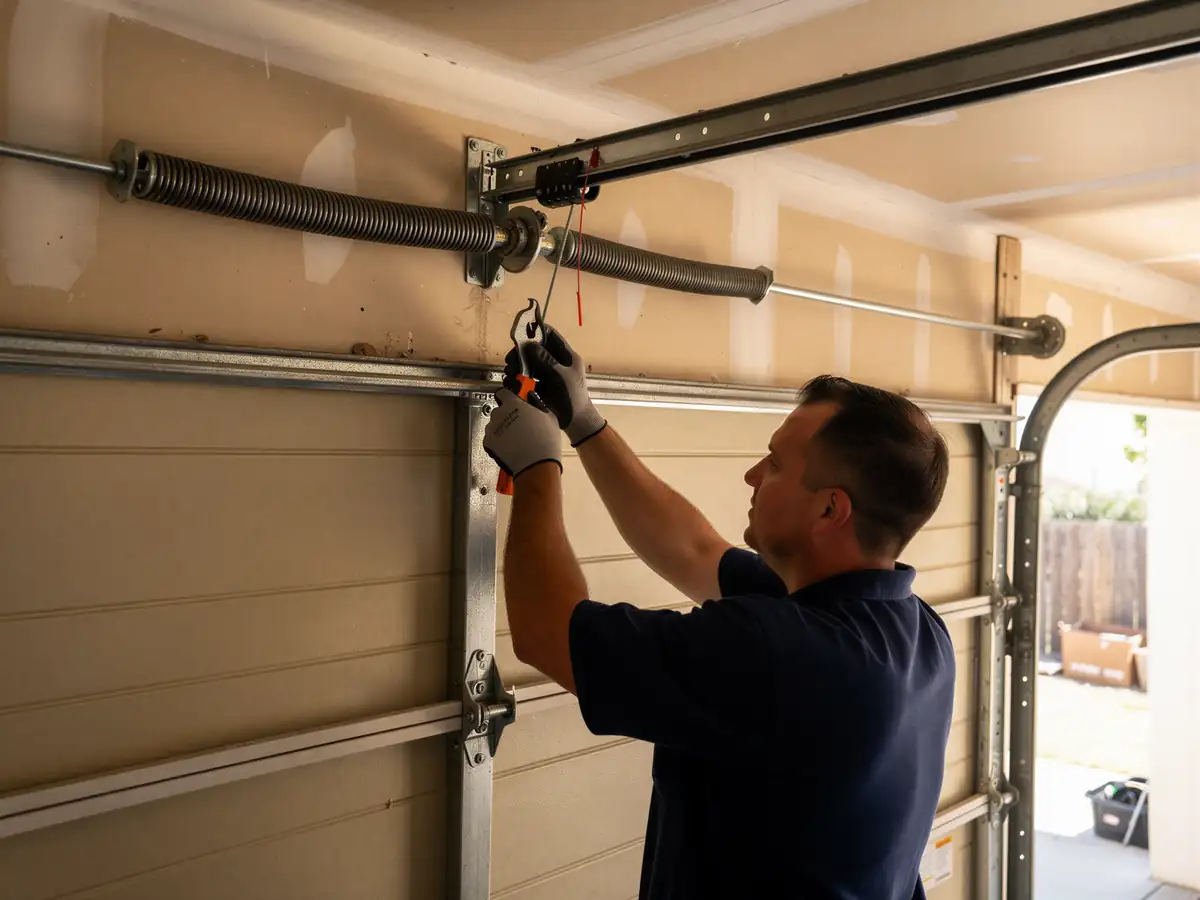
Once the panel sections are up, we mount or reconnect the opener, set the travel limits, and check the force settings so the door reverses properly on an obstruction. Last step is balance: with power disconnected, the door should hold at half-open on its own. If it drifts, the springs aren't right yet, and the job isn't done. We don't call it finished until that balance checks out.
What You Are Seeing
A door that's earned a replacement usually shows a few things at once, not just one
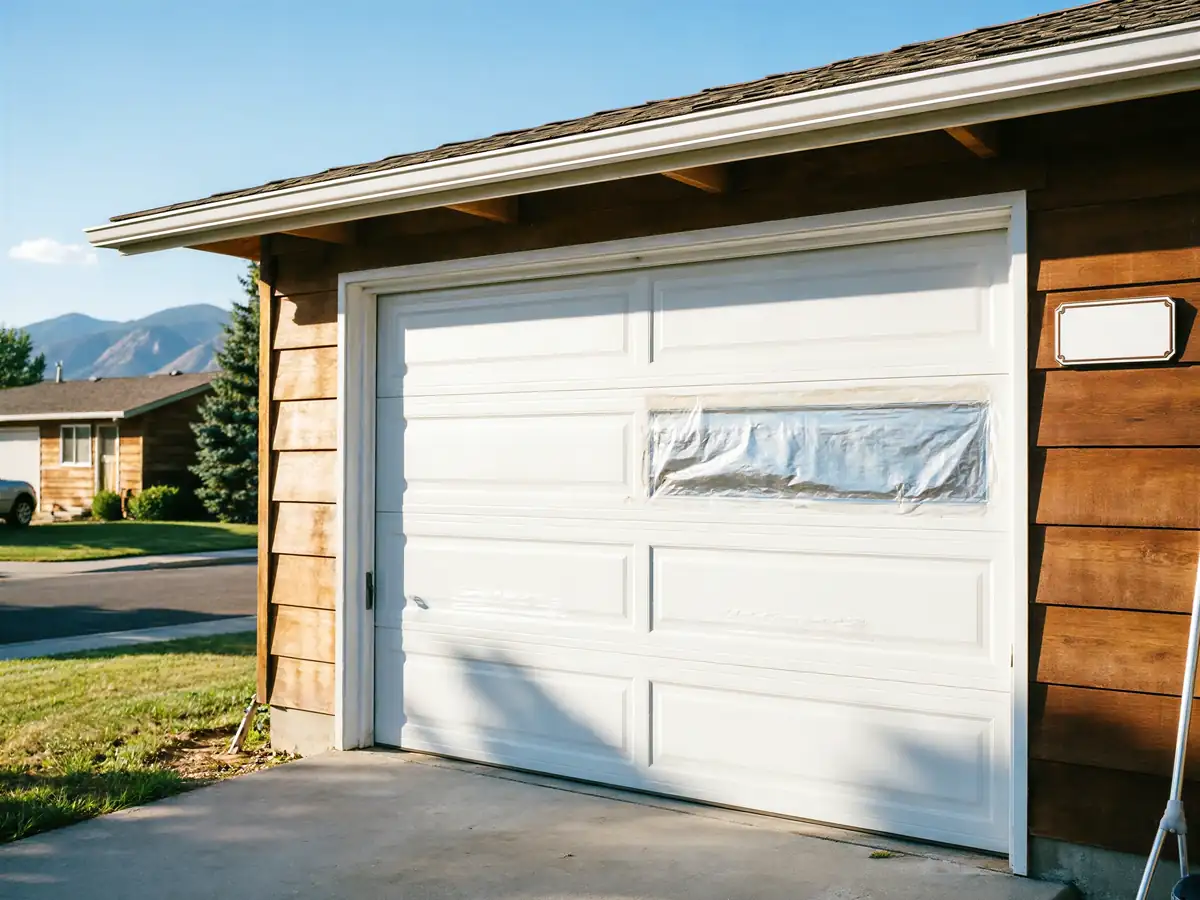
Panels that bow visibly in the afternoon sun and flatten back out overnight are telling you the insulation core has broken down - common on 1980s and 90s doors that were never built with the kind of seal a severe cold climate needs. Rust or soft spots along the bottom section, especially where snowmelt sits against the panel after a storm, point the same direction.
If the door is heavier to lift by hand than it used to be
Or the opener strains and the chain or screw drive sounds louder than it should, the spring is likely compensating for a door that's no longer balanced the way it was built. Gaps at the bottom corners, daylight showing around the edges, or a door that's visibly racked to one side when it's down - those are structural, not cosmetic.
One honest note: not every one of these symptoms means you need a new door
Some are a hardware adjustment or a seal swap. But when two or three show up together on a door this old, in this climate, the repair usually costs you most of what a new install would, without buying you more than another season or two.