When the Power Goes Out, What Happens to Your Opener
Flagstaff homes built between 1985 and 1991 often run original openers that fail hard during winter power cuts - here's what that costs to fix or replace.
We don't have a price list to hand you here, so we won't invent one. What we can tell you is what drives the number up or down. A dead logic board on an opener that's otherwise sound is a different job than a full unit replacement, and on a house built in the 1985-1991 wave that's common in this service area, you're usually looking at the second option - the motor, the gears, and the control board are all the same age and tend to fail together once one part goes. If the opener still has a working manual release and the door itself moves fine by hand, that buys you time to plan the job instead of scrambling. The honest limitation: we can't quote you a number without seeing the unit, because a chain-drive opener from that era and a newer belt-drive unit with battery backup aren't priced the same, and we're not going to pretend otherwise. What we will say is that replacing rather than patching an opener that age is usually the better use of your money, because parts for units from that period are getting harder to source.
The Situation
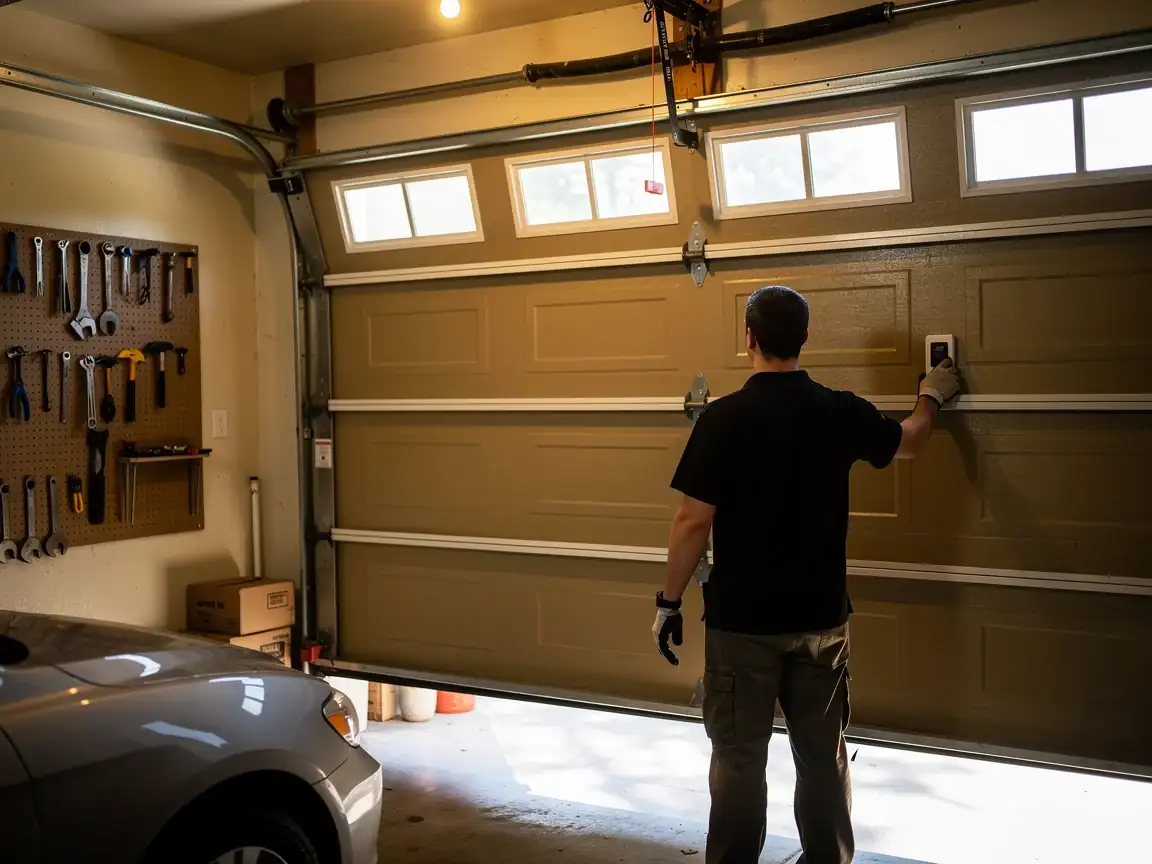
A lot of the houses we work on in this area were built between 1985 and 1991, median year 1985, across four named pockets of similar-era stock. That means a lot of original garage door openers - chain-drive units installed when the house was framed, now pushing past the point where the capacitor, the gears, or the circuit board are the weak link. These openers predate battery backup as a standard feature. When the power cuts, they don't finish the cycle, they don't hold position, they just stop, and the door sits wherever it was when the lights went out. With 2,995 households and 4,536 owner-occupied houses in this service area, that's a lot of garages running the same thirty-plus-year-old hardware, which means a lot of them are due for the same failure at roughly the same time, especially once winter weather starts putting real demand on the electrical grid. This isn't a problem unique to one house - it's a pattern tied to when this part of town got built.
How Local Conditions Play In
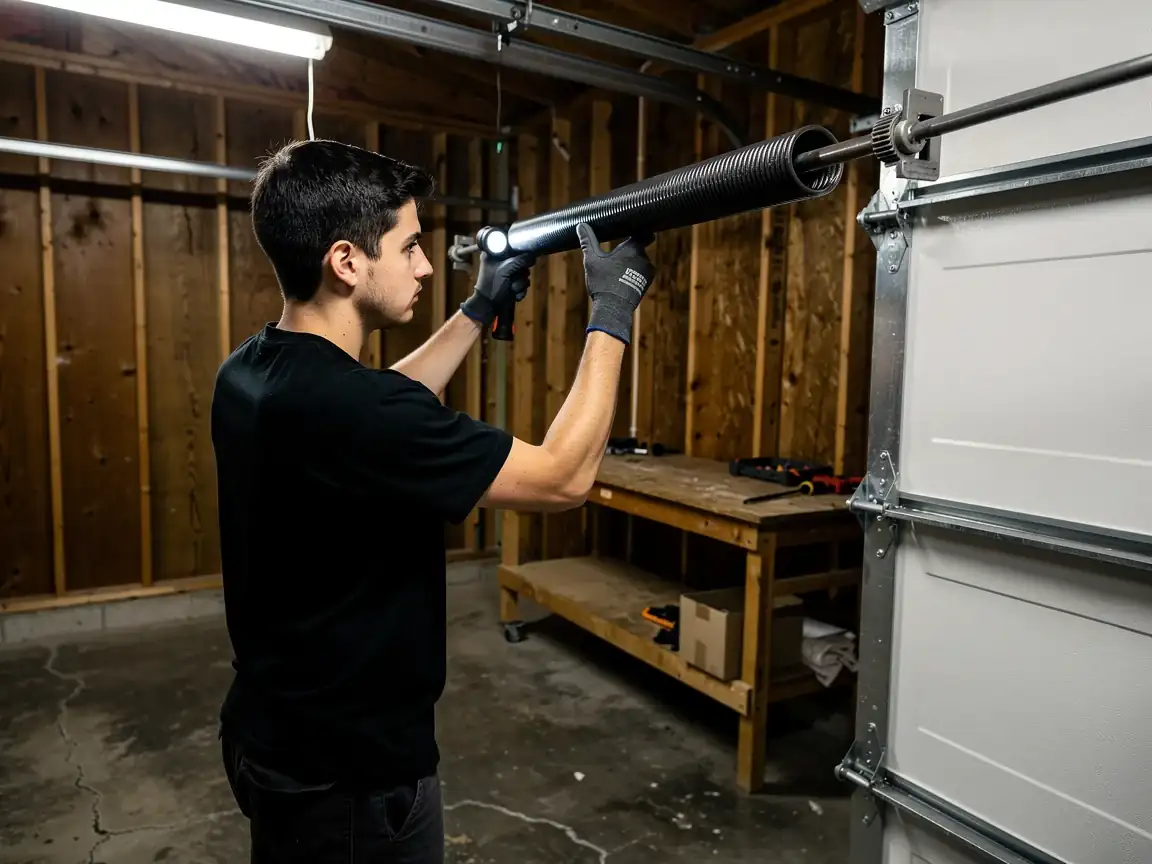
Flagstaff sits in a severe cold climate band, and that matters here for two reasons. First, winter storms cause power interruptions more often than they would somewhere milder, and an opener with no battery backup just quits - no graceful shutdown, no return to the floor, just stopped. Second, cold hits the mechanics themselves: grease stiffens in the chain-drive units common on 1980s-90s installs, extension and torsion springs lose a little tension efficiency in the cold, and a motor already working harder than it should has less margin before something gives. The same pattern shows up across Mountainaire, Kachina Village, Fort Valley, and Munds Park - six to seventeen miles out, same construction era, same cold exposure, same aging openers. None of this means every outage breaks an opener. It means an opener that's already marginal is more likely to fail during a cold snap than on a mild October afternoon, because the stress happens right when the hardware has the least reserve left to handle it.
When Waiting Is Fine
Not every power cut means a dead opener, and not every opener problem means replace-it-today. If your door still releases by hand with the manual cord and moves smoothly on the track, you can ride out a storm without a call - lift it manually, close it manually, and deal with the opener once the weather and your schedule line up. If the opener runs fine most of the time and only stutters occasionally, that's worth watching rather than replacing outright; a logic board that resets after a power blip isn't the same as one that's failing for good. Where we'd tell you not to wait is if the opener won't release manually, if the door won't move at all by hand, or if you're relying on it as your only way in or out during winter. With a median household income of $94,457 in this area, most owners here can plan a full opener swap rather than limp through another cold season on a unit from the 1980s - but there's no reason to spend money on a problem that hasn't shown up yet.
Why does my opener stop working completely during a power outage?
If your opener was installed when most houses in this area were built - between 1985 and 1991 - it almost certainly has no battery backup. Power cuts to the unit mid-cycle, so the motor just stops and the door sits wherever it was. Newer units with backup batteries can finish the cycle or hold position; original 1980s-90s hardware can't.
Is it normal for the cold to make my opener act up?
Yes, especially on older chain-drive units common in this area's housing stock. Cold stiffens the grease in the gears and chain, which makes the motor work harder, and a motor already near the end of its life has less margin to absorb that extra load. It's more a sign of age than a sign the cold itself is causing damage.
How do I get my car out if the opener dies and the power's out?
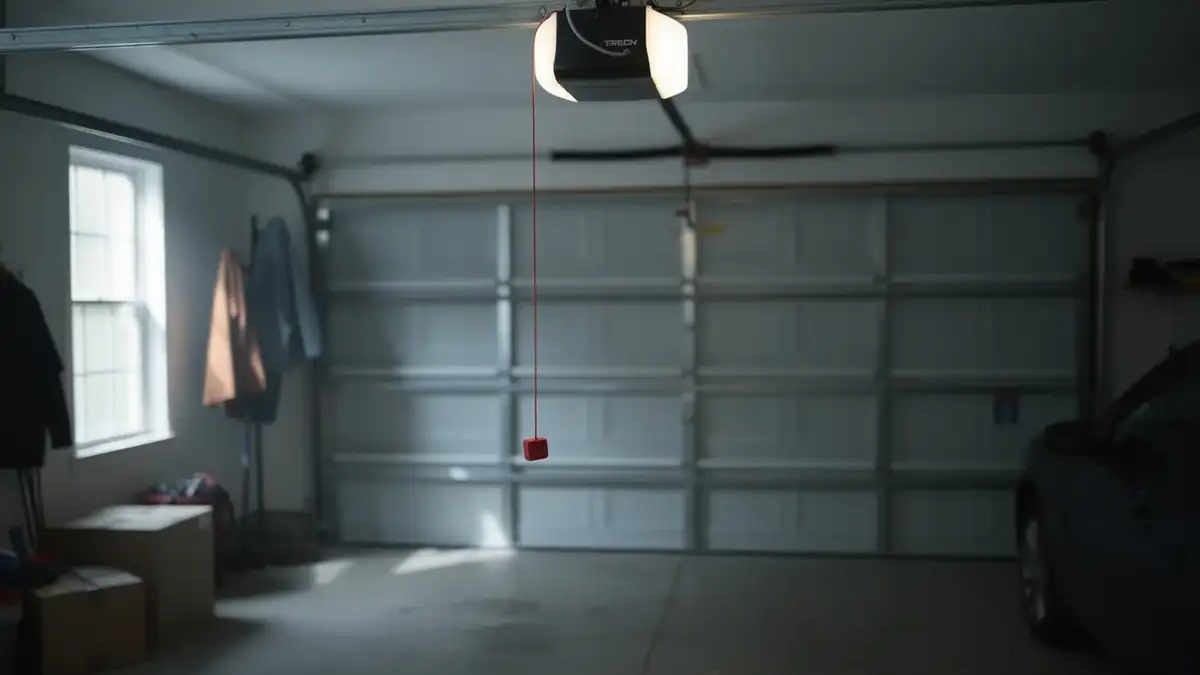
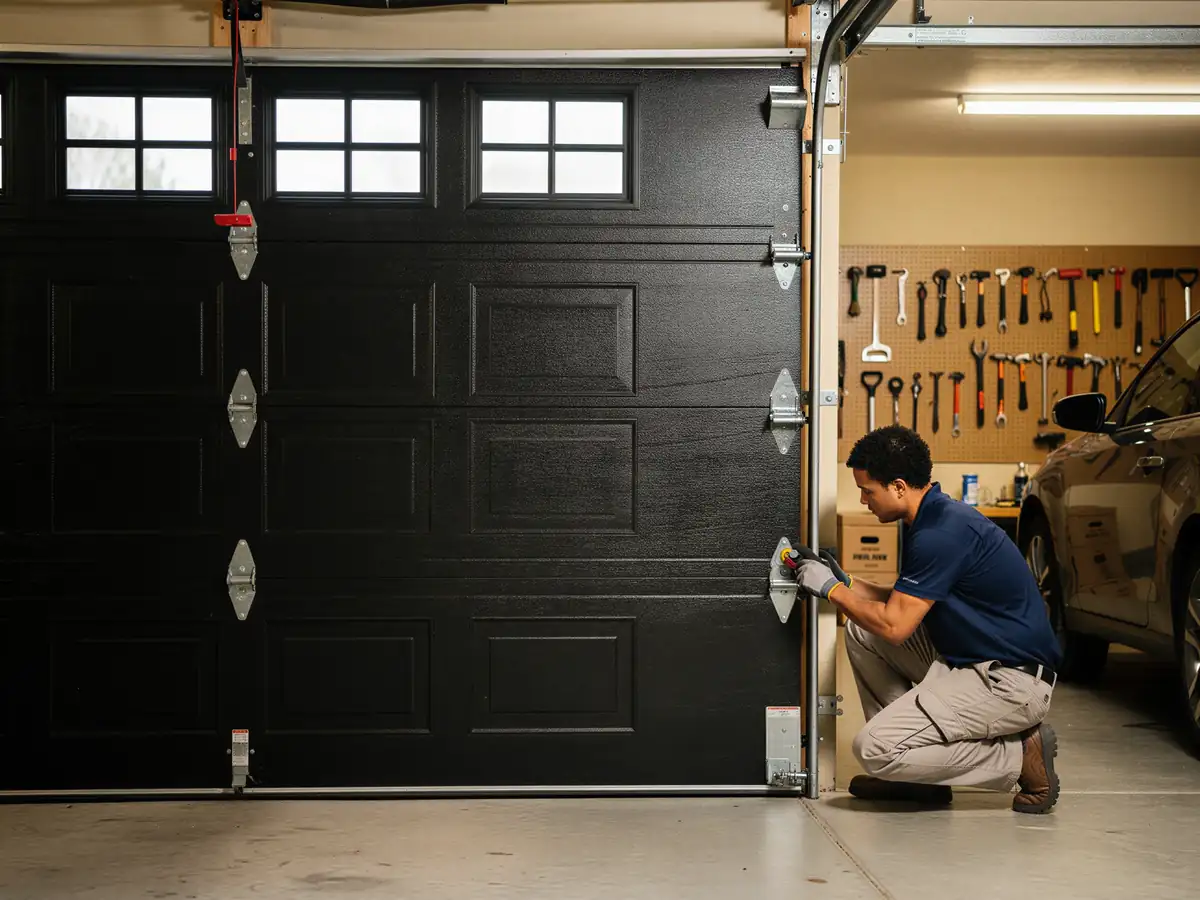
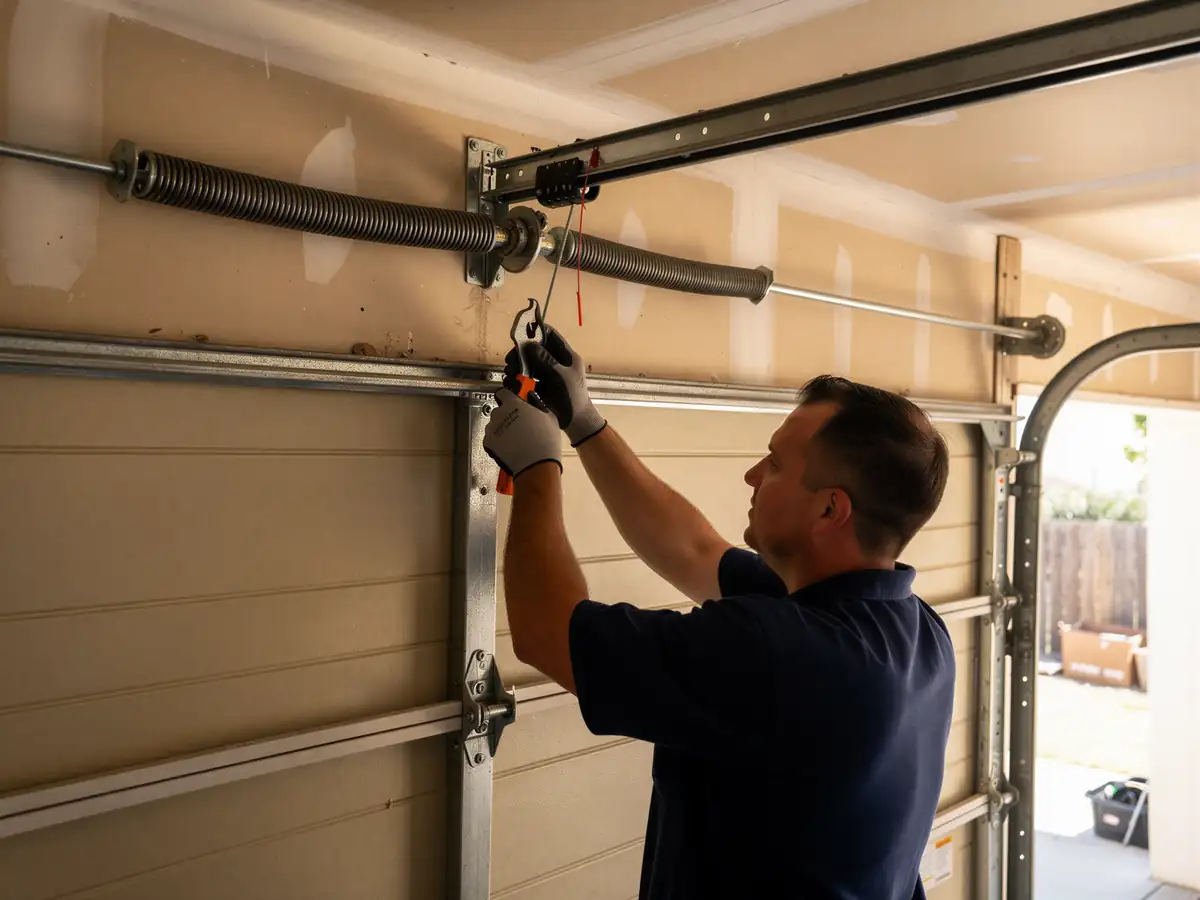
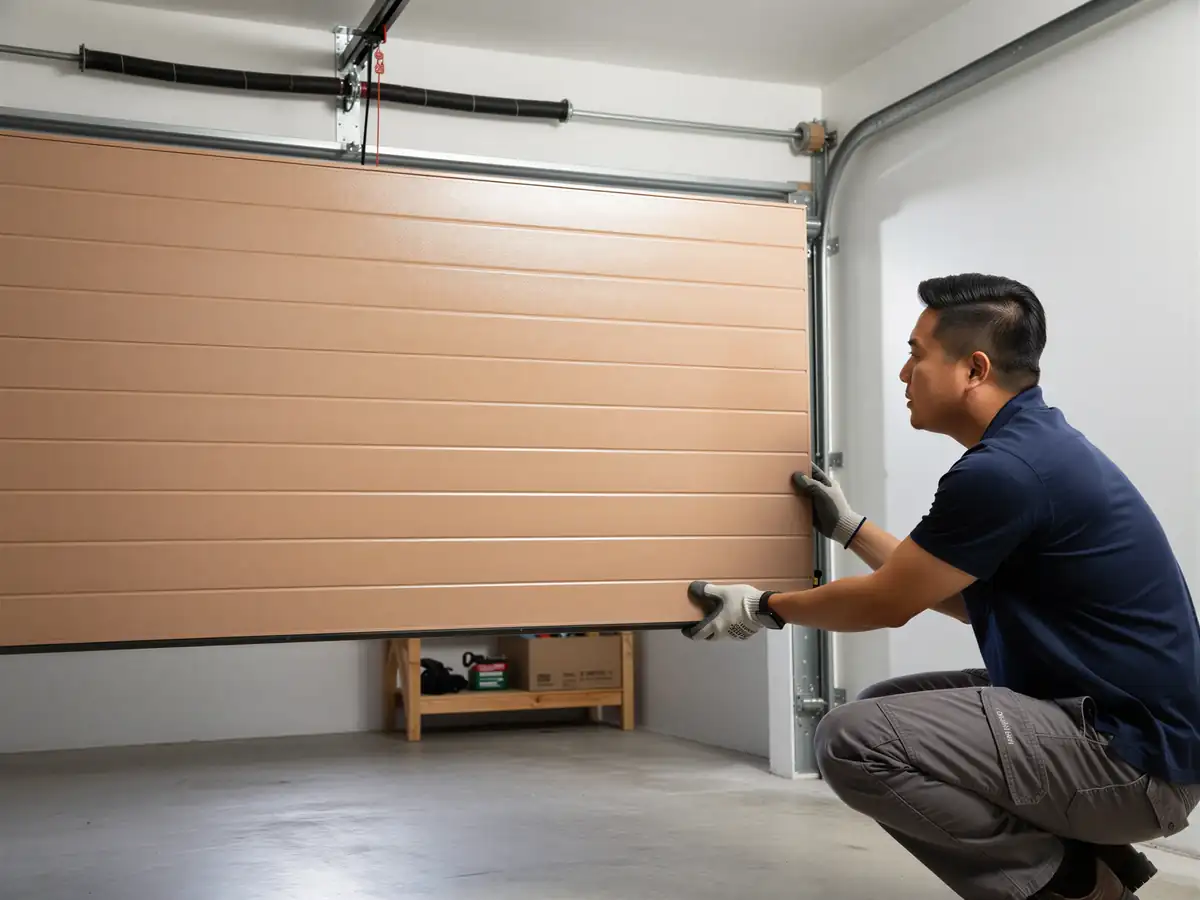
Nearly every opener has a manual release cord, usually a red handle hanging from the trolley. Pull it and you can lift the door by hand. This works whether the opener failed from age or the power just cut out. If the release cord is seized or missing, that's worth having checked before you need it in an emergency.
Ready to get your garage door sorted?
Tell us what it’s doing and where you are in Flagstaff - we’ll take it from there.