Why It Happens Here
Most garage doors and openers here date to the original construction window of 1985 to 1991
Which means the hardware is now more than thirty years old. That's not a guess about your particular house - it's the pattern across the four main pockets of this market, subdivisions built mostly in the 1980s and 90s, where the same era of door and opener is reaching the same point of failure at roughly the same time.
Cold is the part that pushes it over the edge
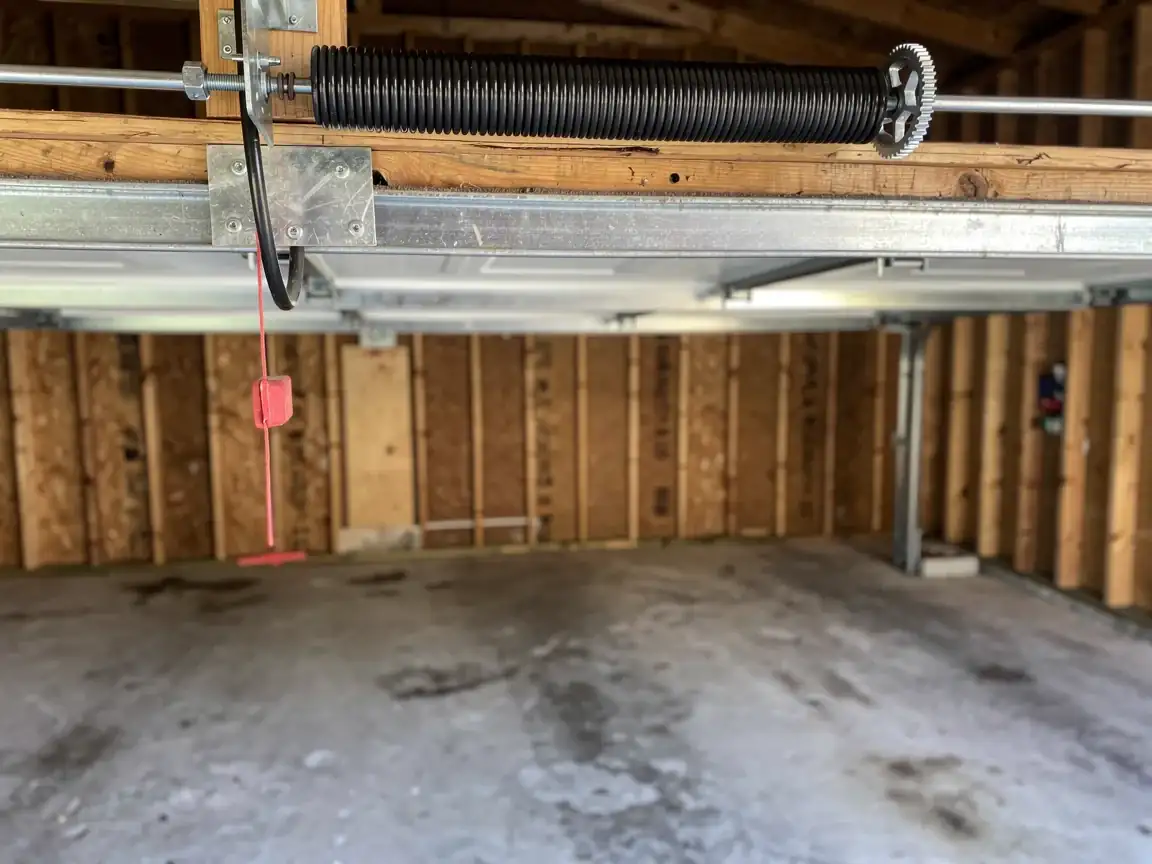
Flagstaff sits in a severe cold climate band, and that matters more to a garage door than people expect. Steel torsion springs and lift cables contract in freezing temperatures, and that repeated contraction is what snaps a spring that already has thirty-plus years of cycles on it. A spring rated for a certain number of cycles doesn't care what year it is - it cares how many times it's wound and unwound, and cold makes each of those cycles harder on the metal.
Openers from that same construction era are usually on their second or third circuit board by now
And the original chain-drive units weren't built with today's cold-weather lubricant specs. Put an aging spring and an aging opener in the same door, in the same winter, and you get the calls we get.
The Cost of This Job
We're not going to put a number here that we can't stand behind - every door is different, and quoting a price without seeing the spring size, the door weight, and what the opener is doing wrong would be a guess dressed up as a fact. What we can tell you is how the decision usually plays out for homeowners in this area.
With 4,536 owner-occupied houses in this service area and a median household income of $94,457, most of the calls we get are homeowners replacing original hardware rather than renters calling a landlord. That changes the conversation - owners are deciding whether to replace a spring alone or replace the spring and opener together, since both are often the same age and failing for the same cold-climate reasons.
The honest limitation: if your opener is also original to the house, fixing just the spring is sometimes a short-term patch. We'll tell you when that's the case instead of just fixing what's in front of us. Parts for some of the original chain-drive openers from that era are also slower to source than current models, and that lead time is worth knowing before you decide.
What the Repair Takes
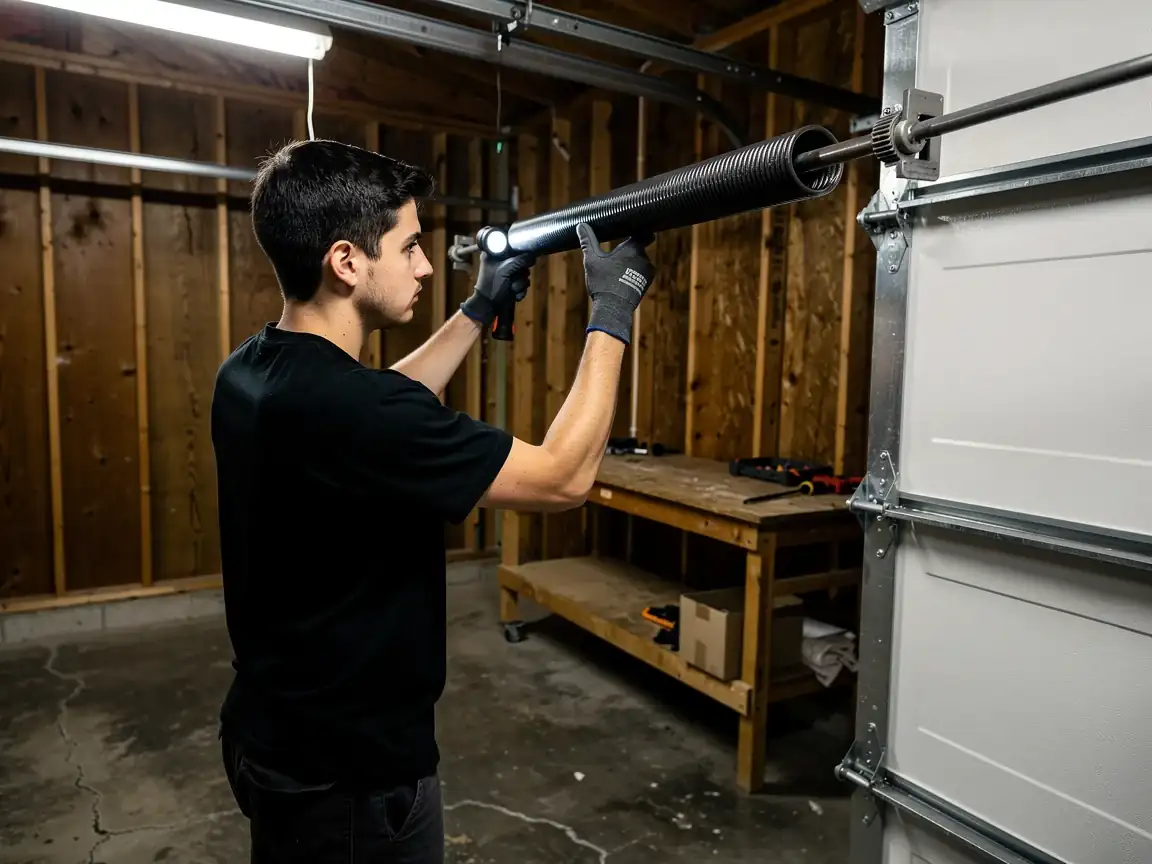
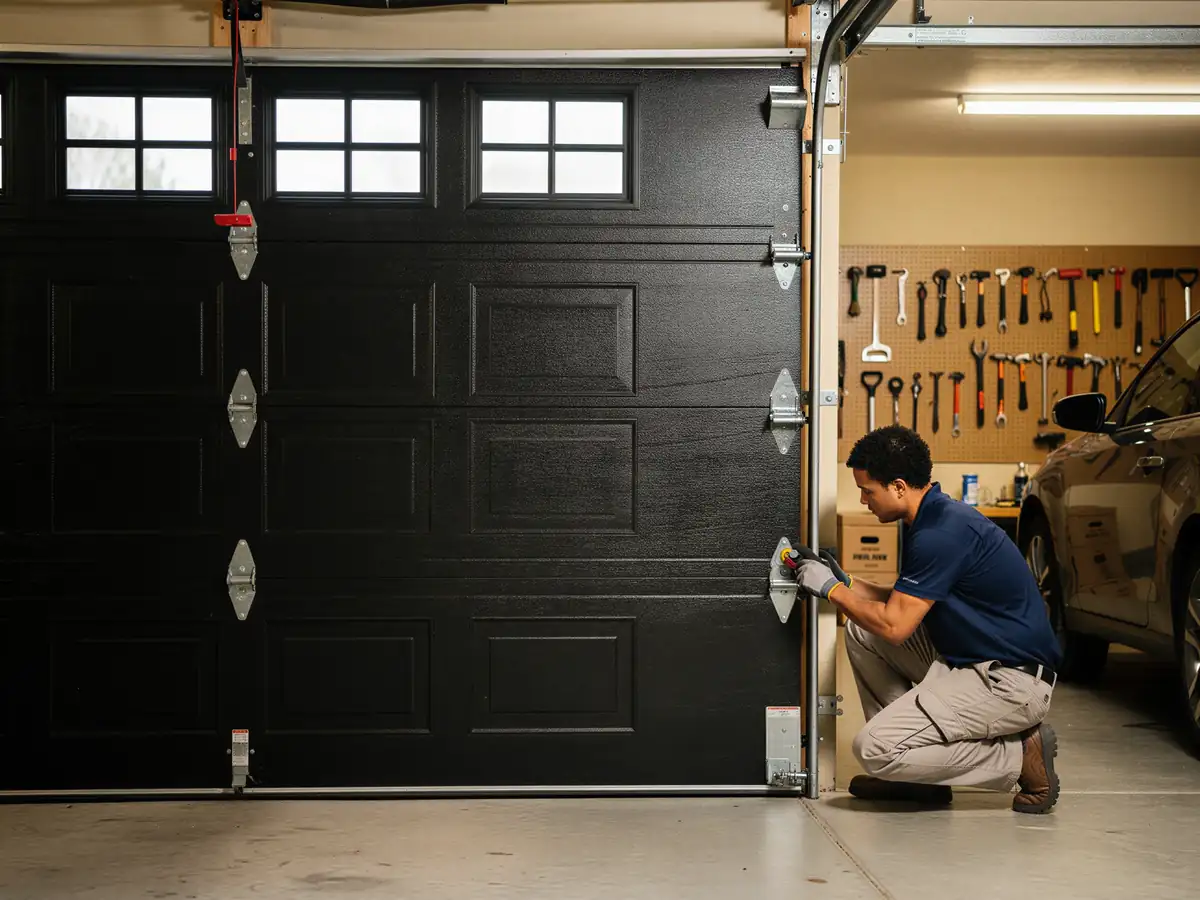
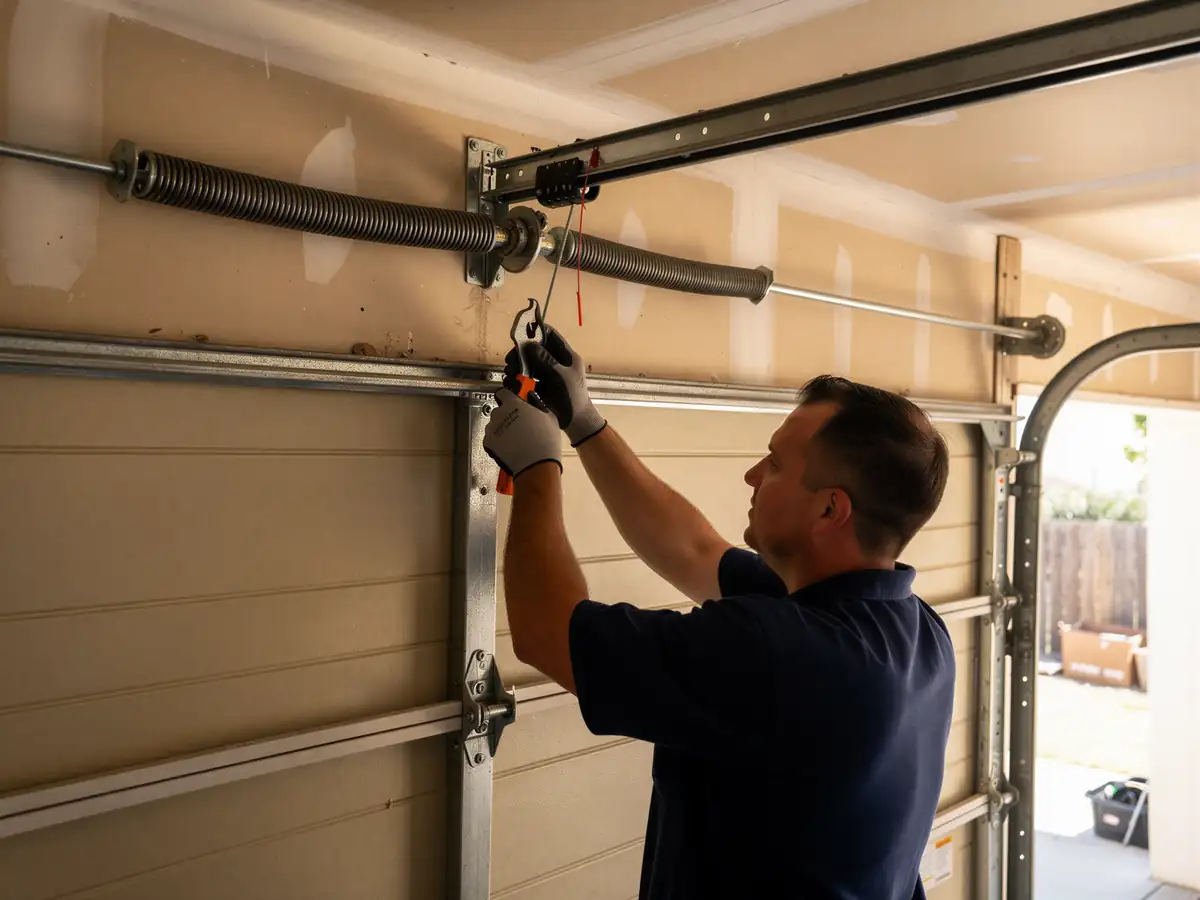
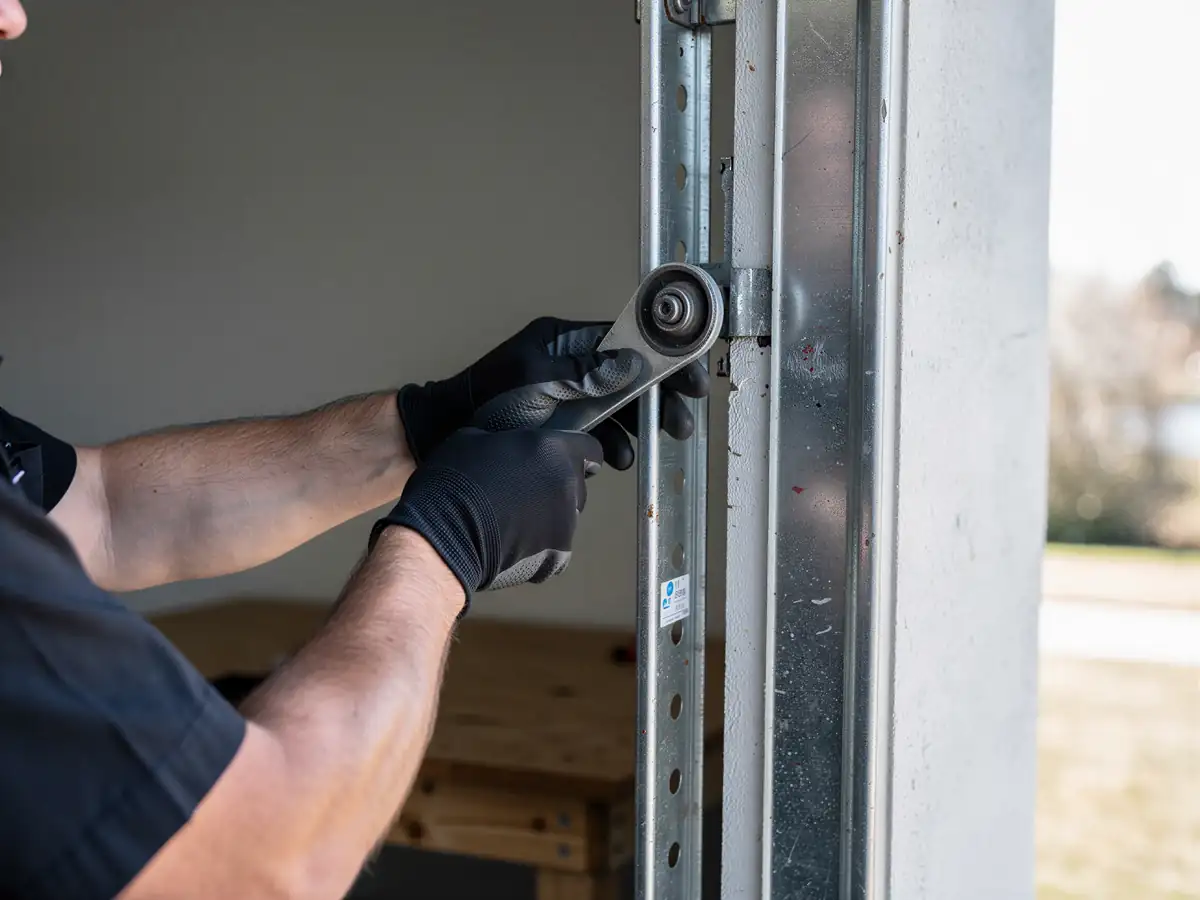
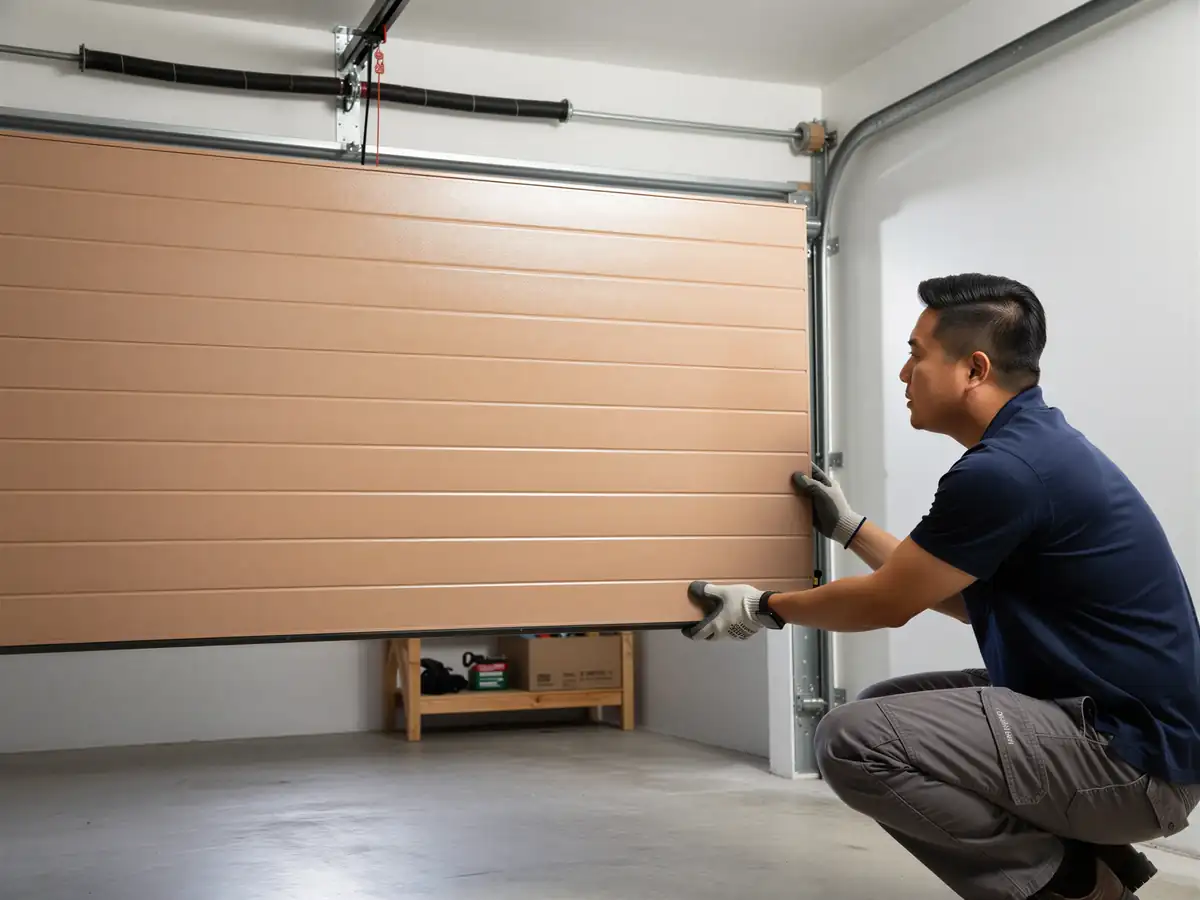
A torsion spring replacement means unwinding the old spring under tension, pulling the shaft, fitting new springs matched to your door's weight, and re-tensioning before testing the door through a full cycle. On a door this age, we're also checking the cables, the drums, and the bearing plates, because thirty-plus years of winding on the same hardware often means more than one part is near the end of its life at once.
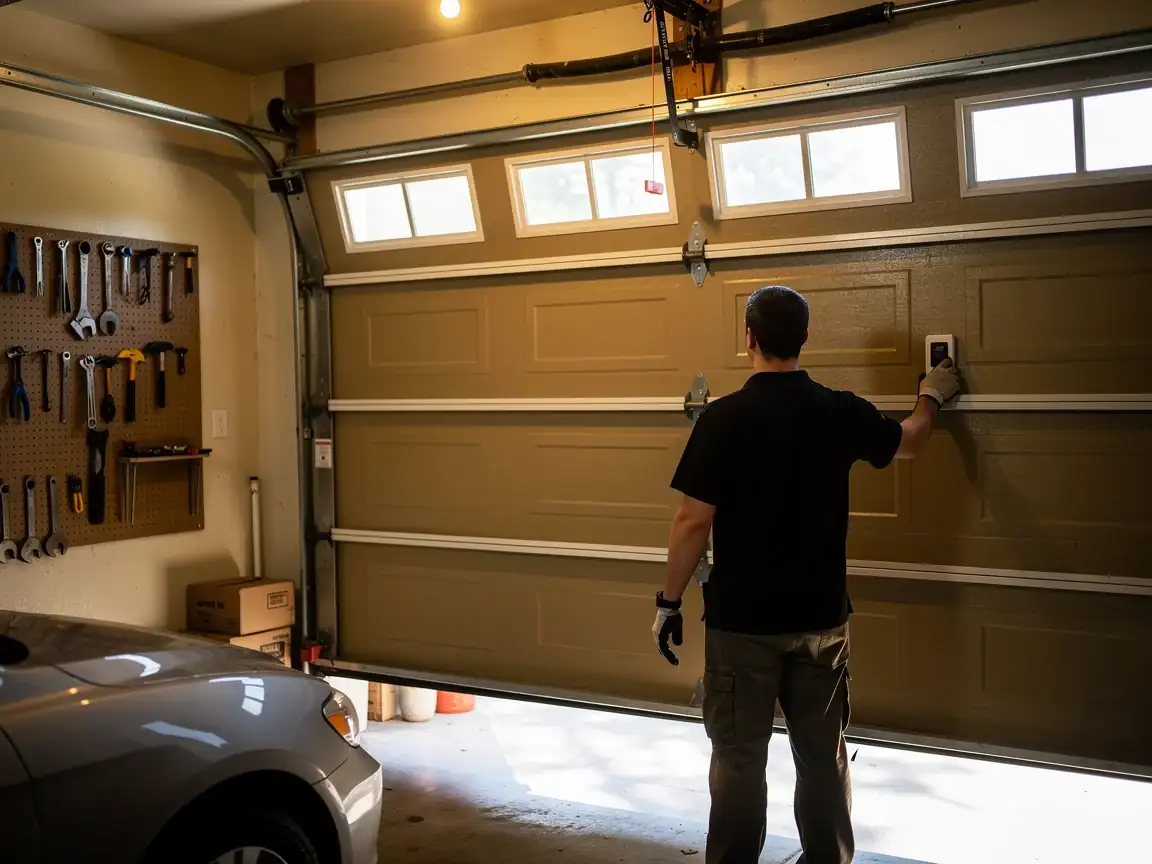
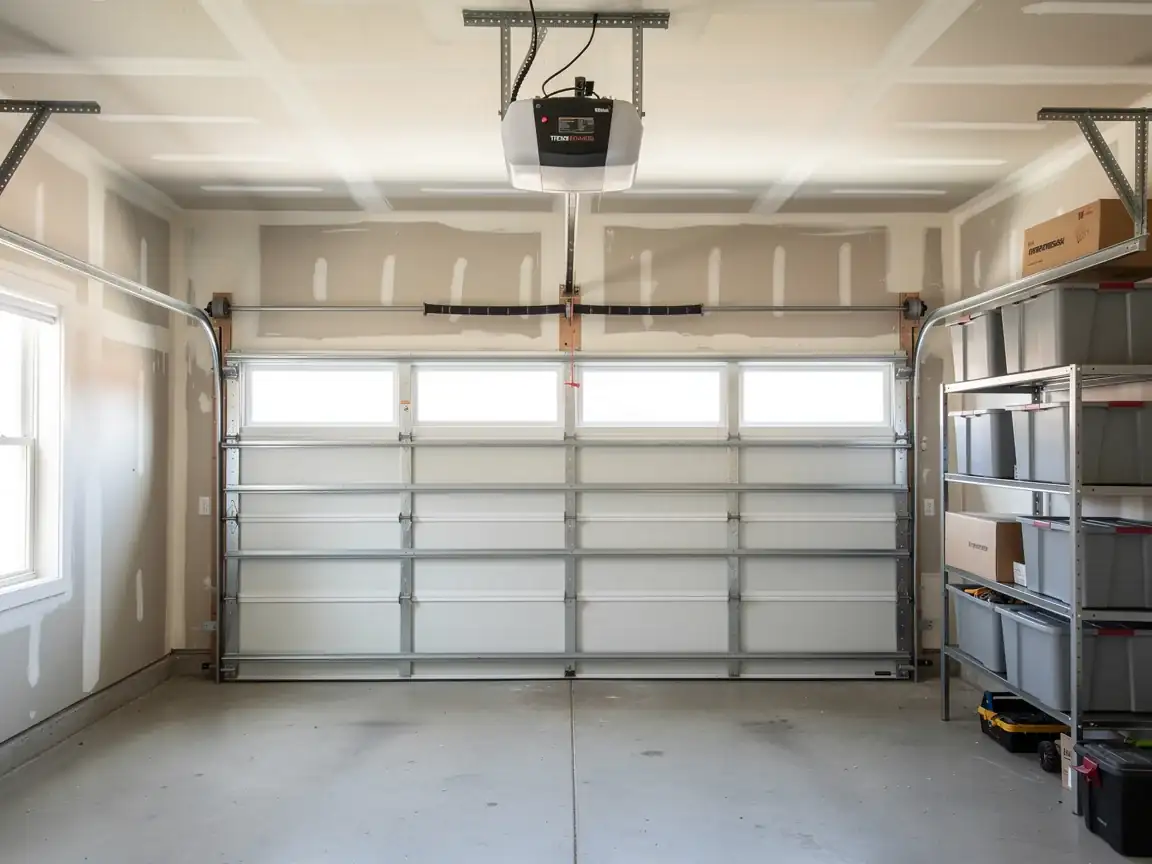
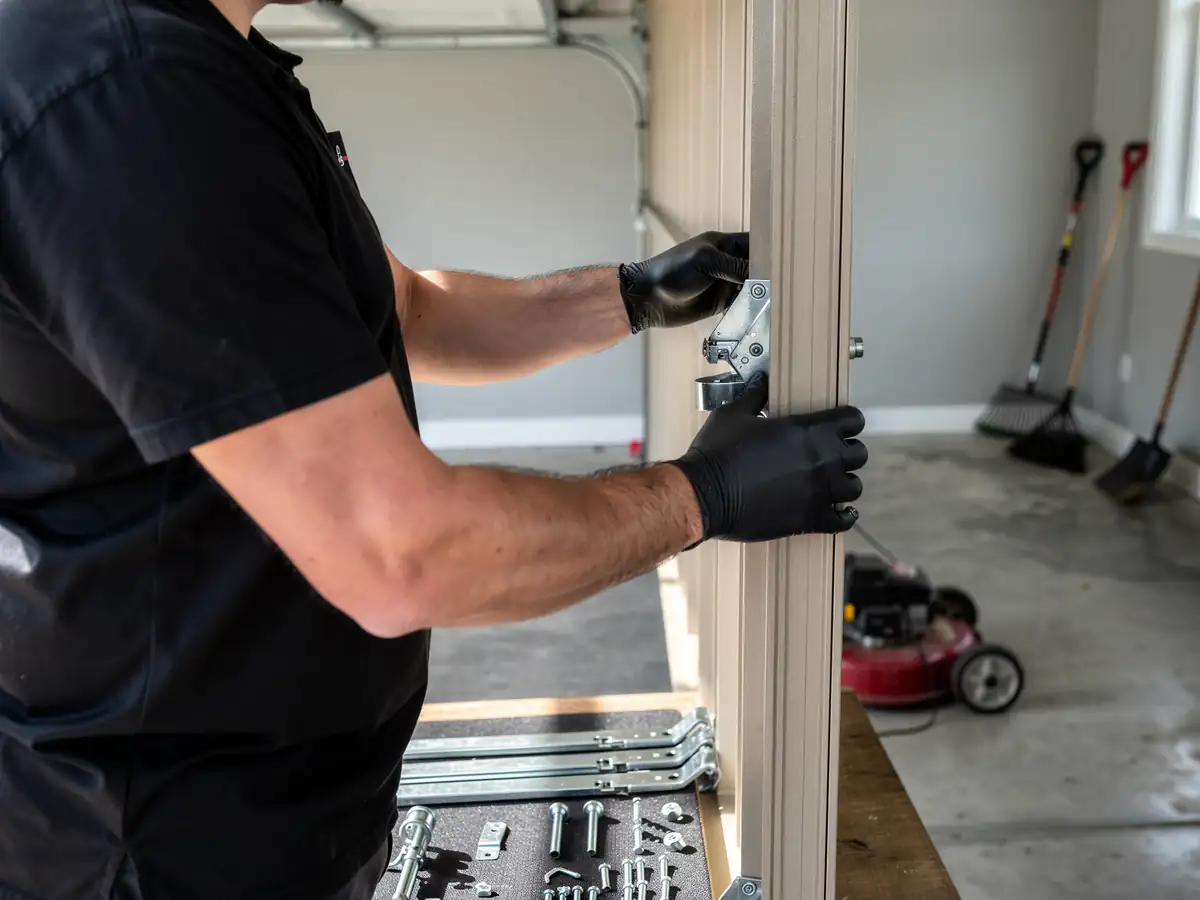
If the opener is part of the job, that's a separate task - disconnecting the old unit, mounting the new rail and motor, and reprogramming the safety sensors so the door reverses properly on contact. We test both the spring work and the opener work independently before we call a job done, because a door that opens smoothly on a warm afternoon can still bind once the temperature drops again.
We work across Flagstaff and out to Mountainaire, Kachina Village, Fort Valley, and Munds Park, and the farther jobs mean longer drive time built into the day, which is part of why we ask what the door is doing before we come out.
What You Are Seeing
The clearest sign is a door that won't budge and a loud bang you heard right before it stopped
That's a torsion spring letting go, usually on a cold morning when the metal was already under more strain than usual. A door that opens unevenly, with one side higher than the other, points to the same spring problem before it fully breaks.
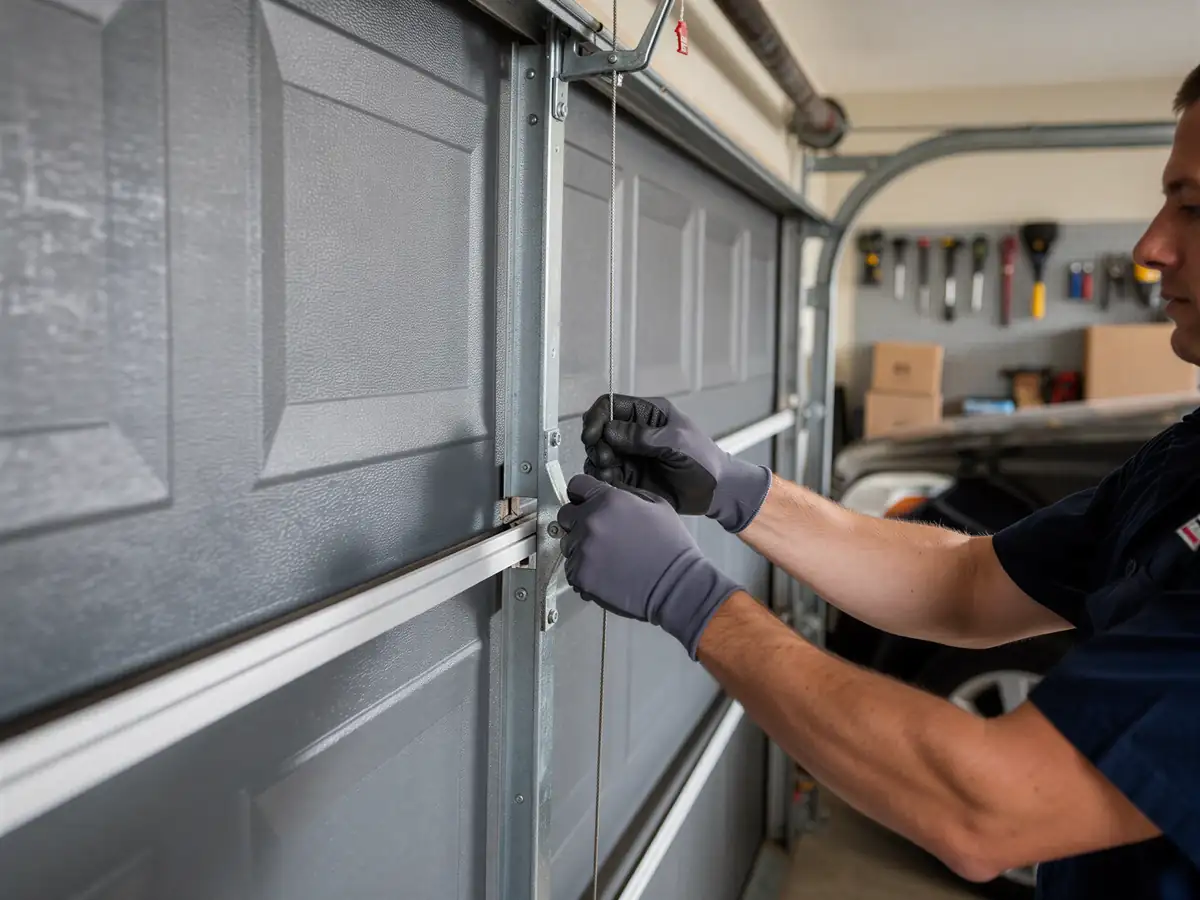
A cable that's gone slack and looped loose at the bottom bracket is the other common sight
Often paired with a door that looks like it's sitting crooked in the track. If the opener is the issue instead, you'll usually hear the motor running without the door moving, or see the door reverse partway up for no clear reason.
None of these are worth forcing
A door under spring tension that's partially failed can drop without warning, and an opener straining against a bad spring burns out faster than it should. If you're hearing a new noise or seeing the door move unevenly, that's the window to call before it becomes a full stop.