Why It Happens Here
Most of the housing in and around Flagstaff went up between 1985 and 1991
With a median build year of 1985, and that generation of garage door track is now pushing forty years old. Across the four main pockets of this stock, the steel track brackets were fastened to framing that's shifted a little with every freeze-thaw cycle since. Flagstaff sits in a severe cold climate band, and that matters more for tracks than almost any other part of the door. Cold steel contracts, the mounting screws back out a fraction of a turn at a time, and a track that was dead straight in 1986 ends up with a slow bow nobody notices until a roller finally pops free of it.
We also see this from ice
Snow melts off a roof during the day and refreezes at the base of the track overnight, and if a roller hits even a thin shelf of that ice, it can jump the rail. On older housing stock built before double-track reinforcement was standard, one hard jolt is sometimes all it takes. This isn't a defect in the door itself - it's forty years of thermal cycling on hardware that was never meant to last past the first few owners.
The Cost of This Job
An off-track door is one of the harder repairs to price over the phone, because the range between a quick fix and a bigger one is wide. A door that's slipped one roller out of the track near the bottom usually takes a straightforward realignment. A door that's come off at the top, especially on a double-wide, often means a bent track section and sometimes a bent panel edge where the roller dragged against it going down.
We won't quote a number without looking at the track, the rollers, and the panel it came off of, because guessing on this one either lowballs a job that needs a track swap or scares off someone who only needed ten minutes of adjustment. What we can tell you: in this service area, where most doors and openers are original to houses built in that 1985-1991 window, the opener drive gear and the track brackets tend to fail around the same age, so if your track is bent, it's worth having us check the opener's travel limits while we're there instead of calling us back in six months for a second visit.
What the Repair Takes
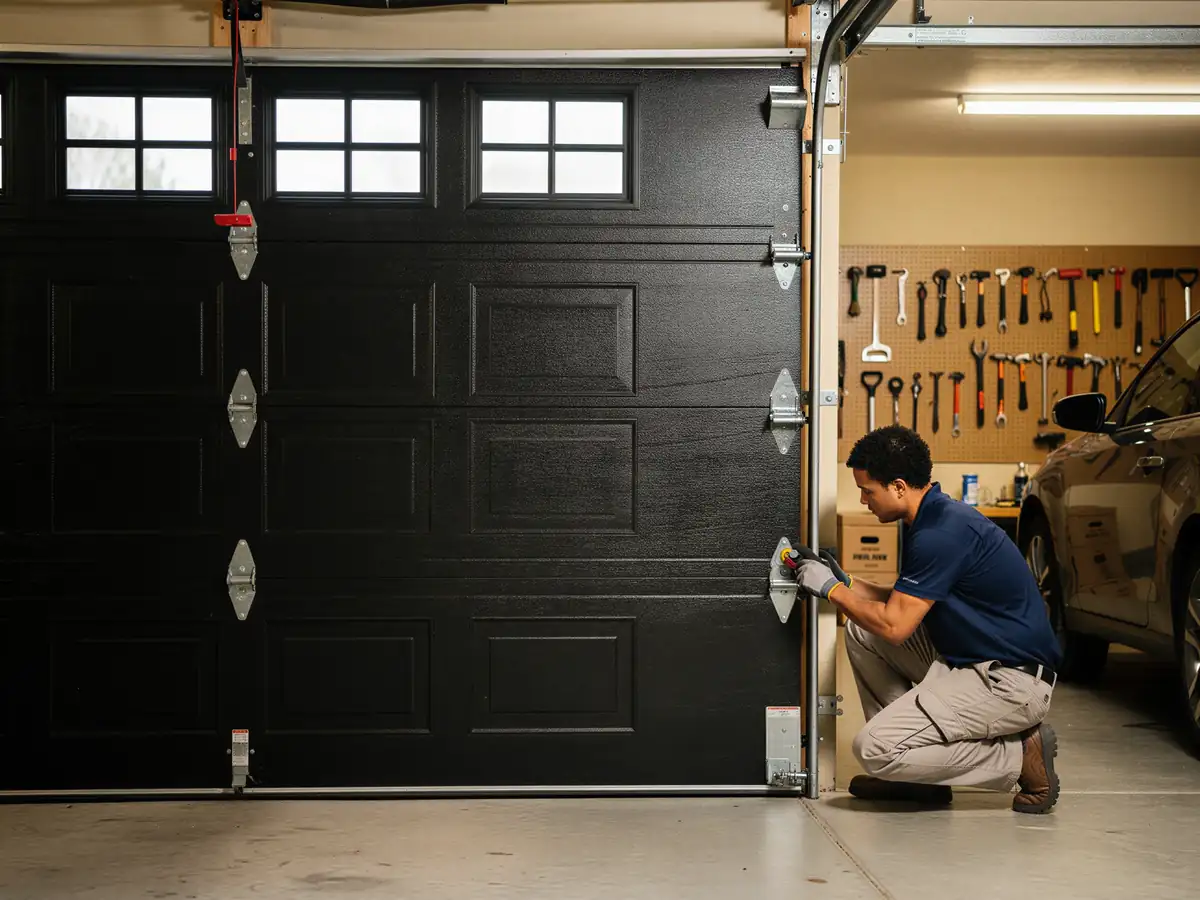
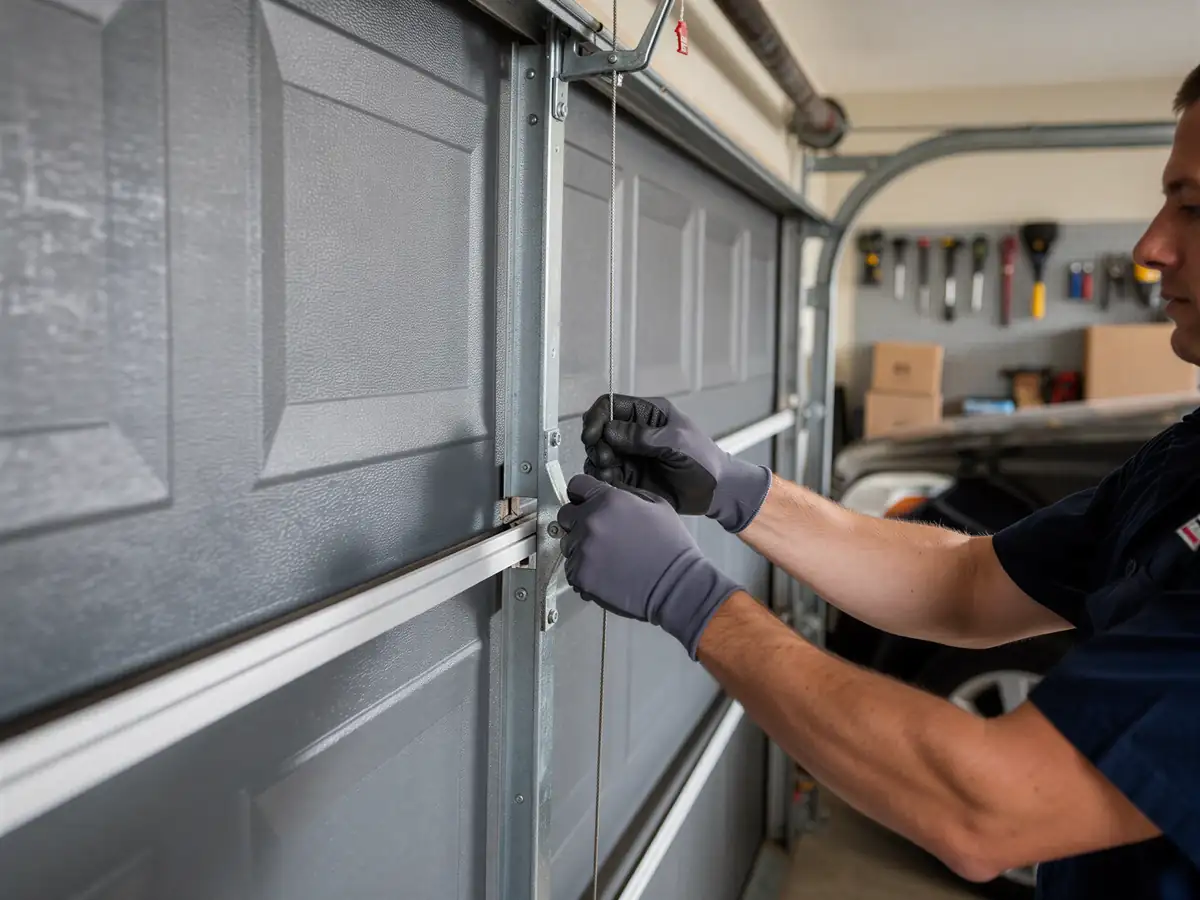
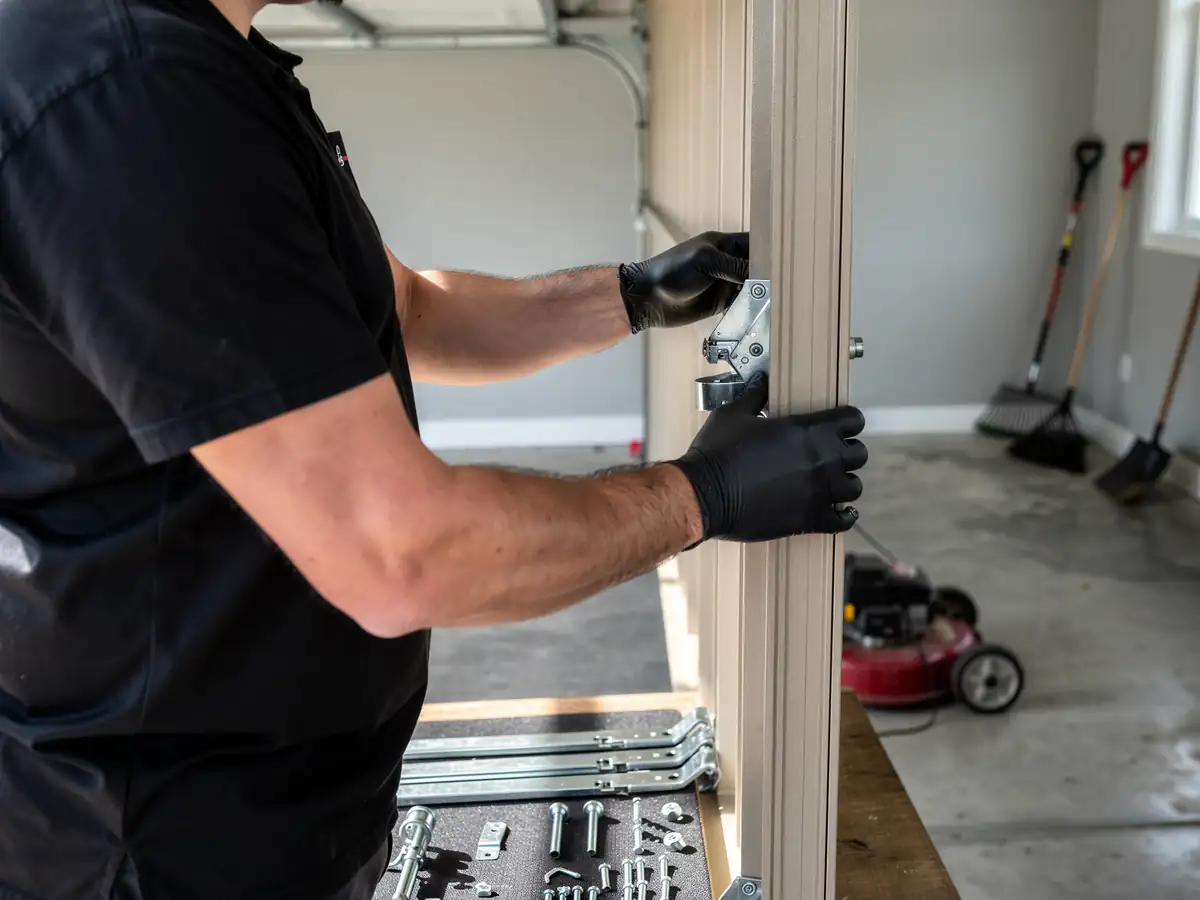
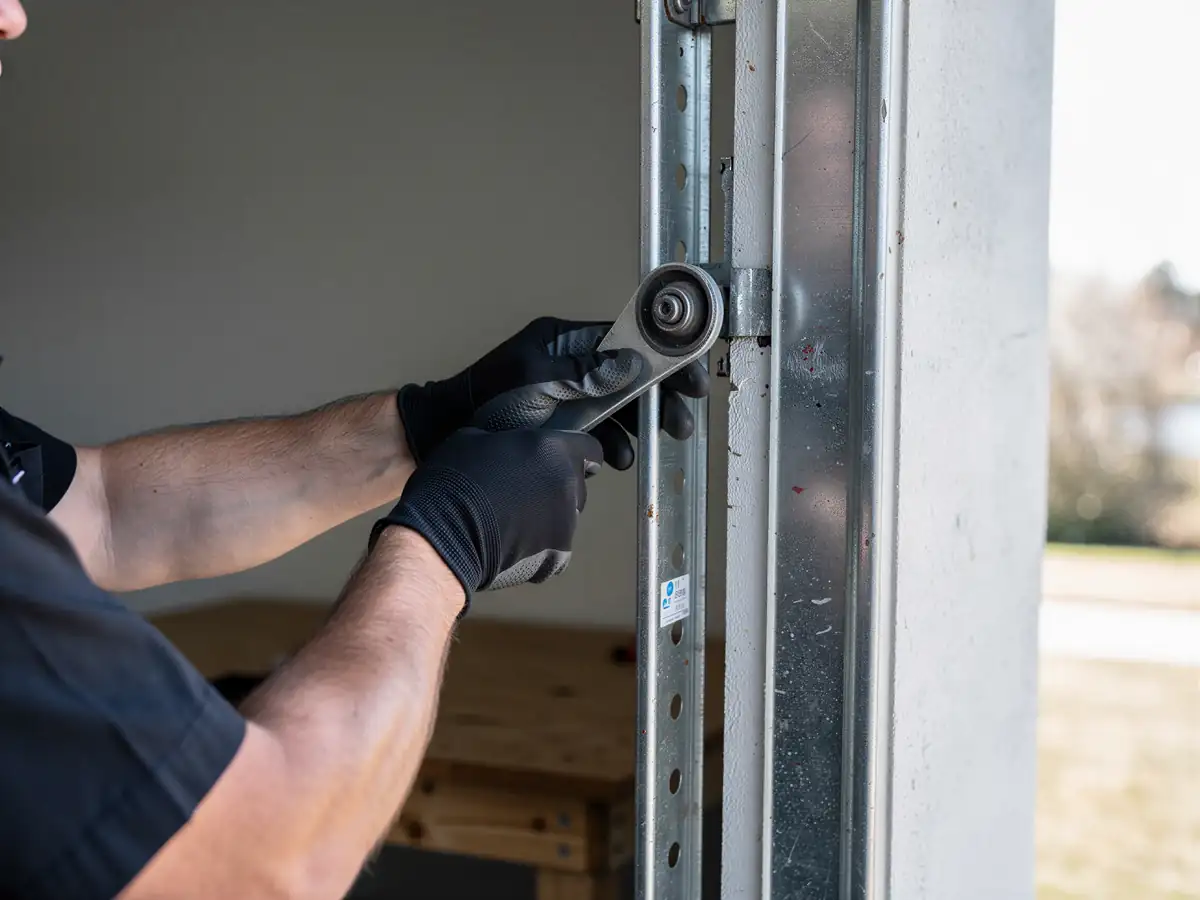
First we check whether the track itself is bent or just loose. A loose track - screws backed out of the jamb, brackets pulled a little from the stud - gets re-set and re-torqued, and the door goes back on its rollers in one visit. A bent track is a different job: we don't hammer a bent track straight, because steel that's been bent once work-hardens at the bend point and will fail there again, usually sooner. That section gets replaced.
While the door's off its rollers, we check the rollers themselves. Nylon rollers from the original install are brittle after decades of cold, and a cracked roller is often what caused the derailment in the first place, not the other way around. We also check the cable on that side, since a door coming off track under tension can fray a cable without snapping it outright, and a frayed cable left alone is the next emergency call.
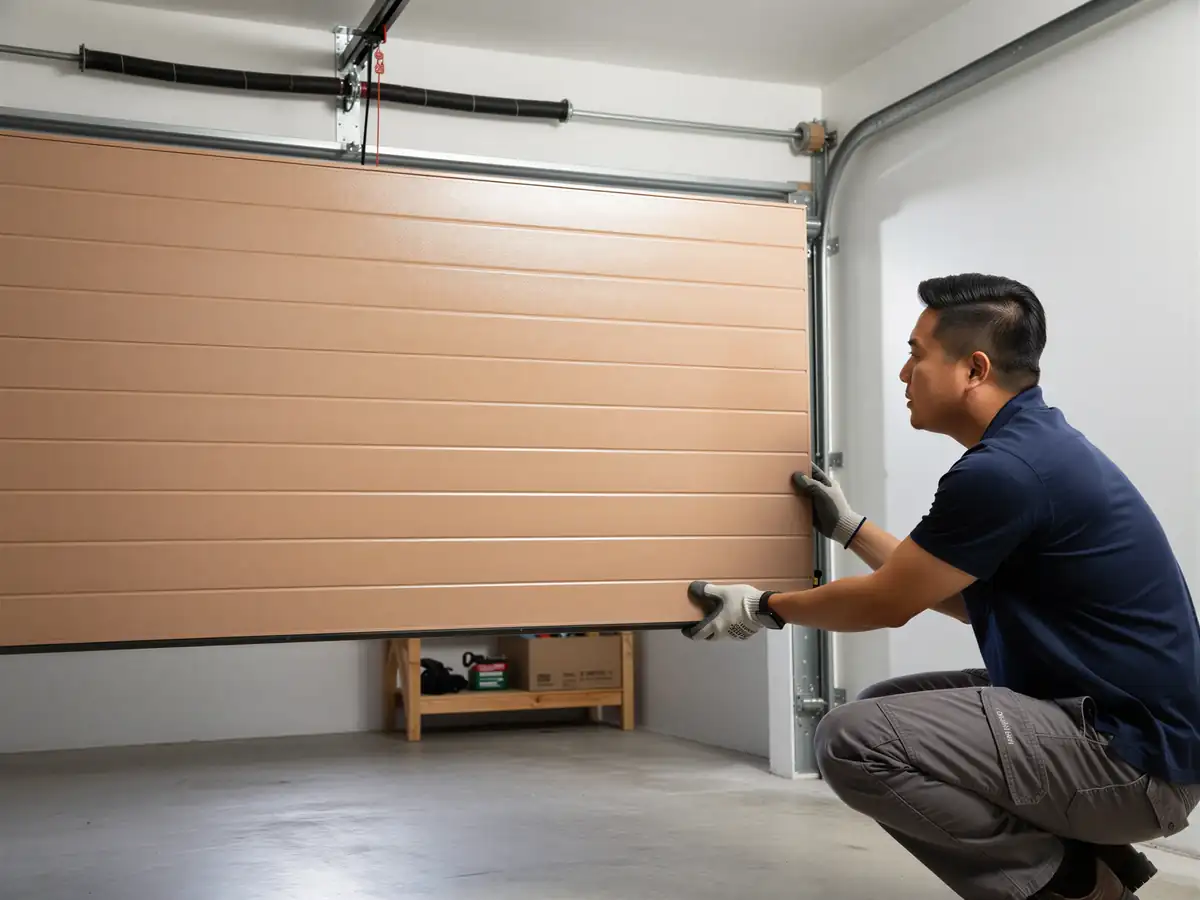
The one thing we won't do is force a bent panel back into shape to save the cost of replacing it - a panel that's been bowed by a dragging roller rarely sits flush again, and a door that doesn't seal flush against a Flagstaff winter isn't worth the shortcut.
What You Are Seeing
The clearest sign is a visible gap between the roller and the track, usually at one bottom corner
With the door sitting crooked in the opening instead of square. You'll often hear it before you see it - a grinding or scraping sound as the opener tries to pull a door that isn't riding where it should. Some doors stop partway and reverse on their own, which is the opener's safety sensor catching the misalignment, not a sign the opener itself is broken.
If the door won't move at all and you can see daylight between a roller and its track
Stop trying the opener. Pulling a jammed door with the motor can bend the track further or snap a cable under load. In this part of the country, a door stuck half-open through a cold night is also a quick way to let heat out and pipes freeze, so this is one we treat as same-day whenever we can.