Flagstaff's 1980s housing stock and severe cold are hard on garage door cables. Here's why they fray and snap here, and what the repair actually involves.
Most houses on the Flagstaff grid went up between 1985 and 1991, with the median right at 1985. That one decade of construction means a huge share of the doors we see still carry their original lift cables, or a first replacement set installed decades ago with the same hardware. Cable life is tied to cycle count and to temperature, and Flagstaff sits in a severe cold climate band, not a mild one. Overnight lows stress-cycle the galvanized wire daily through the winter months, and the zinc coating that's supposed to protect the strands against corrosion gets brittle faster in that kind of swing. A cable that would last another five years in a warmer town starts shedding strands here, usually at the drum end where it wraps tightest. Add in a few decades of sun exposure on south-facing garages and you get the frayed, kinked cable that's one hard close away from letting go. This isn't a design flaw in the door - it's just what happens when 1980s-era hardware meets a cold, high-elevation climate for thirty-plus years. The four main pockets of similar-era stock around town (we break those out on their own pages) see the same pattern for the same reason.
The Cost of This Job
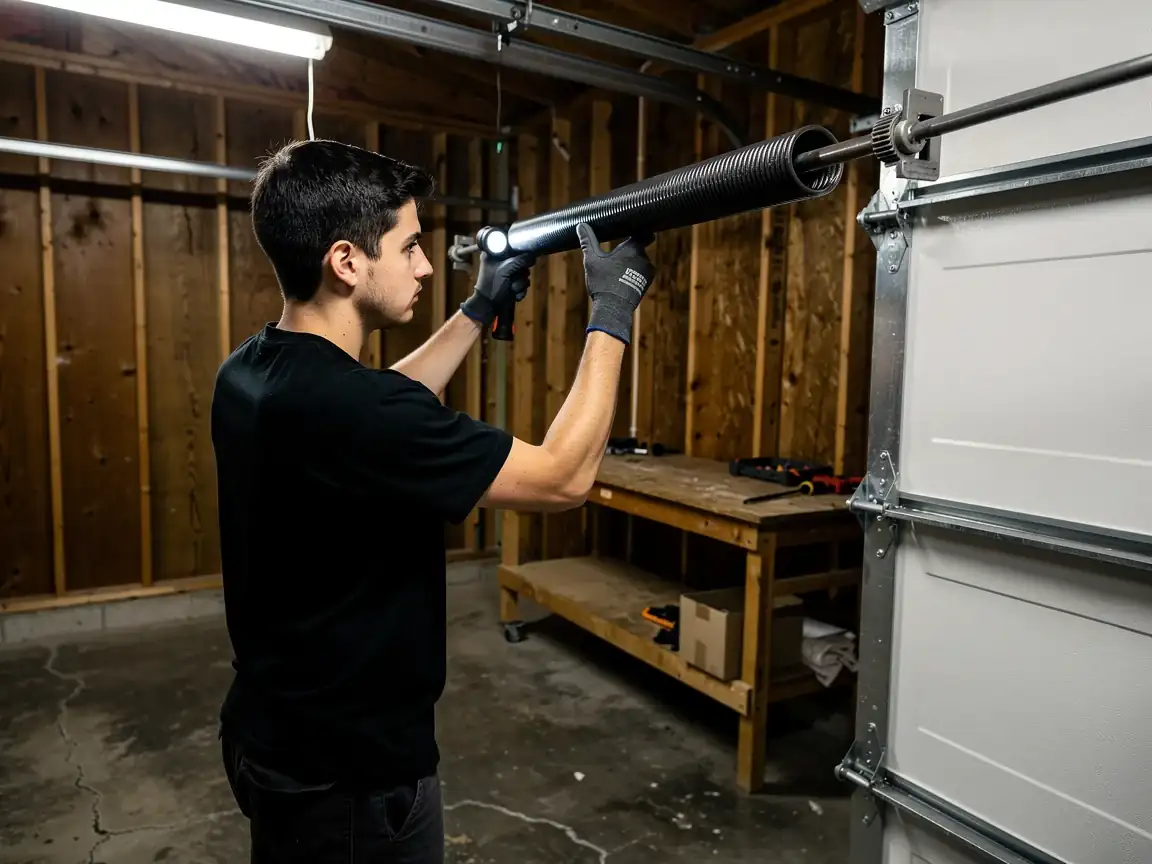
We don't post a flat number here because cable repair on a torsion system is almost never a standalone job - the cable rides the same drum and shaft as the spring, and if one side's cable is frayed, the spring on that side has usually put in the same mileage. A tech needs to look at the drum grooves, the shaft, and the opposite side before quoting, because fixing just the cable and leaving a thirty-five-year-old spring in place is a callback waiting to happen. What we can tell you: this is a parts-and-labor job, not a parts-only one, since cable work means releasing spring tension safely, and that's not something to price sight unseen or attempt yourself. If you're calling around for a number before anyone's looked at your door, ask what they're including - cable-only quotes that don't mention the drums or the spring are usually incomplete.
What the Repair Takes
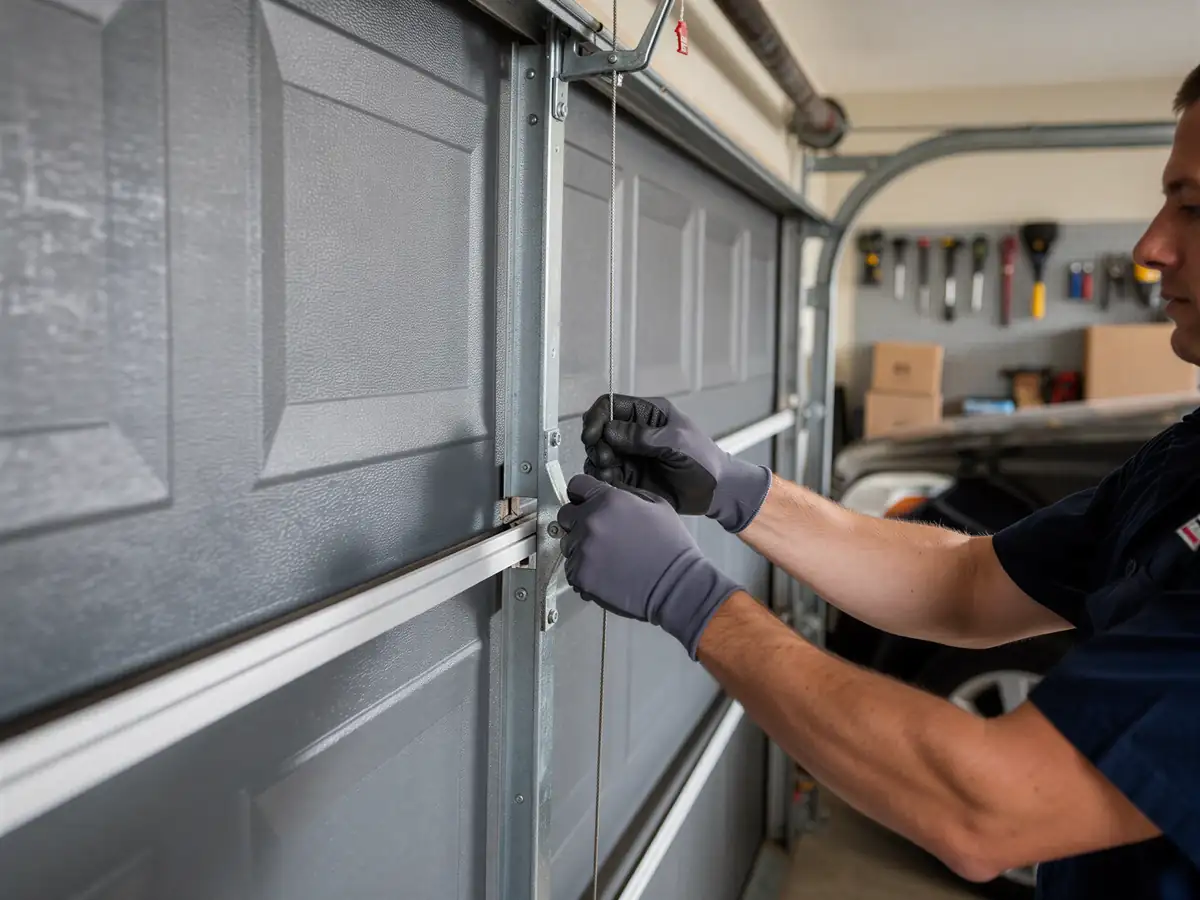
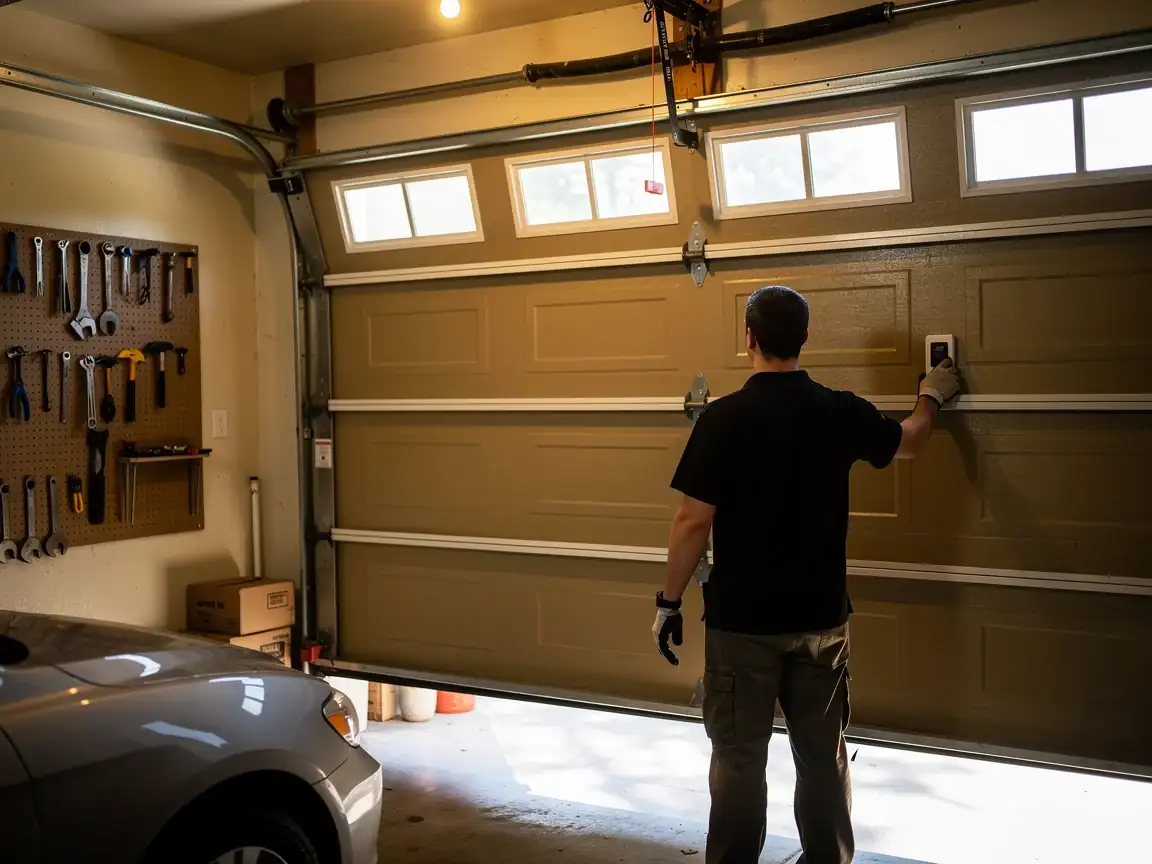
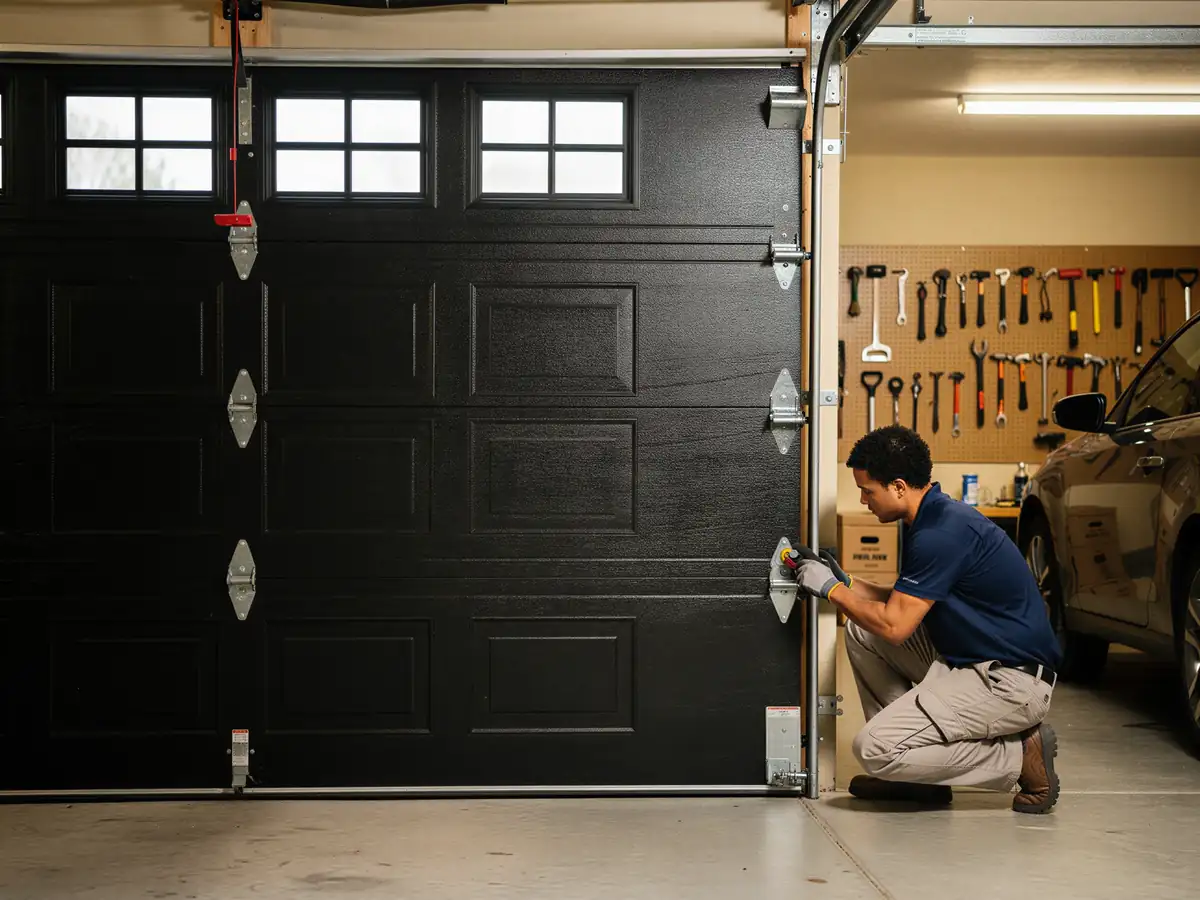
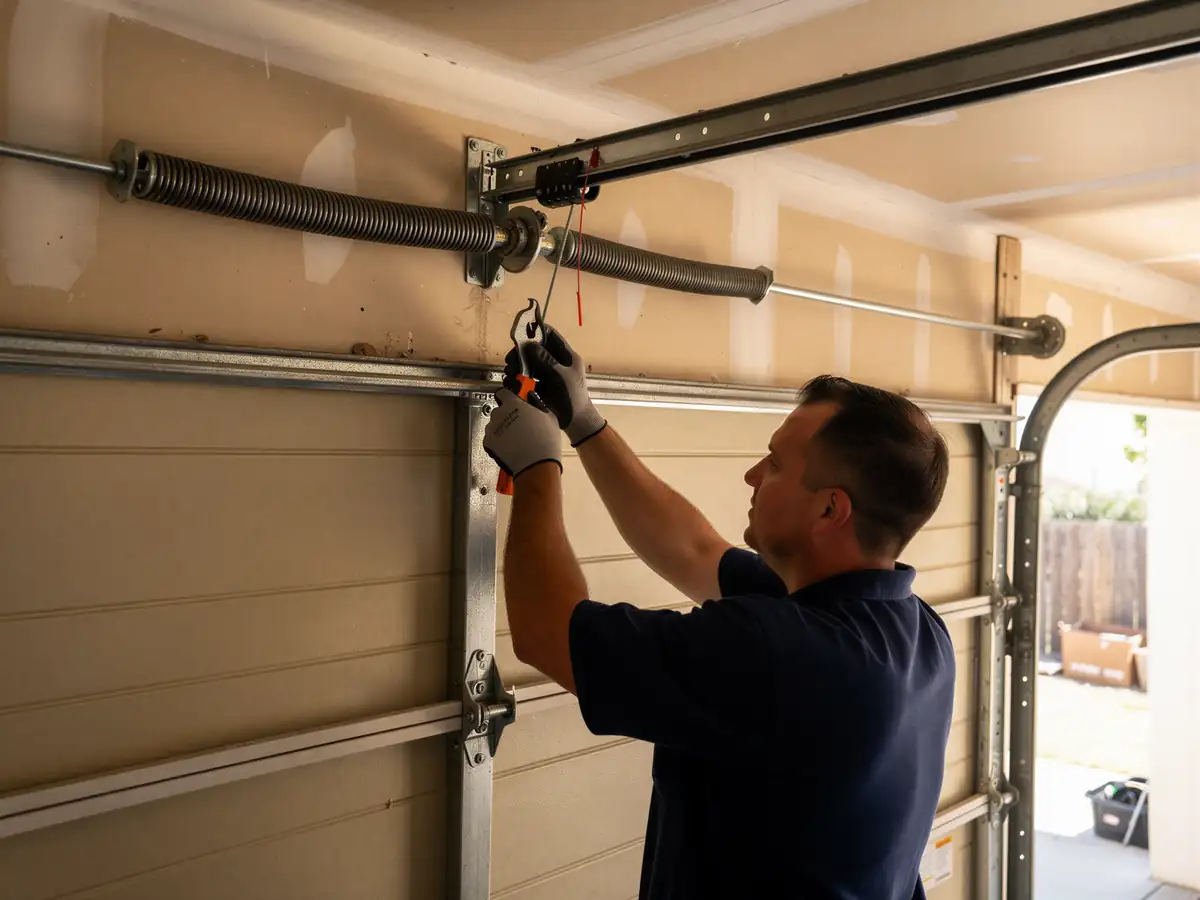
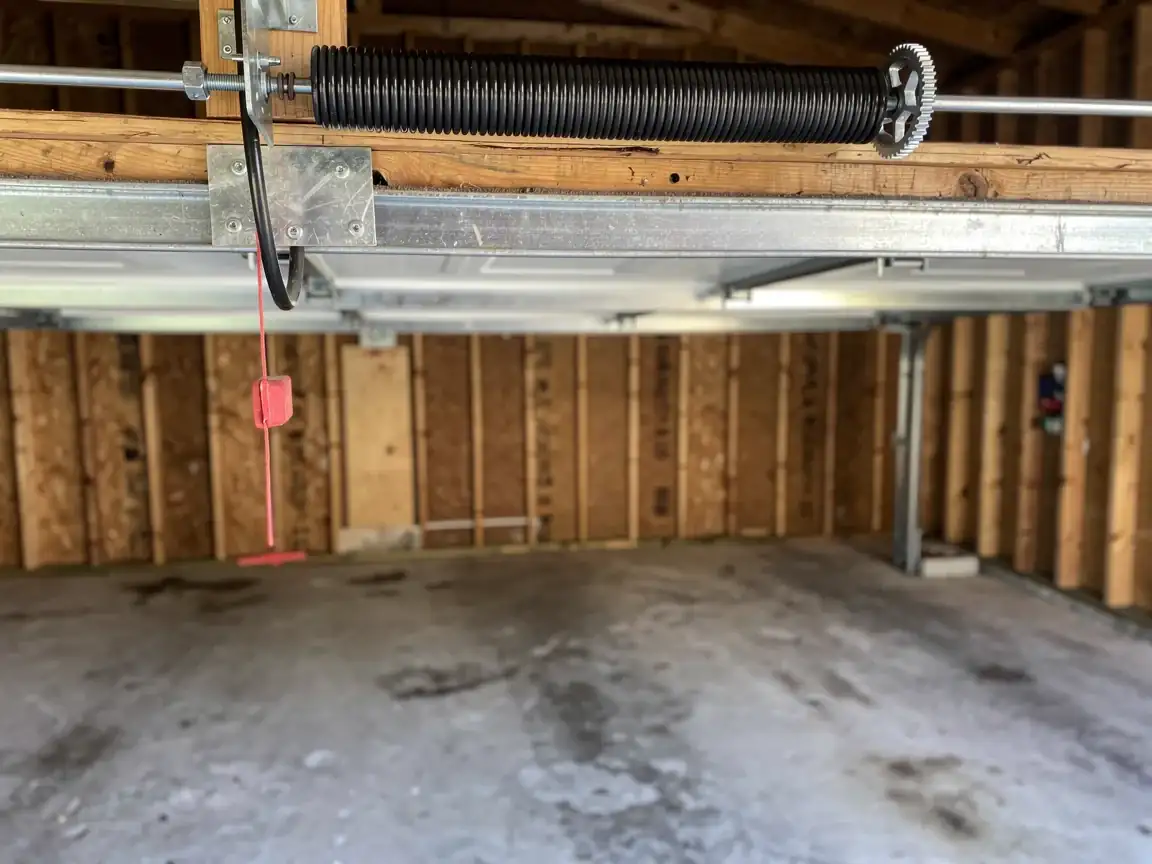
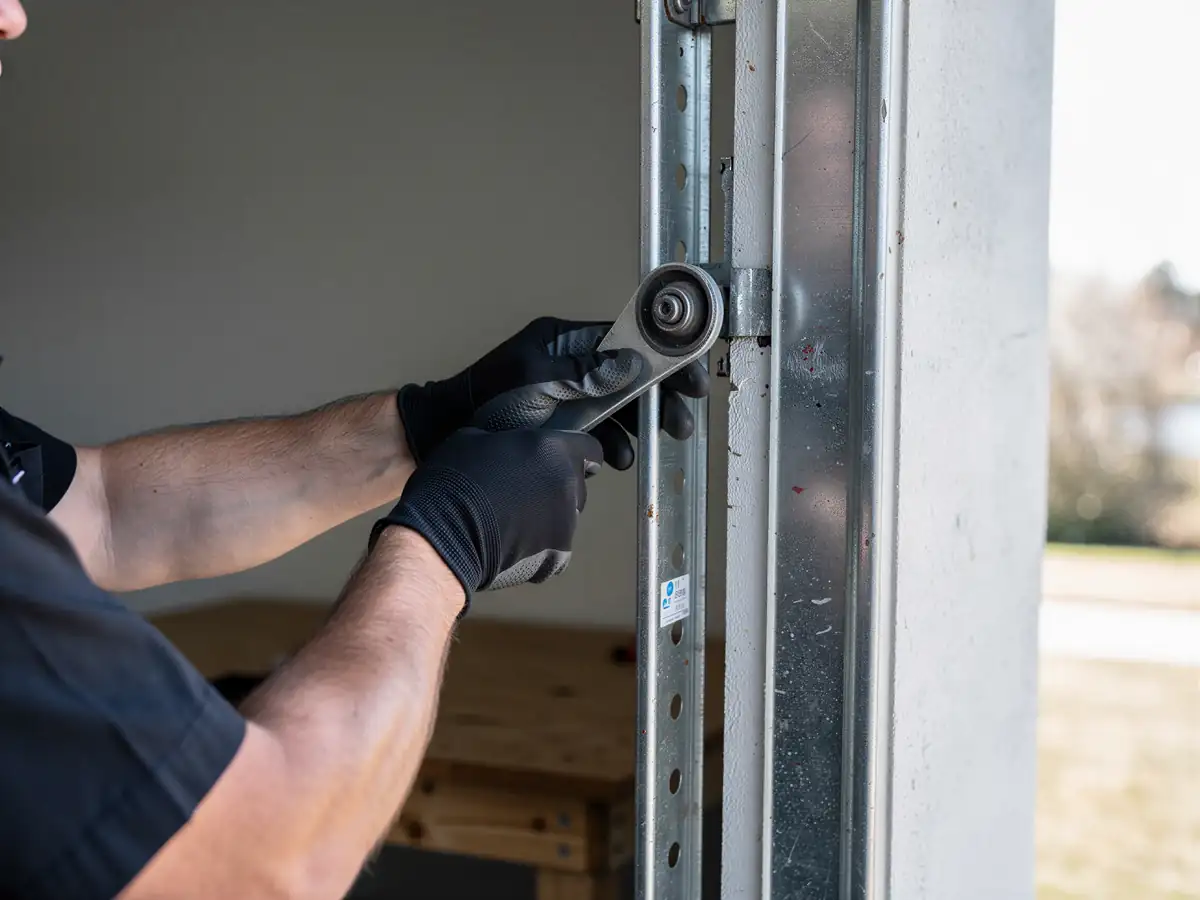
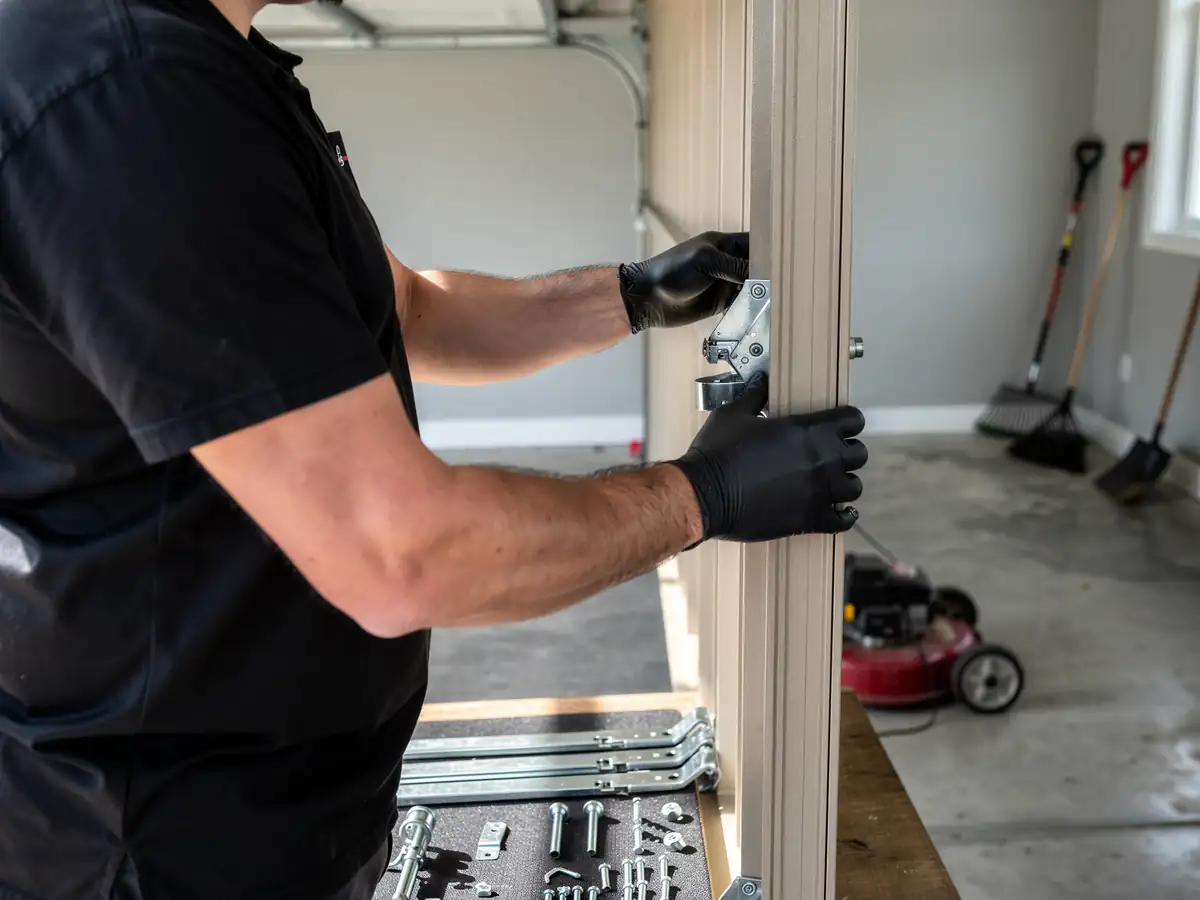
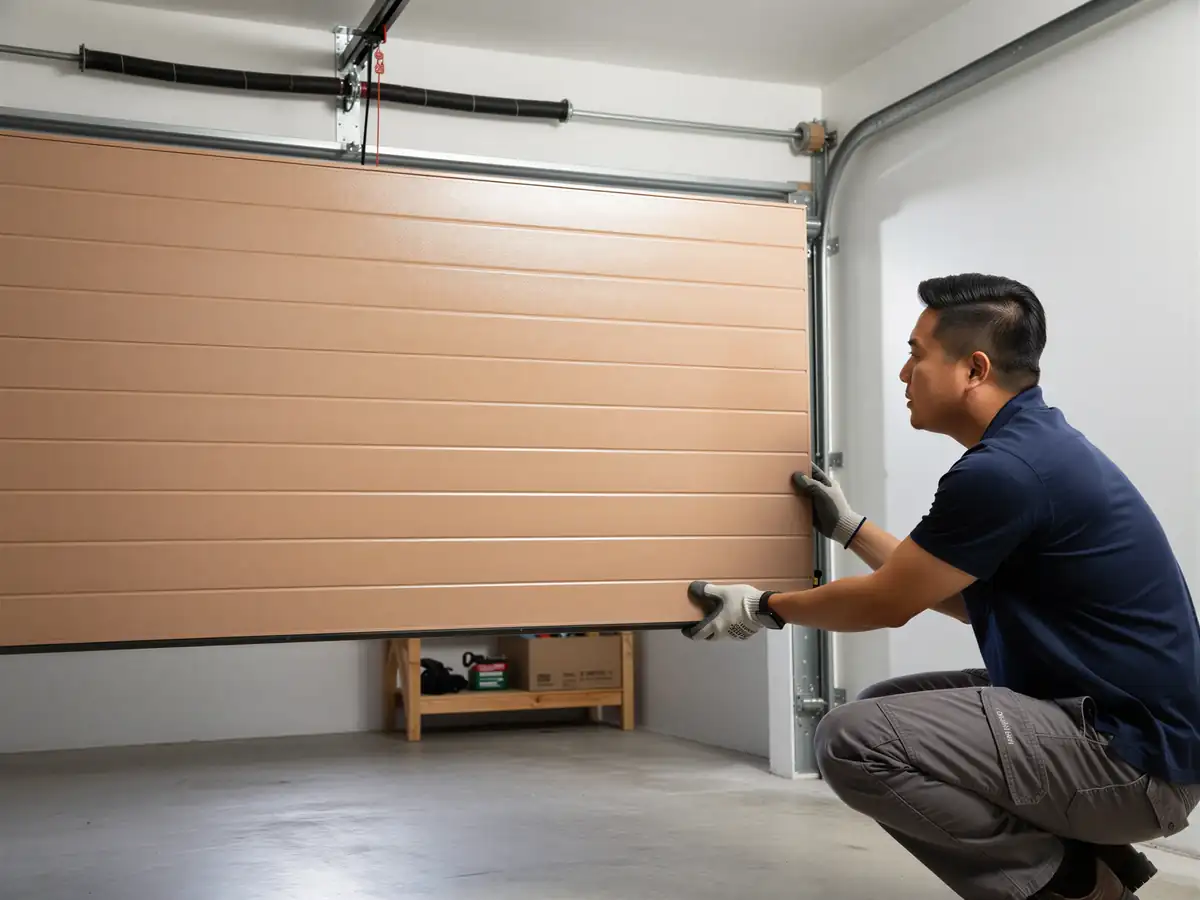
A torsion cable job starts with releasing tension on the spring safely - this is the step that hurts people when it's rushed, so we don't rush it. From there the tech pulls the old cable off the drum, checks the drum grooves for wear (a cable that's been slipping or overlapping can chew a groove that then shreds the next cable too), and inspects the bottom bracket where the cable anchors to the door. On a lot of the 1985-1991 stock we work on, that bracket and the drums are original, so it's common to replace the full set rather than just the wire. New cable gets sized to the door's exact drop and drum, wound evenly, and the spring re-tensioned to balance the door - a door that doesn't balance after cable work means something was missed, not that the job is done. Expect the tech to run the door through several full cycles before calling it finished, checking for drift, listening for drum noise, and confirming both sides are carrying even tension. On an extension-spring setup the process differs and usually involves replacing the safety cables too, which don't exist on older torsion installs.
What You Are Seeing
The warning signs are usually visible before the cable actually breaks. Look for frayed strands near the bottom bracket or where the cable wraps the drum - a few broken wires sticking out like a worn shoelace. A door that suddenly sits crooked, with one side noticeably lower than the other, is telling you one cable has slipped off its drum or stretched. You might hear a loud bang from the garage, which is usually the spring letting go rather than the cable itself, but the two fail together often enough that either sound means stop using the door. If the door drops fast on the way down instead of lowering under control, don't put a vehicle under it and don't try to force it closed by hand - a cable under tension that lets go can whip. None of this is a DIY fix with the garage door closed and under load; the spring tension involved is the same reason we don't recommend reusing an old cable
How it works
From “it’s stuck” to “it’s fixed”
01
Tell us what’s wrong
Describe the symptom - won’t open, loud bang, opener runs but the door won’t move.
02
On-site diagnosis
A technician tests the door under power and by hand and finds what actually failed.
03
Clear, up-front plan
You get the fix that’s needed and what drives the cost - before any work starts.
04
Repaired & tested
The repair is done, the door is set true and tested, and the work area left clean.
Next step
Not sure which repair your door needs in Flagstaff, AZ? Describe what it’s doing - every job starts with a diagnosis.
Why do garage door cables fail more here than in warmer places?
Flagstaff sits in a severe cold climate band, and cold-stiffened steel cable is more prone to fraying and snapping than the same wire in a mild climate. Combined with a housing stock that's mostly original 1985-1991 hardware, a lot of doors here are running cables well past a safe service life.
Can I just replace the cable and leave the spring alone?
Sometimes, but on a torsion system the cable and spring share the same drum and shaft, and if your cable shows wear, the spring on that side usually has similar mileage. A tech needs to check both before telling you it's a cable-only fix.
Is a snapped cable the same as a broken spring?
No, but they're connected. A broken cable often follows spring failure, or causes the door to drop unevenly and strain the opposite cable. If you hear a bang or see the door sitting crooked, treat it as a safety issue either way and stop using the door.
Do you work outside Flagstaff proper?
We cover the surrounding service area including Mountainaire, Kachina Village, Fort Valley, and Munds Park, each with similar-era housing and the same cold-climate wear pattern on garage door cables.
Ready to get your garage door sorted?
Tell us what it’s doing and where you are in Flagstaff - we’ll take it from there.