The Cost of This Job
The call we get most from Fort Valley is a door that slams the last foot of travel or won't open past halfway
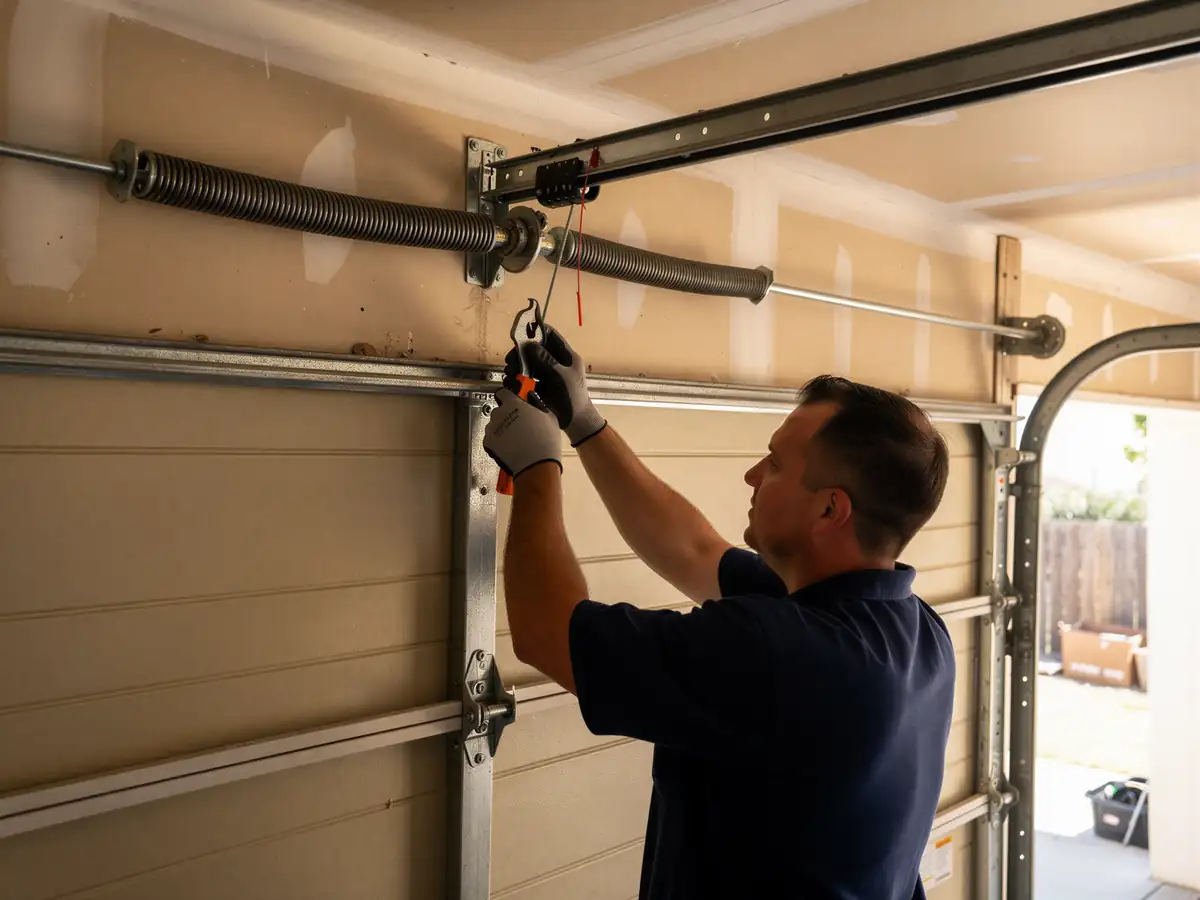
On a house built in the early 1990s, that's usually a worn extension spring or a stretched cable - not the torsion-spring failure that shows up more on newer construction elsewhere in the area.
Fort Valley's median build year runs around 1991, newer than the 1985 median across the rest of our service area
Where the housing stock skews more toward the 1980s and 90s generally. That gap matters for parts: a spring job here is often a straight swap on original hardware that's never been touched, while older stock elsewhere sometimes needs a hardware upgrade along with the spring itself.
We can't quote a number here without seeing the door
A single broken extension spring costs a lot less than a cable, a drum, or a full torsion conversion, and we won't know which you need until a truck is on site. What we can tell you is that spring and cable work on this era of door tends to be the bulk of the job, not the opener.
What You Are Seeing
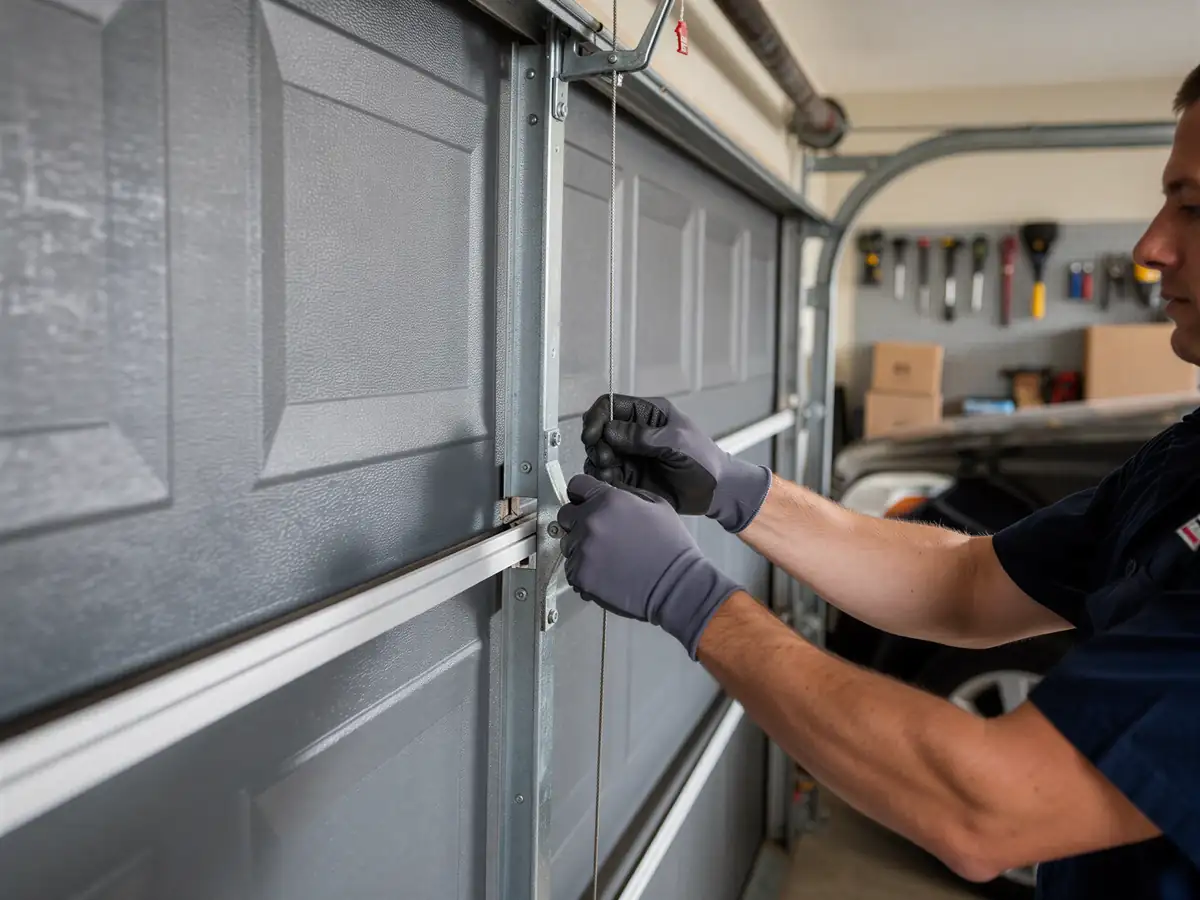
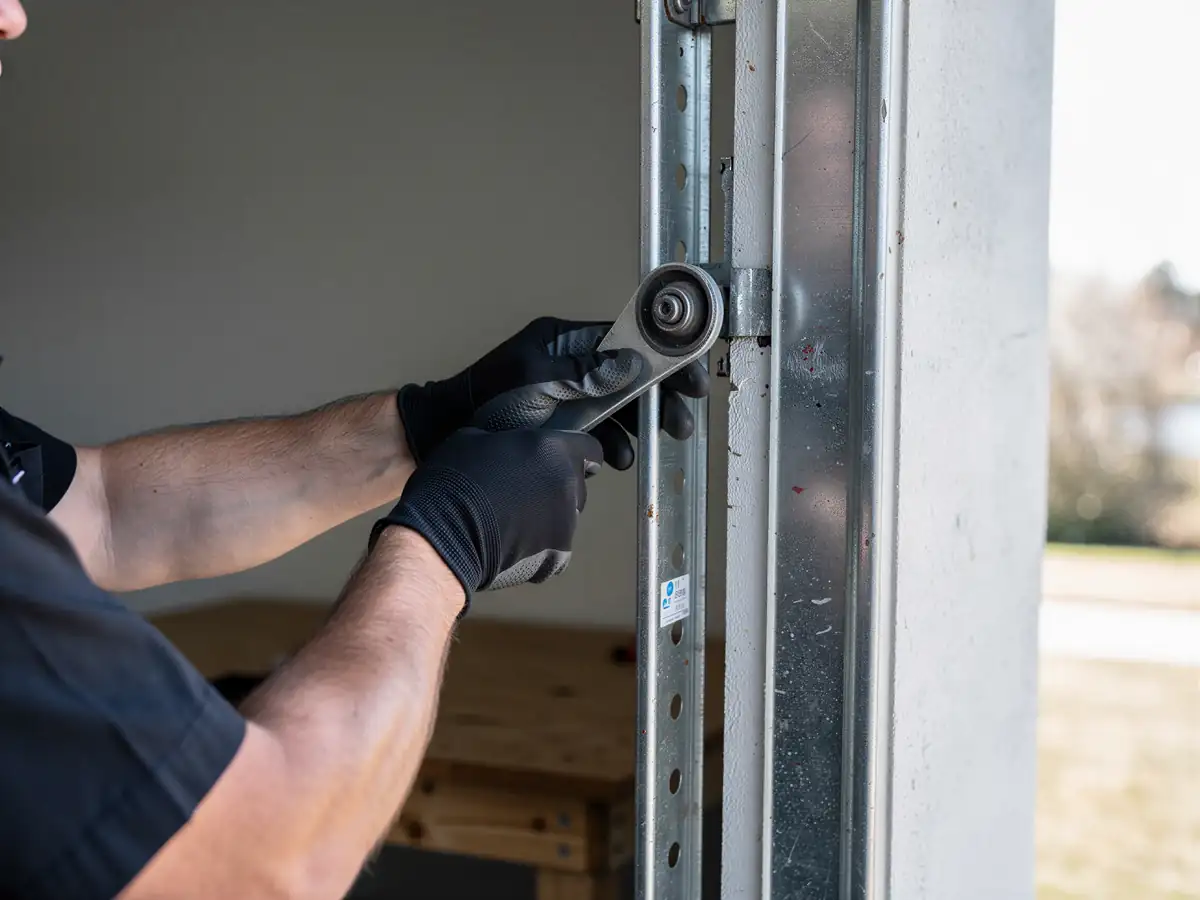
If your door is sagging on one side, jumping off the track, or grinding as it opens, that's consistent with the galvanized rollers and steel cable runs that came standard in the early-90s construction push out this way. Those rollers don't hold up forever, and by this point they're the most common failure we see on this build era.
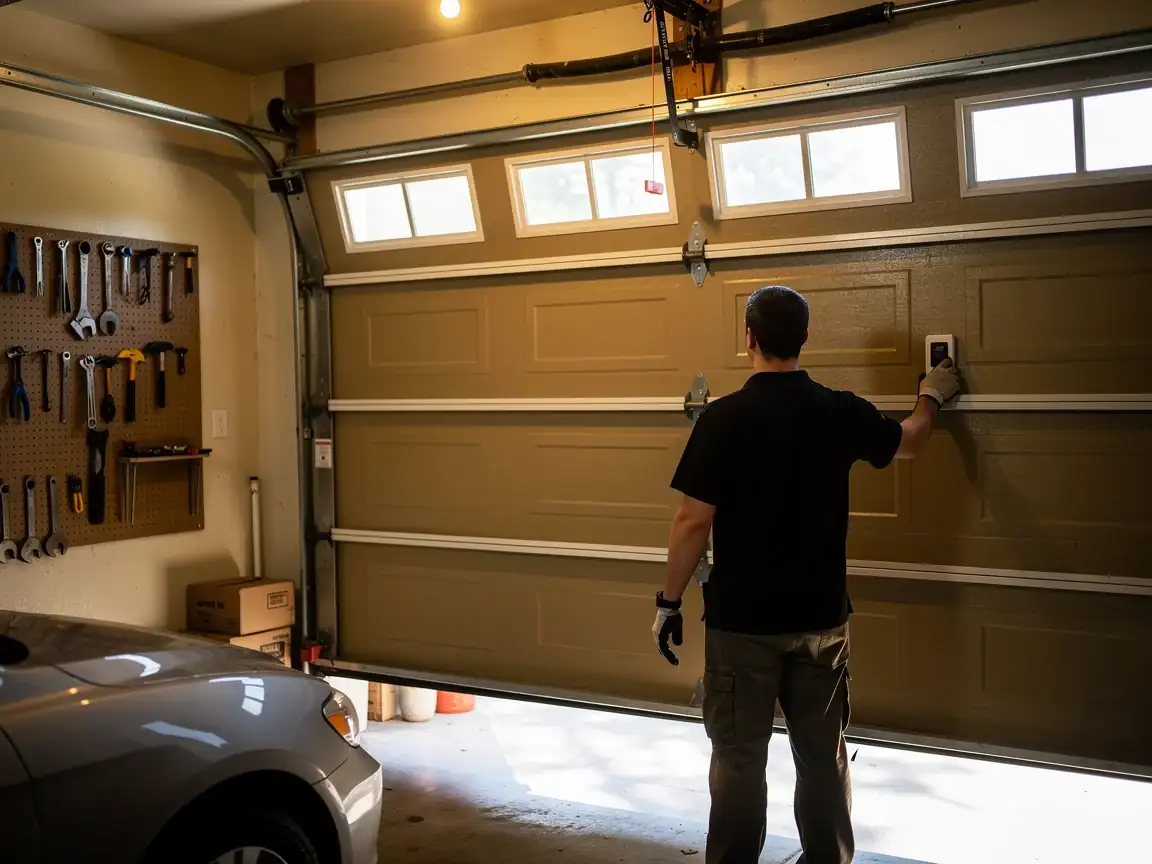
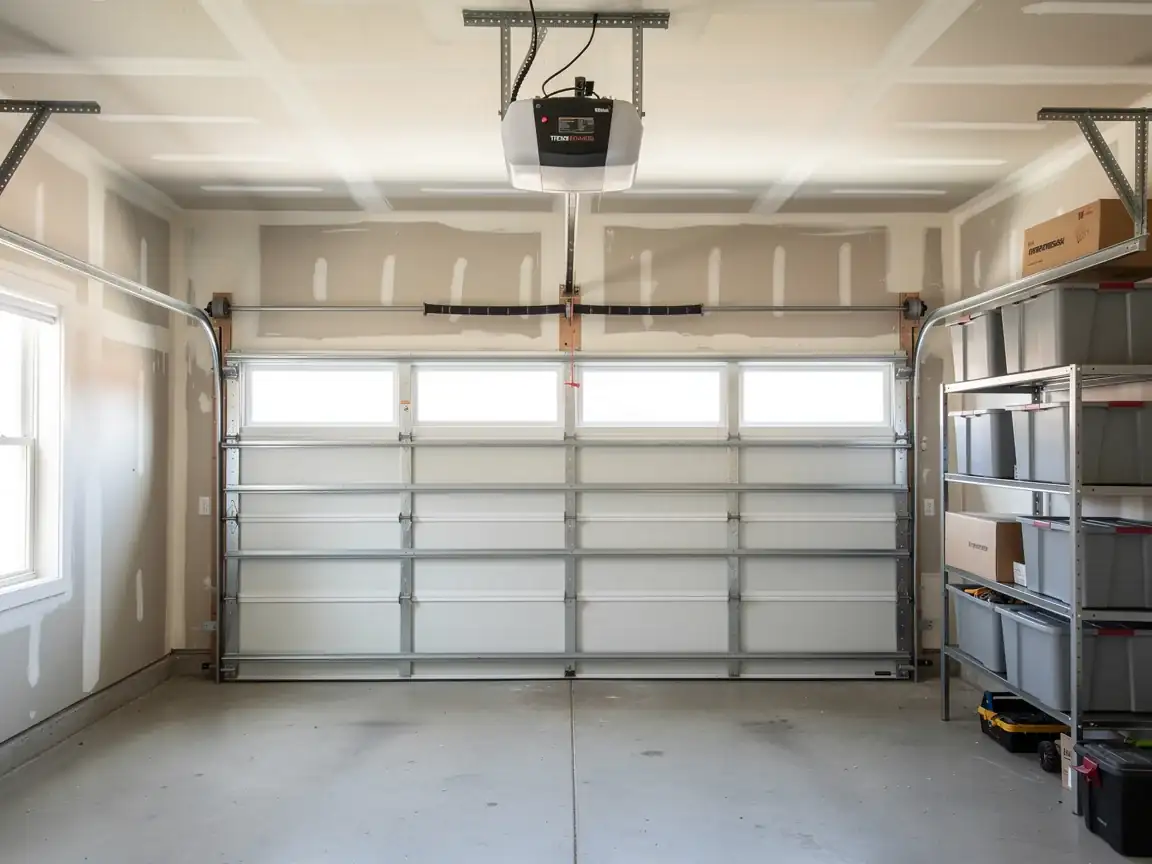
Openers from the same period are often chain-drive units with an older logic board. If the board's circuitry fails, the door usually won't respond to the wall button or the remote at all, which is a different symptom than a mechanical jam. Cold mornings at this elevation also stiffen grease in older gearboxes, which shows up as a slow, grinding start on the first cycle of the day - consistent with the severe cold-climate conditions this whole area sits in.
One thing we can't diagnose over the phone: whether a stuck door is a spring, a track, or an opener problem. All three show up as 'the door won't move,' and they're three different jobs with three different fixes.
How Long It Takes
A straight spring or cable replacement on original hardware from this era is usually the most straightforward job we do, since the parts are standard sizes and the mounting hasn't been modified over the years. A full opener swap takes longer, because the wiring and travel limits on a 1990s unit don't always match a current model, so there's extra setup involved.
Because we're covering Fort Valley from Flagstaff, twelve miles out, the repair itself doesn't take any longer than a job closer in - it's the drive that adds time to the morning, not the work on the door. We don't give a fixed arrival window for this reason; it depends on what's already loaded on the truck and where that truck is coming from that day.
Can You Do This Yourself
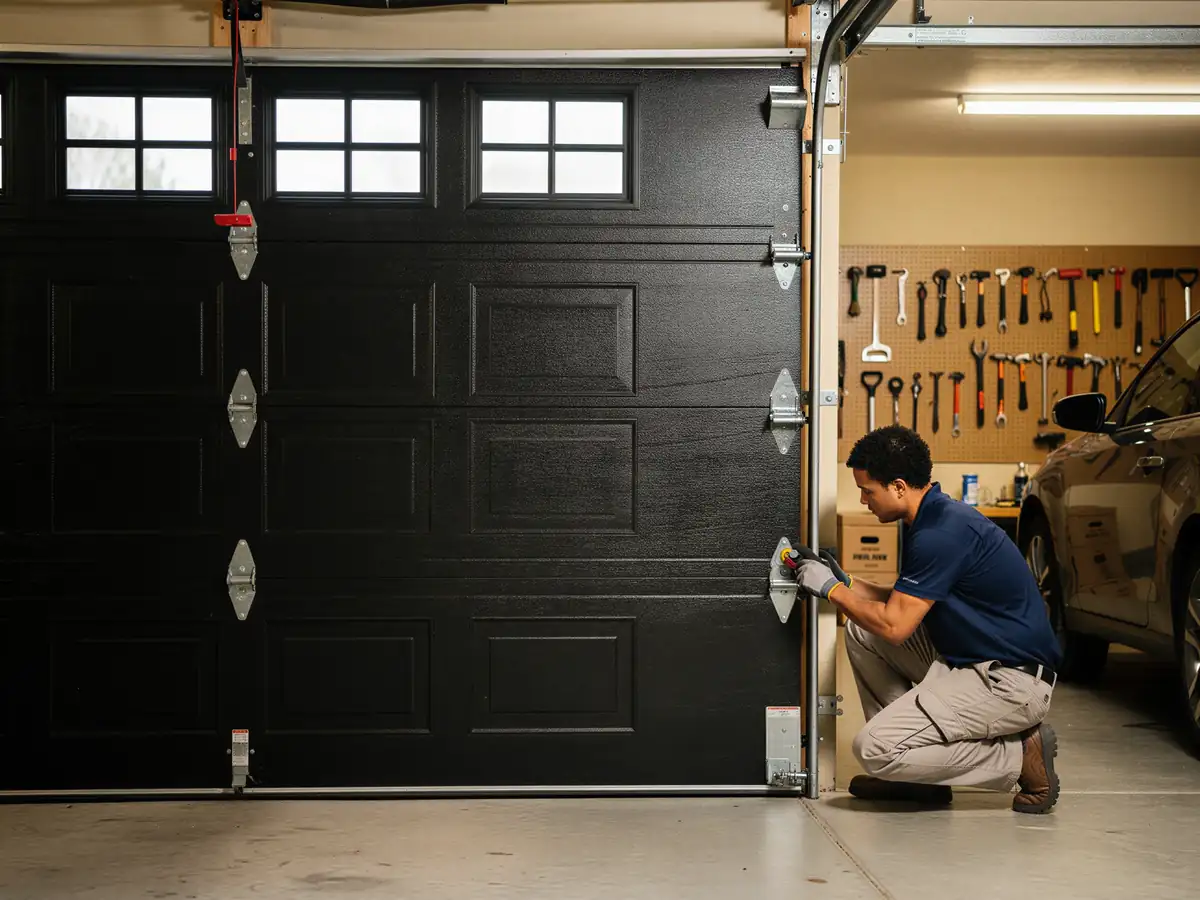
Replacing a roller or tightening a loose hinge bolt is reasonable DIY work on these doors
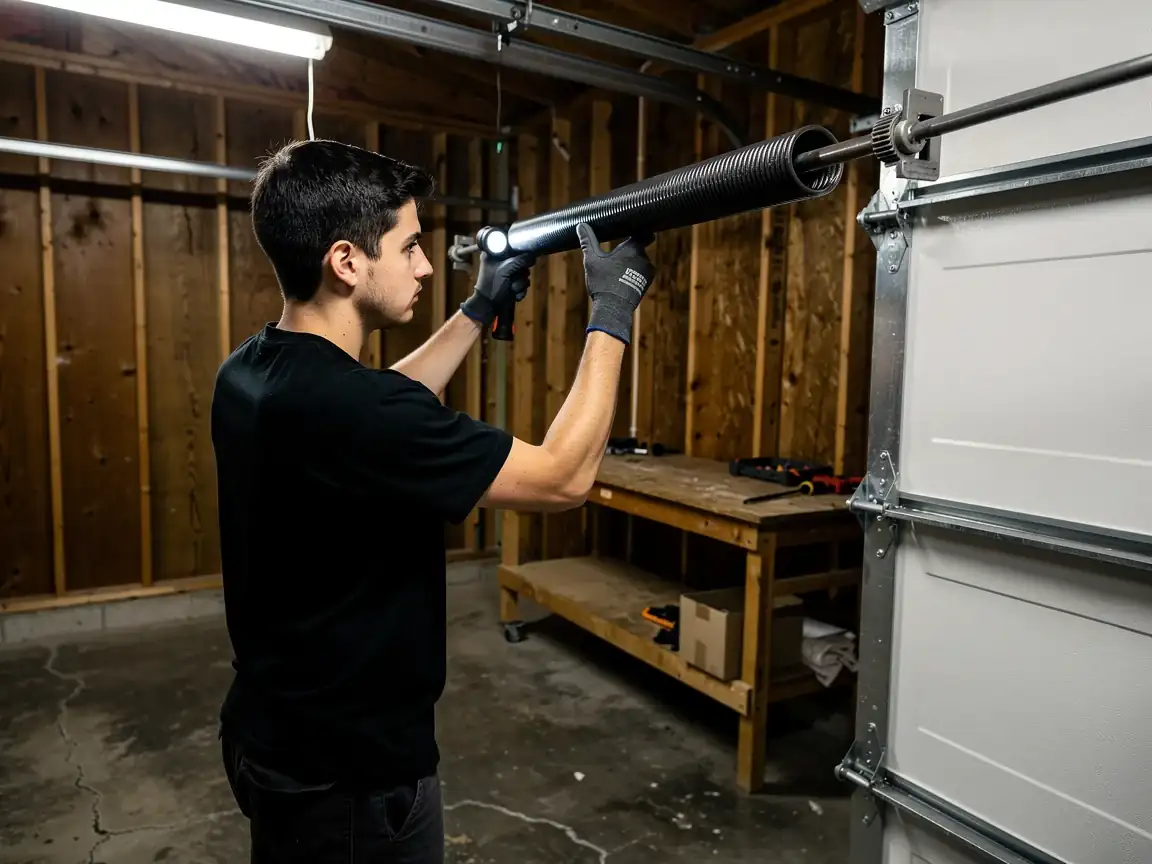
And plenty of Fort Valley owners handle that themselves. A broken spring is not. These doors store enough tension in a wound spring to break a bone or worse if the winding bar slips, and that risk doesn't change because the house is newer than average.
Opener logic boards from the early 90s are also not something to troubleshoot without the right background
A lot of parts for that generation of opener are out of production, and a bad diagnosis means paying for a part that doesn't fix anything. If you're not sure whether what you're looking at is a cheap roller or a torsion spring under load, treat it like the spring until someone who does this for a living tells you otherwise.