The Cost of This Job
What a cable repair runs here depends on what's actually broken, not just the symptom
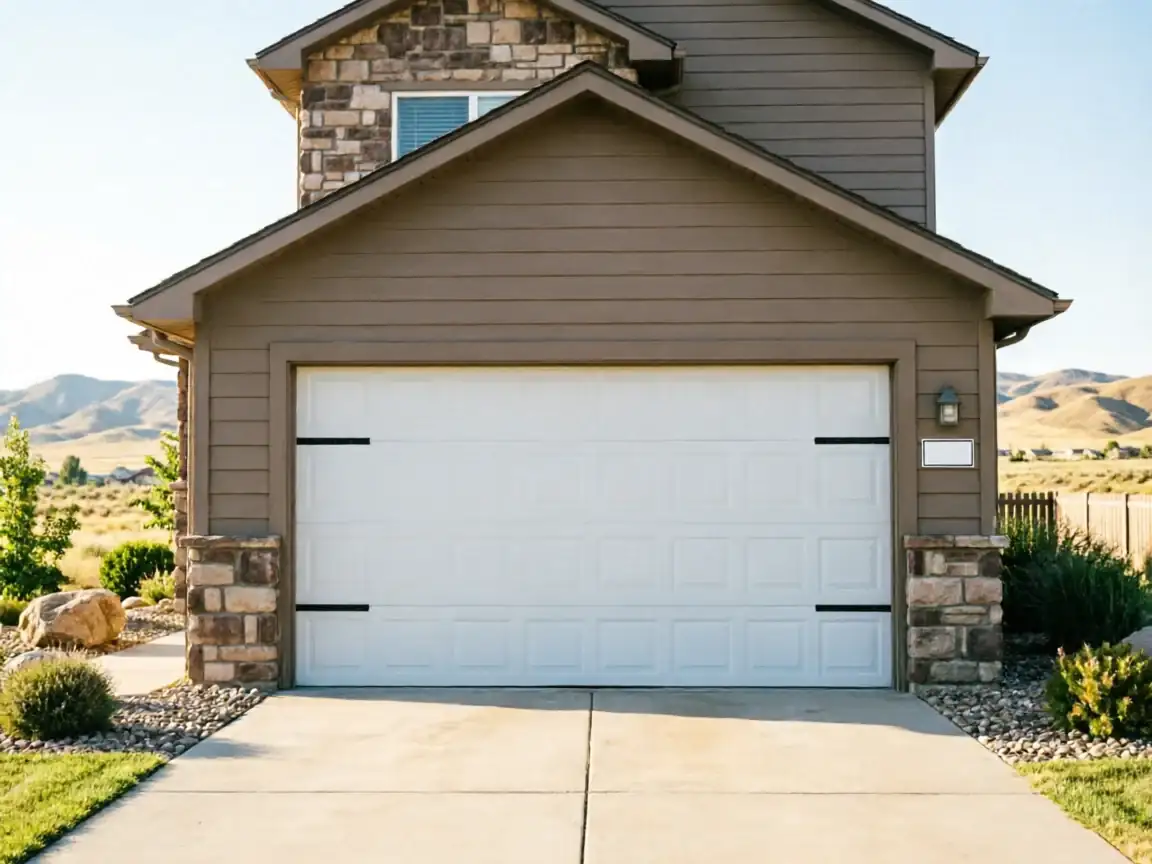
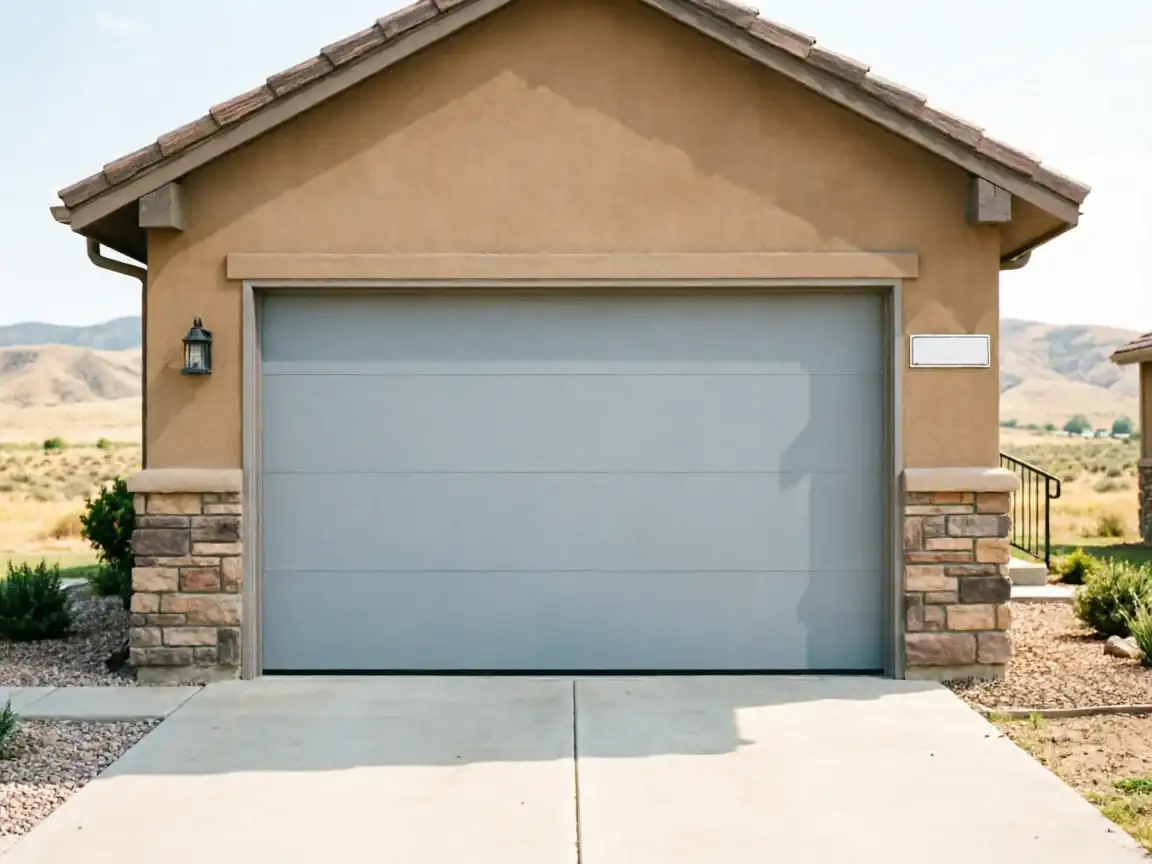
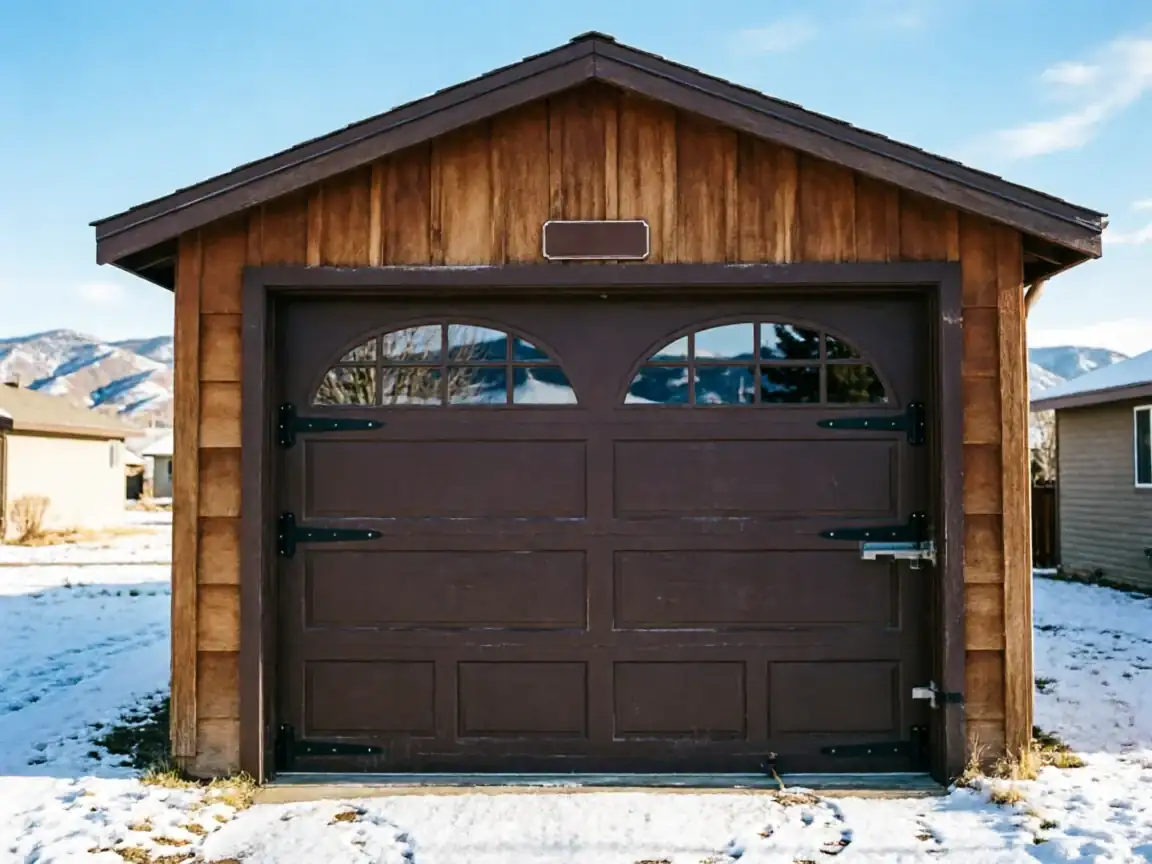
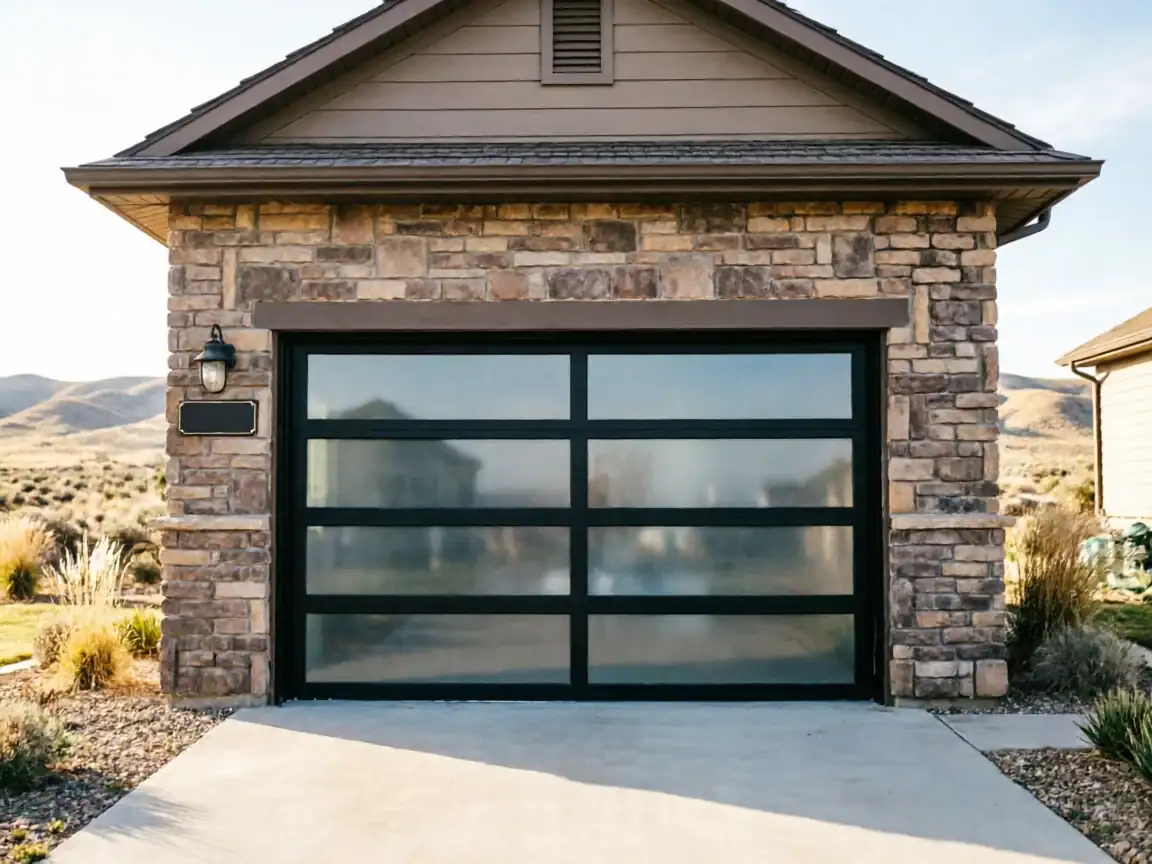
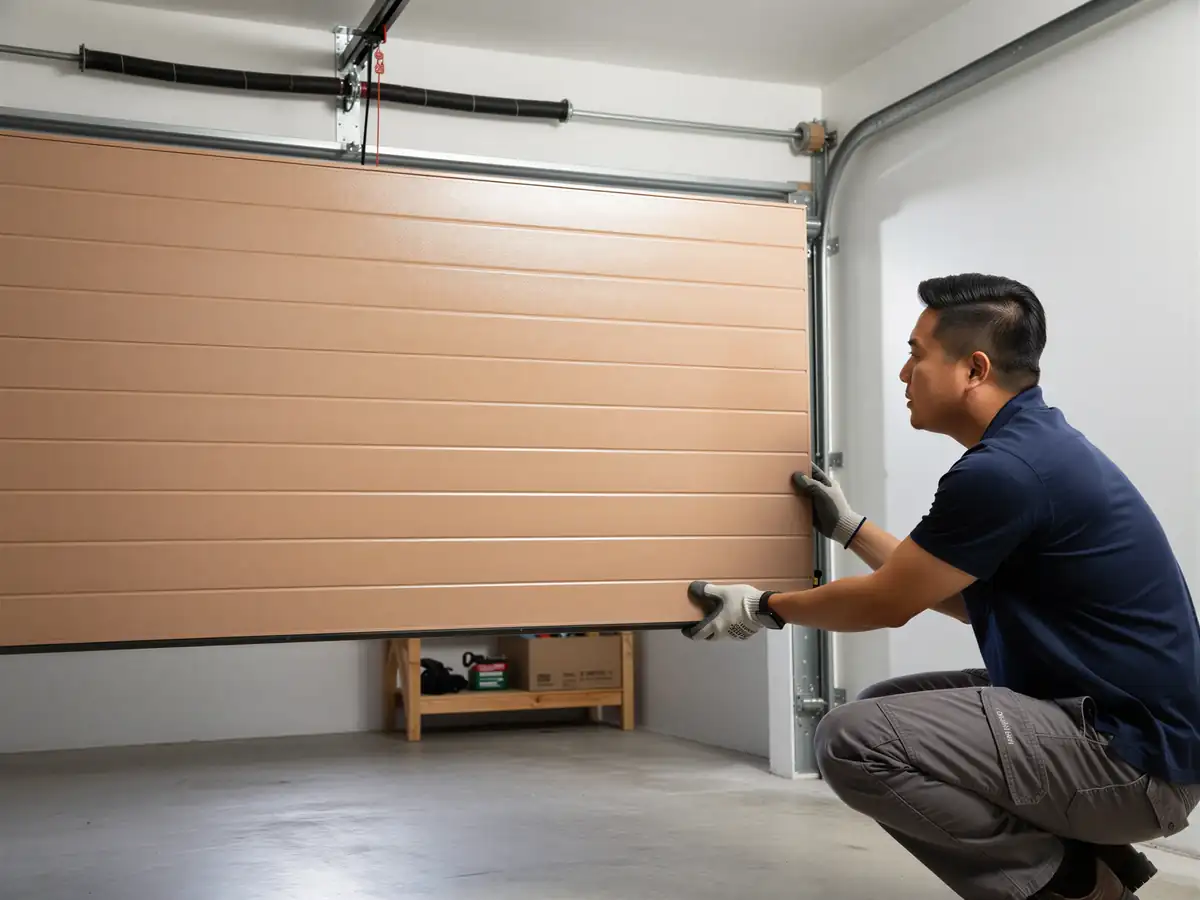
A frayed lift cable on a single steel door is a different job from replacing both cables on a wider double door, and Fort Valley leans heavily toward the double - most of these houses went up around 1991, built for two vehicles and a garage wide enough to match. That extra width means longer cable runs and, on a lot of these doors, heavier galvanized steel panels than you'd find on an older single-car door. We don't post a flat number here because we haven't quoted one without seeing the drum, the cable gauge, and whether the drop happened clean or took a spring or a hinge with it. What we can tell you: if one cable is shot, the other one on that same door has usually seen the same winters and the same stretch cycles, so we'll look at both before we call the job done.
We travel out from Flagstaff for this work, about 12 miles each way, and that's built into how we schedule rather than tacked on as a separate charge
- 12 miles
What You Are Seeing
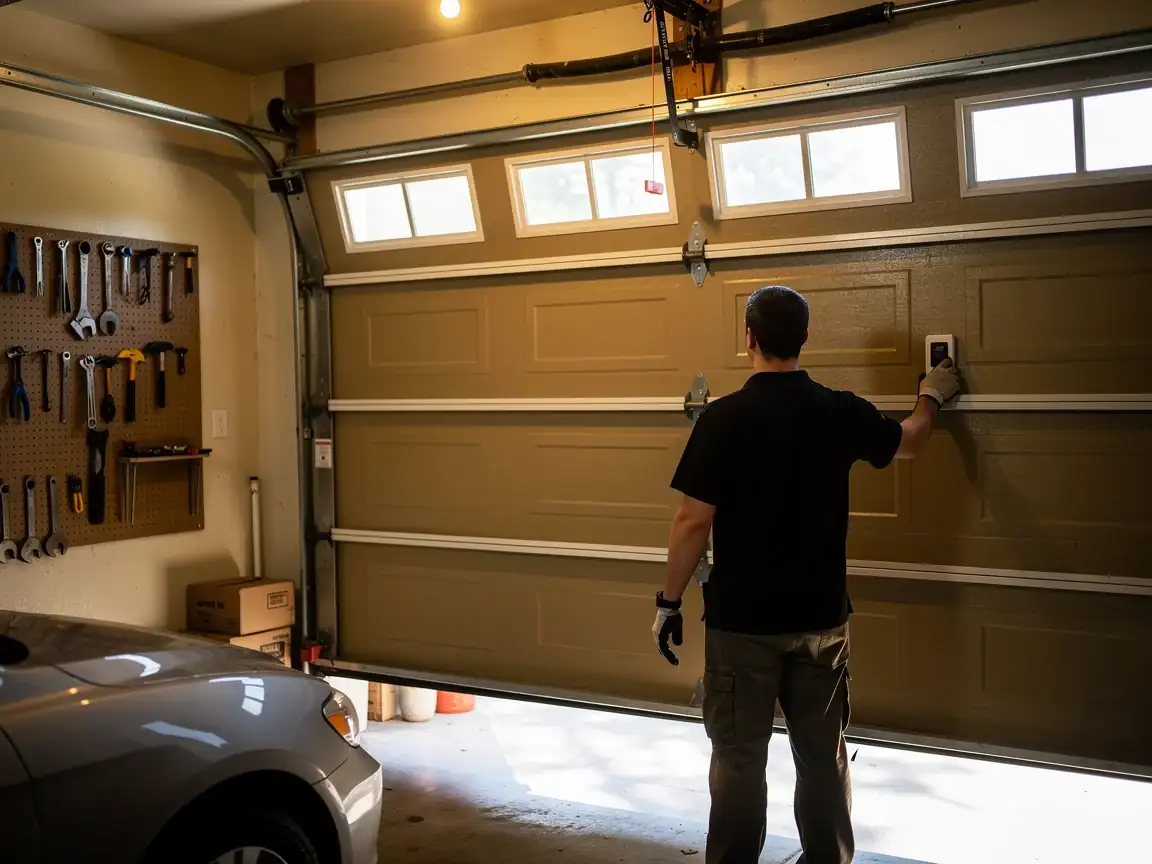
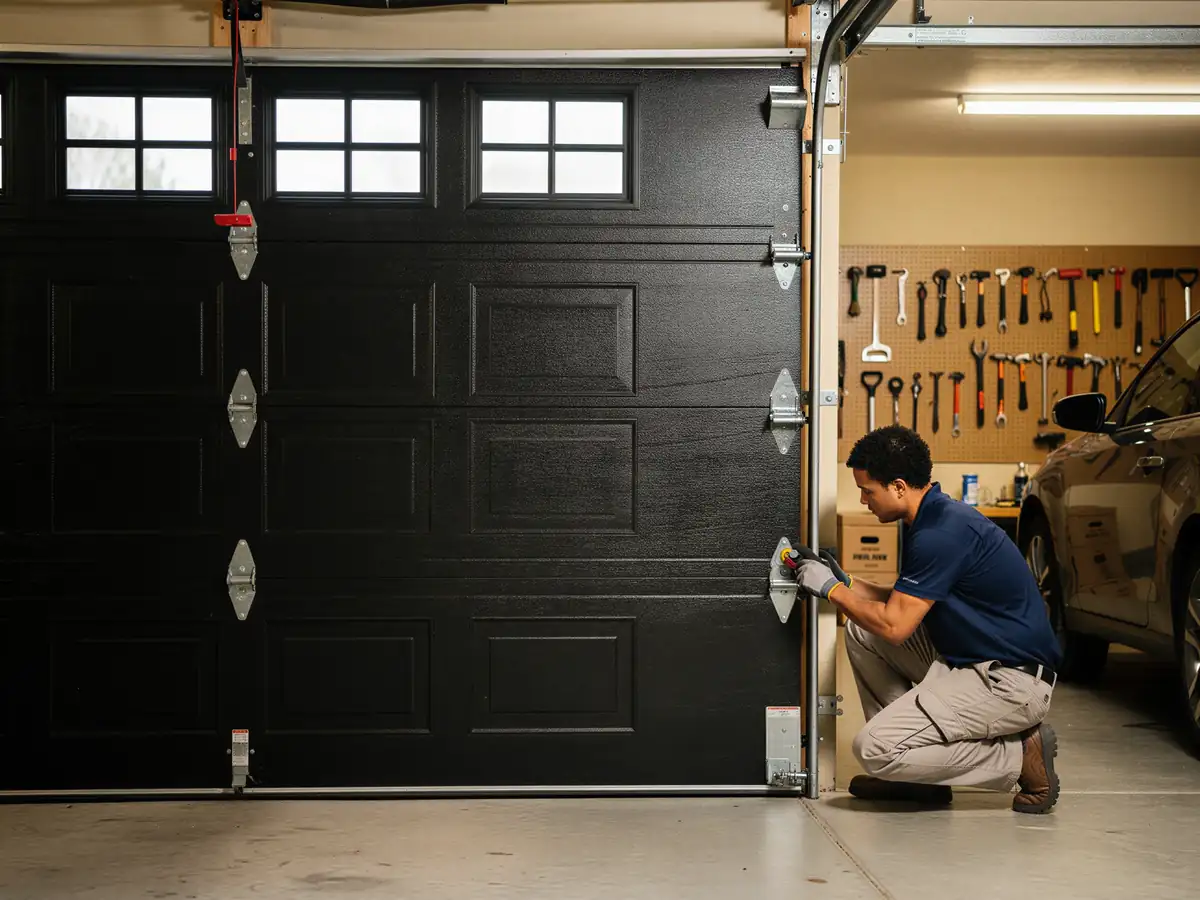
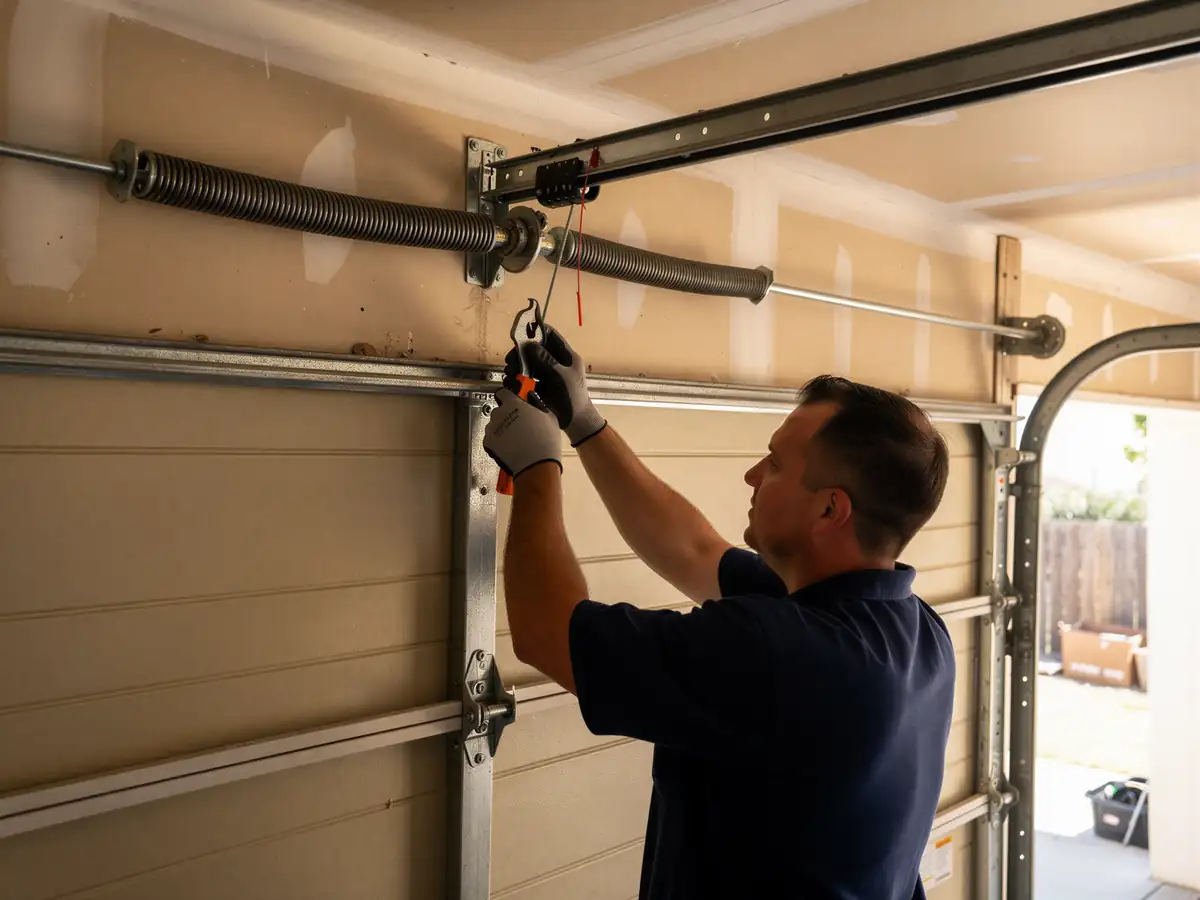
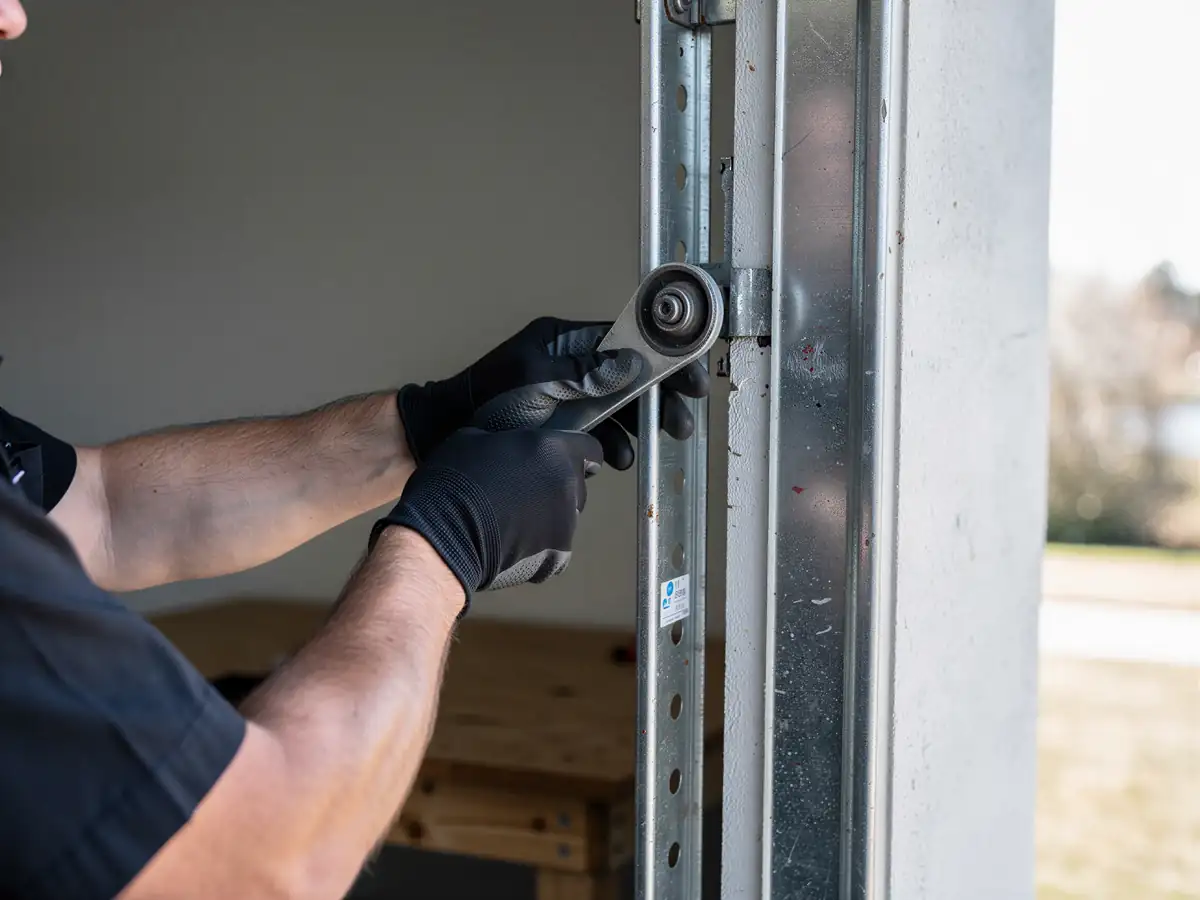
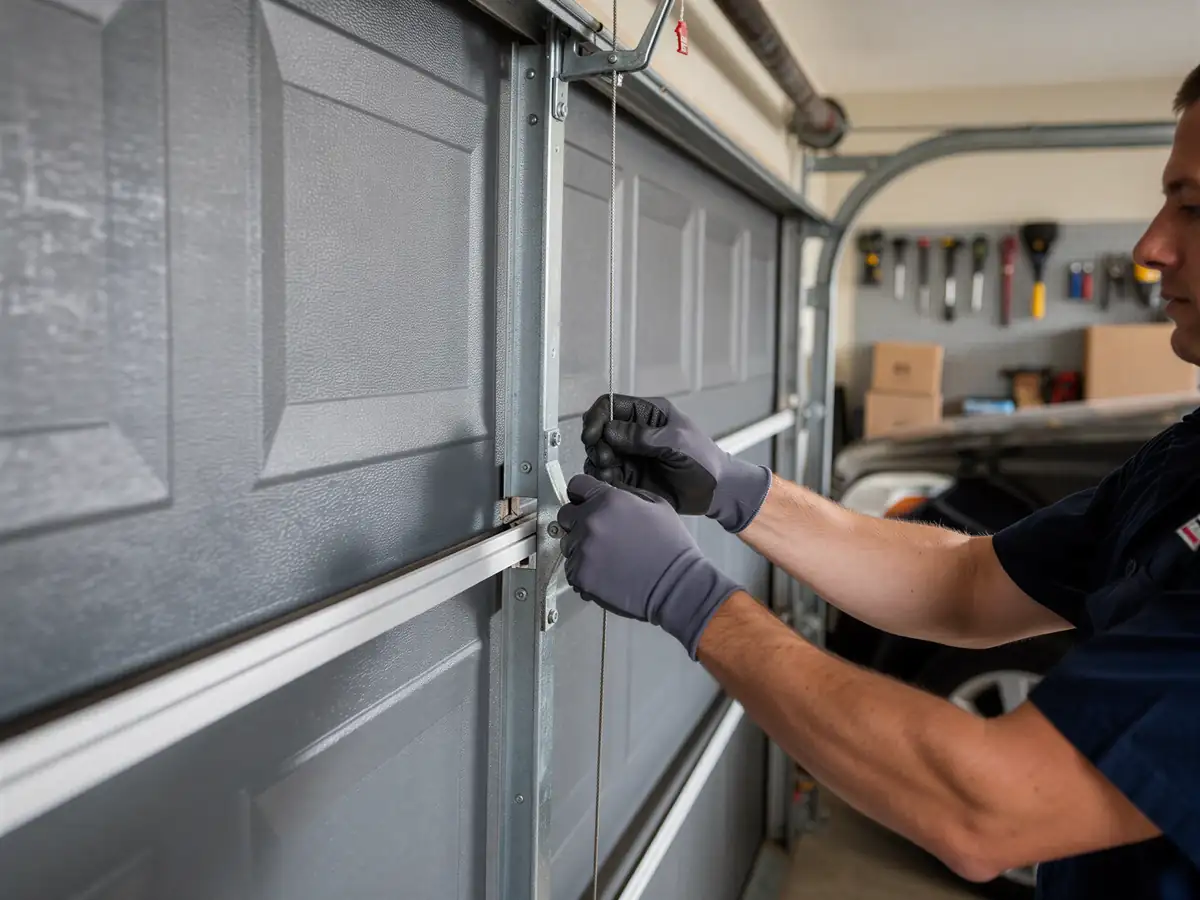
If your door drops crooked, hangs at an angle, or one side won't lift while the other side moves fine, you're probably looking at a broken or badly frayed lift cable, not a spring. On a 1991-built door the giveaway is usually at the bottom corner near the drum - the cable looks like it's unraveling into little wire hairs, or it's already popped and curled back on itself. Cold, dry air at this elevation is hard on galvanized cable. The coating resists rust fine, but repeated freeze-thaw cycling through winter stiffens the strands and they work-harden faster than the same cable would in a milder climate. You'll often see it first as noise - a grinding or ticking sound right before the drop, as the last few strands give out.
Don't confuse this with a broken torsion spring, which usually shows up as a door that won't budge at all, or slams down fast and hard instead of hanging lopsided. The two faults get mixed up constantly because both can happen on the same visit if a cable fails under spring tension. We check both every time, because leaving a stressed spring in place after a cable repair just sets up the next failure.
How Long It Takes
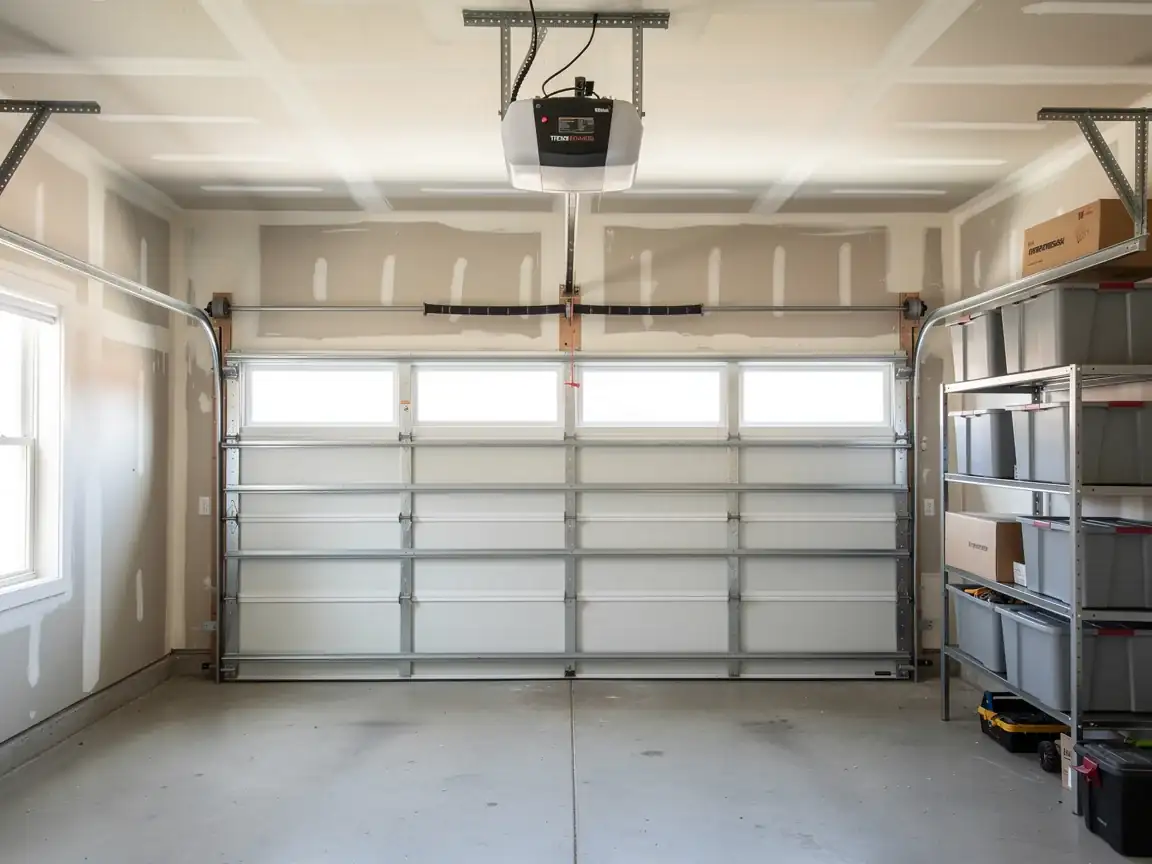
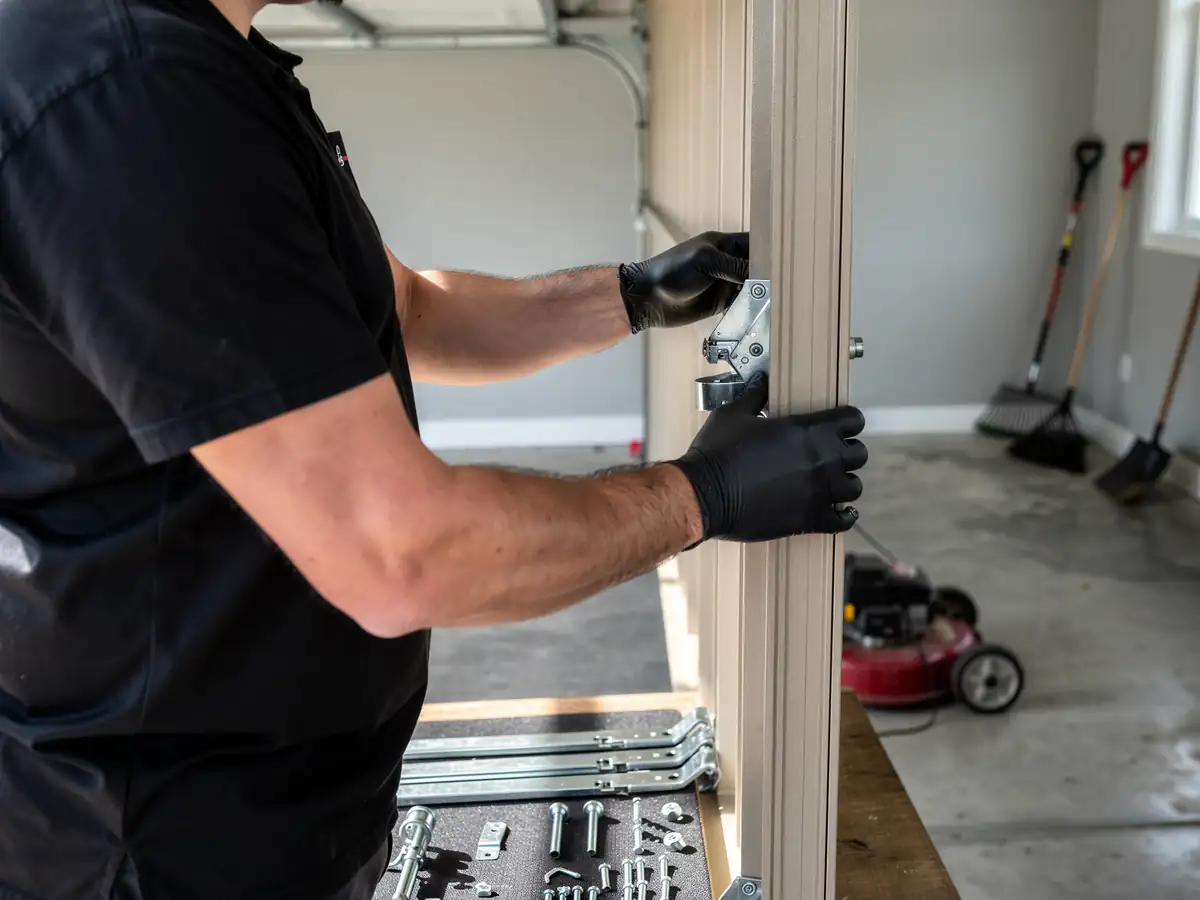
A straight cable swap on one of these doors, once we're on site with the right cable length and drum, is a same-visit repair. The time add comes from two things: whether the door needs to come off a damaged track or roller on the way down, which happens more than you'd think on a wider double door under full spring tension, and whether we're carrying the right cable gauge for a 1991-era drum setup versus the newer standard. We stock common sizes, but we won't guess on a door we haven't measured, so the first part of the visit is diagnosis, not repair.
We don't promise a same-day window for Fort Valley specifically - we're coming from Flagstaff, and we schedule the trip around what else is on the truck that day. What we can tell you is that once the job starts, cable work itself rarely runs long unless it's turned into a spring job too.
Can You Do This Yourself
We'll say this straight
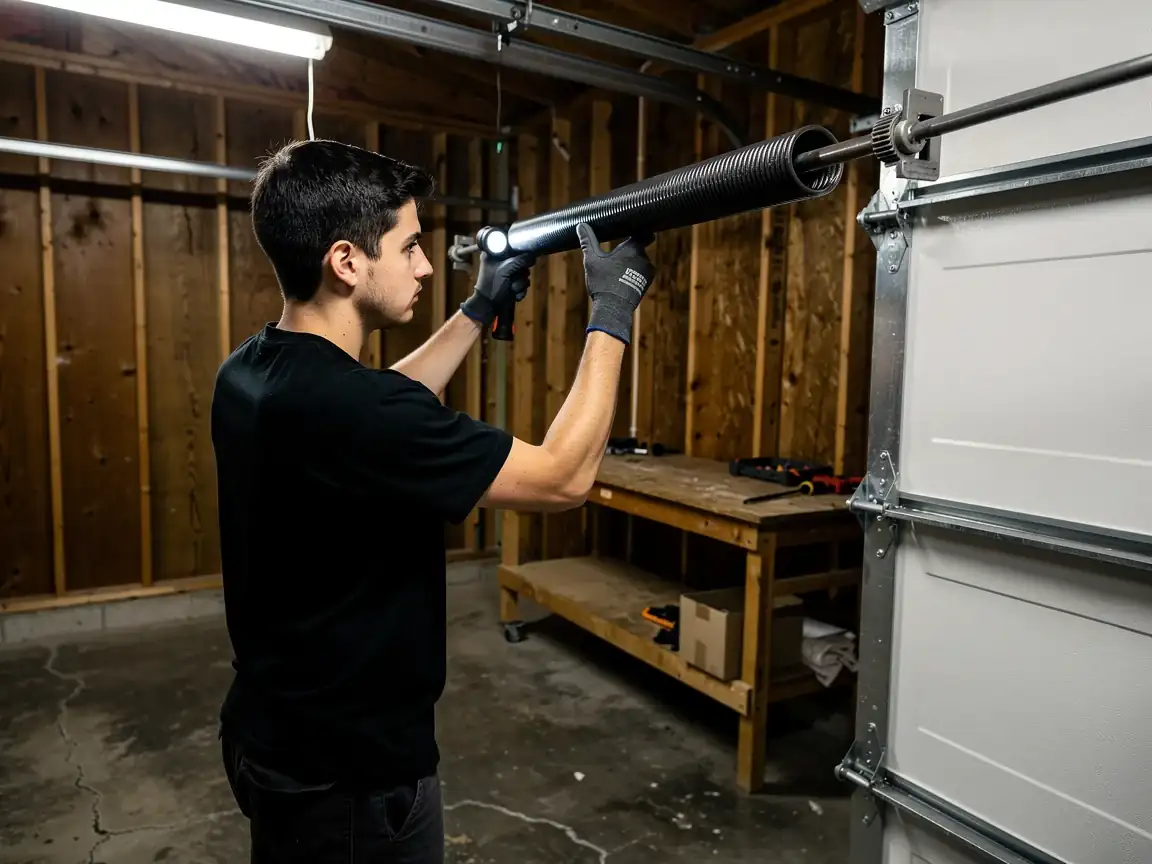
Don't do the cable yourself if the door is under spring tension, which it almost always is when a cable has failed. A torsion or extension spring holding a double-door panel at this weight can put someone in the hospital if it releases while you're working near the drum. That's not a scare line, it's the actual reason this trade carries insurance.
What you can safely check yourself
Whether the cable is visibly frayed or fully separated, whether the door is a single or double, and whether the drop happened slowly (cable stretch) or all at once (cable snap or a dropped spring). That tells whoever comes out what to bring. Our honest limitation - we don't carry every cable gauge for every era of door on the truck at all times, so if your setup is unusual we may need a second trip to get the right part. On a standard 1991-built double door, that's rarely the case.